


Why B2B Ecommerce Web Development Matters Now More Than Ever
B2B Ecommerce Web Development is the creation of online stores for business-to-business sales. Unlike B2C sites, B2B platforms handle:
- Complex pricing: Customer-specific pricing and volume discounts.
- Advanced accounts: Role-based access and approval workflows.
- System integrations: Connections to ERP, CRM, and inventory systems.
- Specialized features: Bulk ordering, quick reorders, and quote requests.
- Longer sales cycles: Support for research and group decisions.
The B2B ecommerce market is booming, expected to reach $28.86 trillion this year. By 2025, 80% of B2B sales interactions will happen through digital channels. This change is driven by new buyer expectations. Today's B2B buyers, 71% of whom are millennials, want the same smooth, self-service experience they get from personal online shopping.
While B2B development is more complex—handling negotiated pricing, large orders, and backend integrations—the opportunity is huge. Up to one-third of B2B transactions are still manual, meaning a good digital strategy can reduce costs, improve customer relationships, and provide useful data.
I'm Steve Pogson, founder of First Pier, a Shopify Expert Agency in Portland, Maine. For over 20 years, my team and I have helped businesses grow their online operations by building high-performance Shopify stores for B2B sales. This guide will cover the key features, platform choices, and marketing strategies for a successful B2B ecommerce website.

Basic B2B Ecommerce Web Development terms:
Getting Started: What is B2B Ecommerce?
B2B ecommerce is about businesses selling to other businesses online. It's more than a digital catalog; it's a system for handling complex business needs like negotiated pricing, bulk orders, and approval workflows. The global B2B ecommerce market is projected to hit $28.86 trillion this year, and Gartner predicted that 80% of B2B sales interactions will happen via digital channels by this year.
Moving online helps businesses improve efficiency by automating tasks like order processing. It also builds customer relationships by offering the self-service convenience modern buyers want. With up to one-third of B2B transactions still completed manually, there's a major opportunity for companies that adopt a smart digital strategy. If you're thinking about expanding your digital presence, you'll find helpful information about multichannel business expansion on our solutions page.
B2B vs. B2C Ecommerce: What's the Difference?
While both involve selling online, B2B and B2C ecommerce are very different. The entire process—from research to payment—is different.
| Factor | B2C Ecommerce | B2B Ecommerce |
|---|---|---|
| Customer Base | Individual consumers | Businesses, organizations |
| Order Size | Small, frequent | Large, infrequent, bulk |
| Pricing | Fixed, public, promotions | Negotiated, tiered, custom, volume discounts |
| Sales Cycle | Short, impulsive | Long, multi-stakeholder, research-intensive |
| Decision-Making | Emotional, individual | Logical, value-driven, committee-based |
| Relationships | Transactional, brand loyalty | Long-term, partnership, repeat business |
| Payment Options | Credit card, PayPal, digital wallets | POs, net terms, ACH, invoicing, credit lines |
| Product Info | Visuals, simple descriptions | Detailed specs, technical data, CAD files, case studies |
| User Experience | Easy to use, looks good, quick checkout | Efficient, works well, self-service, account management |
B2B purchases are logic-driven, focusing on value and ROI. A procurement manager buys to solve a business problem, not because of an emotional whim. This means your B2B site needs to support a different buying process with detailed specs, comparison tools, and resources for building a business case. The focus is on long-term partnerships, not one-time sales.
The Big Benefits of Selling B2B Online
Moving to online sales can transform a business. Key benefits include:
- Increased Sales: Your digital store is always open, reaching customers globally. Online orders are also getting larger, with orders over $500,000 growing fast.
- Reduced Costs: Automating order processing frees up your sales team to focus on high-value deals instead of data entry. Moving just some of the one-third of B2B transactions still done manually creates immediate savings.
- Better Data: Your ecommerce platform provides insight into customer behavior, helping you optimize your catalog and pricing.
- Improved Experience: Modern B2B buyers (71% are millennials) expect self-service options like checking order history and placing reorders online. This convenience builds loyalty.
- Automation: The right platform handles routine work as you grow, so you don't have to add staff proportionally. To learn more, check out our Shopify automation services.
Looking Ahead: B2B Market Trends and Business Models
The B2B ecommerce landscape is always changing. Staying ahead of these trends is key for any B2B Ecommerce Web Development project.

- Business Models: Wholesale ecommerce (bulk sales to retailers) and B2B2C (selling to businesses that resell to consumers) are common.
- Using AI: Nearly half of commerce leaders are using AI for smarter product recommendations, better search, and service automation.
- Personalization: B2B buyers expect custom catalogs, pricing, and content based on their needs and past behavior.
- Machine-to-Machine Commerce: By 2030, experts predict about one-third of all B2B ecommerce could be completely automated, with systems placing orders automatically.
If you're interested in building a successful wholesale channel, explore our wholesale strategy services.
Building a Great B2B Website: Key Features and Design Tips
For B2B Ecommerce Web Development, you're building a digital workspace for businesses. Success depends on three things: user experience (UX), mobile optimization, and security. B2B buyers use an average of 10 channels in their buying process, so your site must work flawlessly on any device. Since you're handling sensitive business data, security is the foundation of trust. The best B2B sites enable self-service, allowing customers to manage accounts and find information on their own. For more on creating an engaging online experience, check out more info about ecommerce UX design.
Must-Have Features for a Successful B2B Store
A B2B store needs a different toolkit than a B2C site. Here are the features that matter:
- Customer-Specific Pricing/Catalogs: Automatically show negotiated rates and custom product lines for different clients.
- Bulk & Quick Reorder: Allow customers to order large quantities or quickly reorder past purchases.
- Quote-to-Order: Let buyers request a custom quote that can be converted directly into an order.
- Advanced Search: Help buyers find technical products quickly with powerful search and filtering.
- Role-Based Access: Allow different team members (e.g., engineer, purchasing manager) to have different permissions on the same account.
- Account Management Portal: A central hub for customers to view order history, track shipments, and manage invoices.
- Gated Content: Protect sensitive pricing or technical data, making it available only to logged-in accounts.
- Flexible Payment Options: Accept purchase orders, net terms, ACH transfers, and invoicing.
For help optimizing your platform for these features, you can find more info about Shopify Plus optimization.
Best Practices for User-Friendly B2B Web Design
Great features are useless with a poor interface. A user-friendly design is key.
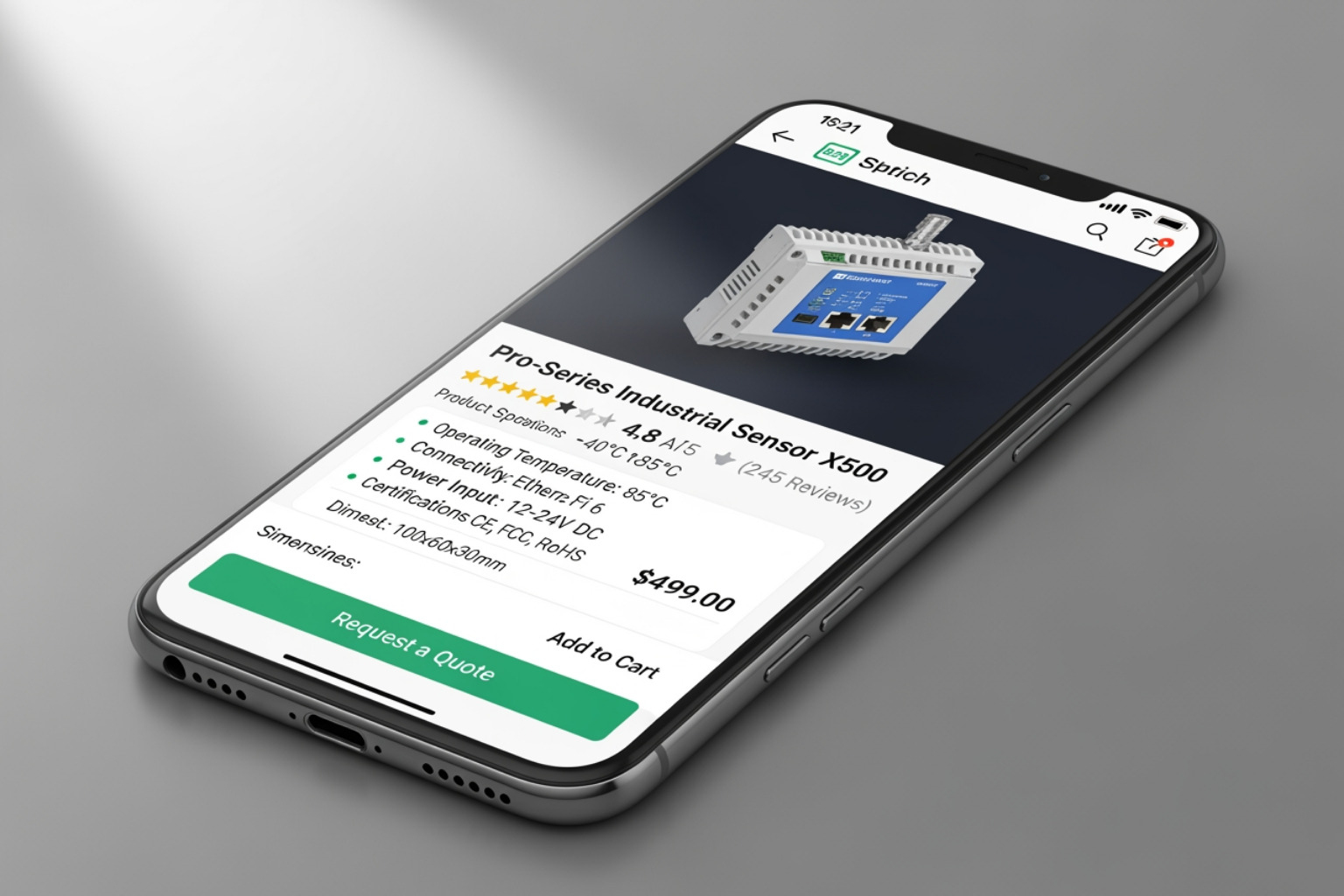
- Responsive & Mobile-Optimized: Your site must work perfectly on desktops, tablets, and phones.
- Simple Navigation: Use clear categories and menus so busy professionals can find products fast.
- Detailed Product Pages: Include specs, technical drawings, manuals, and case studies.
- Fast Page Speed: About 70% of online users say page load speed influences their purchasing decisions. A slow site costs you sales.
- Clear Calls-to-Action (CTAs): Make the next step, like "Request a Quote" or "Add to Cart," obvious.
- Streamlined Checkout: Pre-fill customer info and minimize required fields to reduce friction.
Keeping Your B2B Store and Customer Data Secure
Security in B2B Ecommerce Web Development is built-in, not an add-on. A data breach can destroy client trust.
- PCI DSS Compliance: Required for handling credit card data.
- SSL Certificates: Encrypt data between the customer's browser and your server (look for "https://").
- Data Encryption: Protect stored information on your servers.
- Secure Payment Gateways: Use reputable processors with fraud detection.
- Role-Based Permissions: Limit access to sensitive data and admin functions.
- Fraud Prevention Tools: Detect and flag suspicious orders before they are processed.
- Regular Audits & Updates: Continuously monitor for vulnerabilities and apply security patches.
Ensuring your store meets compliance standards is something we take seriously. You can find more info about Shopify accessibility and compliance.
Real-World Examples of Top B2B Websites
Learning from others can provide useful ideas for your own B2B Ecommerce Web Development project.
- White Cap: This construction supplier offers both quick cart purchases and quote requests for complex orders, catering to different buyer needs.
- Super-Sod: They saw a 59% increase in leads after adding ecommerce. Their virtual yard estimator is a smart tool that helps landscape pros quickly calculate project needs.
- Houzer: This sink seller has a dedicated Pro Pricing page that clearly outlines the benefits of a professional account, like free shipping and bulk discounts.
These examples show that successful B2B sites focus on efficiency, personalization, and tools that solve specific customer problems.
Your Strategic Plan for B2B Ecommerce Web Development
Starting a B2B Ecommerce Web Development project without a plan is like building a house without blueprints. A planned approach begins with clear business goals: Are you trying to cut costs, enter new markets, or give customers a better experience? Your answers will shape every decision. You also need to understand your target audience—how they buy and what would make their jobs easier.
Budget is a key factor. A custom ecommerce website can cost anywhere from $5,000 to $50,000+, so defining your needs early is important. If you're moving from an old system, that adds another layer of planning. You can find more info about platform migrations on our site.
How to Create Your B2B Ecommerce Project Plan
A detailed project plan is the first step to success. Here's how to create one:
- Define Your Objectives: Set specific, measurable goals, like "increase online sales by 30% in the first year" or "reduce order processing time by 80%."
- Research Your Audience: Know your buyers. What are their job titles? What is their approval process? Create detailed buyer personas to guide your design and feature choices.
- Prioritize Features: List all desired features (custom pricing, bulk ordering, etc.) and sort them into "must-have for launch," "important for later," and "nice-to-have." This Minimum Viable Product (MVP) approach keeps your project focused.
- Set a Realistic Timeline: Most B2B projects take three to nine months. Break the project into phases with clear milestones and responsibilities.
- Allocate Your Budget: Plan for platform costs, development, design, integrations, marketing, and training. Set aside a 10-15% contingency fund for unexpected issues.
For guidance on building a plan that can grow with you, explore more info about creating scalable marketing strategy.
Choosing the Right Platform for Your Business
Picking the right B2B ecommerce platform is one of the most important decisions you'll make. Consider these factors:
- Native B2B Features: Does the platform support tiered pricing, custom catalogs, and purchase orders out of the box, or does it require costly add-ons?
- Scalability: Can the platform handle future growth in orders, products, and traffic?
- Total Cost of Ownership: Look beyond the monthly fee. Factor in development, integration, maintenance, and transaction fees.
- Integration Capabilities: Your platform must connect with your ERP, CRM, and other systems. Look for strong, well-documented APIs.
- Ease of Use: The admin interface should be intuitive for your team to manage products, orders, and customers.
- Support and Ecosystem: Is there a strong community, app marketplace, and network of experienced partners?
My team specializes in Shopify development and often recommends it for B2B because it has strong native features, is scalable, and has a massive support ecosystem.
Connecting Your Store: The Importance of ERP and CRM Integration
Your website is only part of the project. The other part is connecting it to the systems that run your business, like your ERP and CRM.

Integration creates a single source of truth. When a customer places an order, the information flows to your ERP for fulfillment. When inventory is updated, it reflects on your site in real-time. This automation eliminates manual data entry and errors.
- Real-time inventory and pricing from your ERP prevents selling out-of-stock items and ensures customers see their correct, negotiated prices.
- Streamlined order management sends web orders directly to your fulfillment system, speeding up the entire process.
- CRM integration allows your sales team to see customer activity on the site and helps you personalize the online experience.
Without these connections, your site is just another data silo. With them, it becomes the hub that makes your whole operation more efficient. My team offers specialized Shopify ERP services to help businesses connect their systems.
Common Roadblocks and How to Handle Them
Most B2B Ecommerce Web Development projects face predictable challenges. Here's how to prepare for them:
- Data Migration: Moving product, customer, and order data is complex. Start cleaning your data early, before you even pick a platform.
- Legacy Systems: Old, custom-built systems may lack modern APIs for integration. You may need middleware or custom development to connect them.
- Internal Resistance: Involve your sales and customer service teams early. Show them how the new system will make their jobs easier and provide good training.
- Budget Overruns: Stick to your prioritized feature list to avoid scope creep. A contingency fund helps cover unexpected costs.
- Lack of Expertise: Most businesses don't have in-house B2B ecommerce specialists. Partnering with an experienced agency can be faster and more cost-effective.
Attracting and Keeping Customers: B2B Ecommerce Marketing
Building a great B2B website is the first step. The next is getting customers to find it and keep them coming back. B2B marketing is unique because buyers do extensive research. They use an average of 10 channels in their buying process, from Google searches to LinkedIn. Your marketing needs to provide real value throughout this process.
Today, 71% of B2B buyers are millennials who expect a smooth, personalized experience. Your marketing can't just push products; it must answer questions and make it easy for them to do business with you. For more on growing your customer base, explore more info about driving customer acquisition.
The Role of SEO in B2B Ecommerce Web Development
If your site doesn't appear in search results, you're invisible. SEO is essential for attracting B2B buyers.
- Keyword Research: Focus on specific, long-tail keywords that signal high purchase intent (e.g., "high-pressure industrial centrifugal pump" instead of just "pumps").
- Technical SEO: Ensure your site has fast load times, a mobile-friendly design, and a clean structure so search engines can easily crawl and index it.
- On-Page Optimization: Optimize product and category pages with relevant keywords, detailed descriptions, and technical specs to help both buyers and search engines.
- Link Building: Earn links from reputable industry websites and publications to signal your authority to search engines.
- Content Strategy: Create educational content like blog posts, guides, and case studies to attract buyers during their research phase.
For help with getting your B2B site to rank higher, check out more info about SEO services.
Effective Digital Marketing for B2B Audiences
A multi-channel strategy builds relationships that lead to sales.
- Email Marketing: Use segmented and personalized emails to share product updates, exclusive offers, and industry insights. Find out more with more info about email and SMS marketing.
- Paid Search (PPC): Use platforms like Google Ads to target high-intent buyers actively searching for your products. You can target specific keywords, industries, and job titles. Learn more with more info about paid search and SEM.
- Social Media (LinkedIn): Use LinkedIn to show you're an expert, network with decision-makers, and build brand credibility by sharing useful content.
- Account-Based Marketing (ABM): Focus your marketing efforts on a few high-value target companies with highly customized content and outreach.
- Content Marketing: High-quality content like blogs, whitepapers, and webinars helps with SEO, demonstrates your expertise, and builds trust.
Using Data to Improve Your B2B Website
Successful B2B Ecommerce Web Development projects treat the launch as a starting point. Continuous improvement based on data is what separates good sites from great ones.
- Set Key Performance Indicators (KPIs): Track metrics that matter to your business, like conversion rate, average order value, and customer lifetime value.
- Use Analytics: Tools like Google Analytics show you where visitors come from, what they do on your site, and where they drop off.
- Conversion Rate Optimization (CRO): Identify and fix friction points on your site to increase the percentage of visitors who become customers.
- A/B Testing: Test changes to headlines, buttons, and layouts to see what works best. Let data, not guesses, guide your decisions.
- Collect Customer Feedback: Use surveys and interviews to find pain points that data alone might miss.
By regularly analyzing data, you create a cycle of improvement. For in-depth analysis of your store's performance, check out more info about ecommerce analytics.
Frequently Asked Questions about B2B Ecommerce
How long does it take to build a B2B ecommerce website?
The timeline for B2B Ecommerce Web Development varies based on complexity, but a typical project takes 3 to 9 months.
A Minimum Viable Product (MVP) with essential features can launch in 3 to 5 months, allowing you to get to market quickly. A full build with extensive custom features and complex integrations with legacy systems will take longer, often 6 to 9 months or more.
Factors that influence the timeline include:
- Integration complexity: Connecting to multiple or custom ERP/CRM systems.
- Customization level: Unique designs and features take more time than standard solutions.
- Data migration: Cleaning and moving large amounts of product and customer data.
Working with an experienced agency like First Pier can often speed up the process by avoiding common pitfalls.
What's the difference between a B2B portal and a B2B ecommerce website?
Though often used interchangeably, they have different primary functions.
A B2B portal is a secure gateway for existing customers to manage their accounts. They can view order history, download invoices, track shipments, and access support resources. Its main purpose is account service, not direct sales.
A B2B ecommerce website is built for online transactions. It features a product catalog, shopping cart, and checkout process for customers to browse and buy products directly.
The best solutions integrate both. A great B2B ecommerce site includes a customer account area that acts as a portal, providing a single, seamless experience for both buying and account management.
How do you handle complex B2B shipping and logistics online?
Handling B2B shipping in B2B Ecommerce Web Development requires specific features to manage large, complex orders.
- Real-Time Carrier Rates: Integrate with freight carriers (like FedEx Freight) to provide accurate shipping quotes at checkout based on weight, dimensions, and destination.
- Freight & LTL Options: Offer less-than-truckload (LTL) shipping for oversized or bulk orders, with options like liftgate service.
- Multiple Warehouse Routing: If you have multiple locations, the system should automatically route orders to the nearest warehouse with stock to optimize shipping costs and speed.
- Delivery Scheduling: Allow customers to schedule delivery dates for large orders that require special receiving arrangements.
- Custom Shipping Rules: Set up rules for free shipping, flat rates, or special handling for certain products or customers.
- 3PL Integration: Automate order transmission and tracking by connecting your platform directly to your third-party logistics provider.
For specific guidance on your shipping setup, check out more info about Shopify shipping optimization.
To Sum Up: Your Next Steps in B2B Ecommerce
We've covered the key aspects of B2B Ecommerce Web Development, from essential features to effective marketing. The main takeaway is that a strong B2B ecommerce presence is no longer optional—it's necessary for staying competitive.
The B2B ecommerce market is projected to hit $28.86 trillion, and buyers now expect to purchase online. With 71% of B2B buyers being millennials, the demand for self-service, custom pricing, and easy reordering will only grow.
A well-planned B2B ecommerce site can:
- Boost sales by reaching a wider audience 24/7.
- Reduce costs by automating manual order processing.
- Improve customer relationships with convenient self-service tools.
- Provide insights from data to help you make smarter business decisions.
Success requires careful planning, the right technology, and a clear strategy. You need to decide which features matter most, how your new site will integrate with existing systems, and how you'll manage the transition.
This is where an experienced partner can make a difference. My team at First Pier in Portland, Maine, specializes in the unique challenges of B2B Ecommerce Web Development. We know how to build sites that not only look good but also drive results, connecting your ecommerce platform with your ERP and CRM systems.
If you're ready to move beyond manual order processing, now is the time to act. The businesses that go digital now will gain a major advantage. Contact our award-winning Shopify ecommerce agency and let's discuss a B2B ecommerce solution that fits your needs and sets you up for long-term growth.





.png)
.png)

