


Why Building an E-commerce Website is Your Gateway to Digital Success
Build e-commerce website success starts with understanding the key steps to turn a simple online store into a thriving business. Here's what you need to know:
Essential Steps to Build an E-commerce Website:
- Choose your platform - Select between all-in-one solutions like Shopify or custom development
- Define your business model - Decide on B2C, B2B, D2C, or marketplace approach
- Design your storefront - Create a mobile-responsive, branded experience
- Set up products - Add high-quality images, detailed descriptions, and pricing
- Set up payments - Integrate secure payment gateways and shipping options
- Launch and market - Launch your site and drive traffic through SEO, email, and social media
- Improve with AI - Use personalization and automation to boost conversions
Online retail is a booming, multi-trillion dollar market, with over a fifth of all sales happening online. Yet many businesses struggle to move beyond a basic setup to create a unique brand experience.
Your website is more than a digital storefront. It's your brand's first impression, and research shows visitors decide whether to stay or leave in just 50 milliseconds. That split-second judgment makes every design choice, product description, and checkout step critical to your success.
Building a successful e-commerce site is more than picking a template and adding products. You need a solid plan for your business model, a deep understanding of your audience, and a seamless customer experience from start to finish.
This guide will walk you through the key decisions and steps needed to create an online store that stands out.
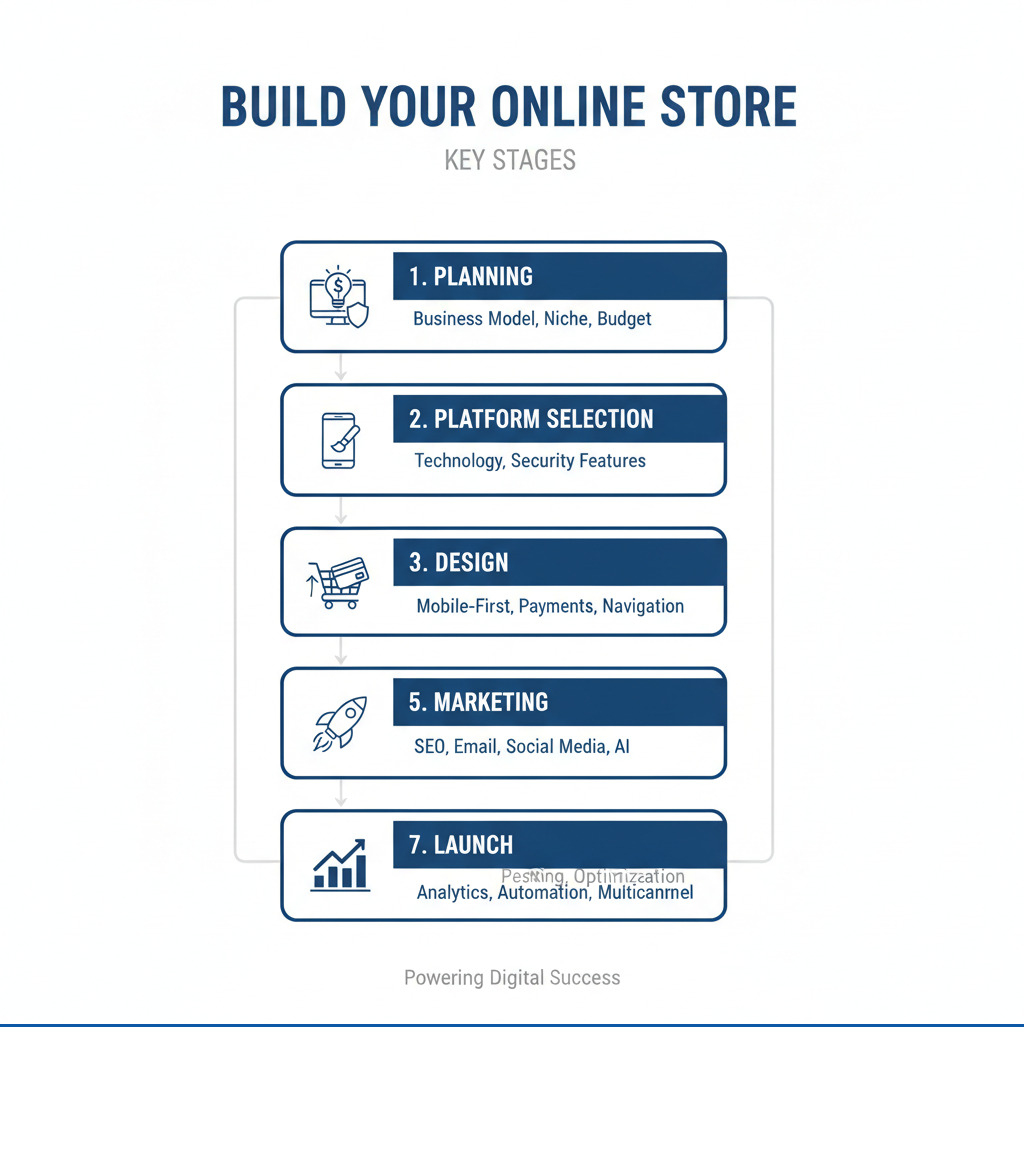
Planning Your E-commerce Business: The First Steps
Before picking logo colors or templates, you need a strong foundation for your online business. This planning phase is like creating a blueprint; it saves time, money, and future headaches.
In this stage, you'll define your business model, what you're selling, and who you're selling to. Skipping this can lead to a beautiful site with no visitors or the wrong ones.
Finding Your Niche and Business Model
When I sit down with new clients who want to build e-commerce website projects, my first question is always simple: "What are you selling, and who's buying it?" The answer shapes everything that follows.
Your business model sets how you interact with customers and how money flows through your business. In B2C (Business-to-Consumer), you're selling directly to individual shoppers—think of a boutique selling handmade candles. It's the most common model.
B2B (Business-to-Business) is different. Here, you're selling to other companies, which usually means larger orders, negotiated pricing, and longer sales cycles. If you're considering this route, my team offers wholesale strategy services for the unique challenges of B2B sales.
Then there's D2C (Direct-to-Consumer), where you make your own products and sell them straight to shoppers. This model gives you complete control over your brand and customer relationships, but you're responsible for everything from production to service.
The type of product you sell matters just as much. Physical goods require inventory, packaging, and shipping. Digital products like e-books or courses offer instant delivery and no shipping costs. Subscription models create predictable recurring revenue, whether you're sending monthly snack boxes or providing access to exclusive content.
Your brand identity must be solid before you build. It's more than a logo; it's knowing who you are and what makes you different. Our branding and identity services can help create a consistent presence that connects with your audience.
Market research is key. You need to understand your competitors—what they do well, where they fall short, and how you can stand out. This helps you develop your unique selling proposition (USP): the clear reason someone should buy from you.
Target audience research is more than demographics. You need to understand your customers' needs, pain points, and shopping habits. What problems are they solving? This insight shapes everything from your site design to your marketing.
Finally, choose the right domain name. It's your digital address and should be memorable, easy to spell, and fits your brand.
Budgeting for Your Online Store
"How much will this actually cost?" The answer varies widely based on your needs.
You can start with a modest budget, but knowing all potential costs upfront prevents surprises. Platform fees are usually monthly subscriptions that scale with your sales and features.
Transaction fees can catch new owners off guard. Payment processors charge a small percentage plus a fixed amount for each sale, which adds up as you grow.
Your domain name is a small annual fee. If you use a self-hosted solution, you'll also pay for web hosting, though many all-in-one platforms include this.
Design and development costs can range dramatically. Working with professionals saves time, but if your budget is tight, modern platforms offer templates and drag-and-drop builders.
Don't forget your marketing budget. A great site is useless if no one sees it. You'll need funds for SEO, social media ads, and email marketing. Many businesses spend their whole budget on the site and then have no money left to attract customers.
Also, consider maintenance and ongoing costs for security updates and content refreshes.
View your website as an investment, not an expense. Cutting corners can cost you sales and customer trust. For a broader view on costs, you can explore industry resources like this one.
The good news? You don't need to do everything at once. Start with the essentials, prove your concept, and reinvest your profits into improvements.
How to Build an E-commerce Website: Choosing Your Platform and Design
Once you have your business plan, it's time to choose the right tools and design for your online store. This is where the rubber meets the road!
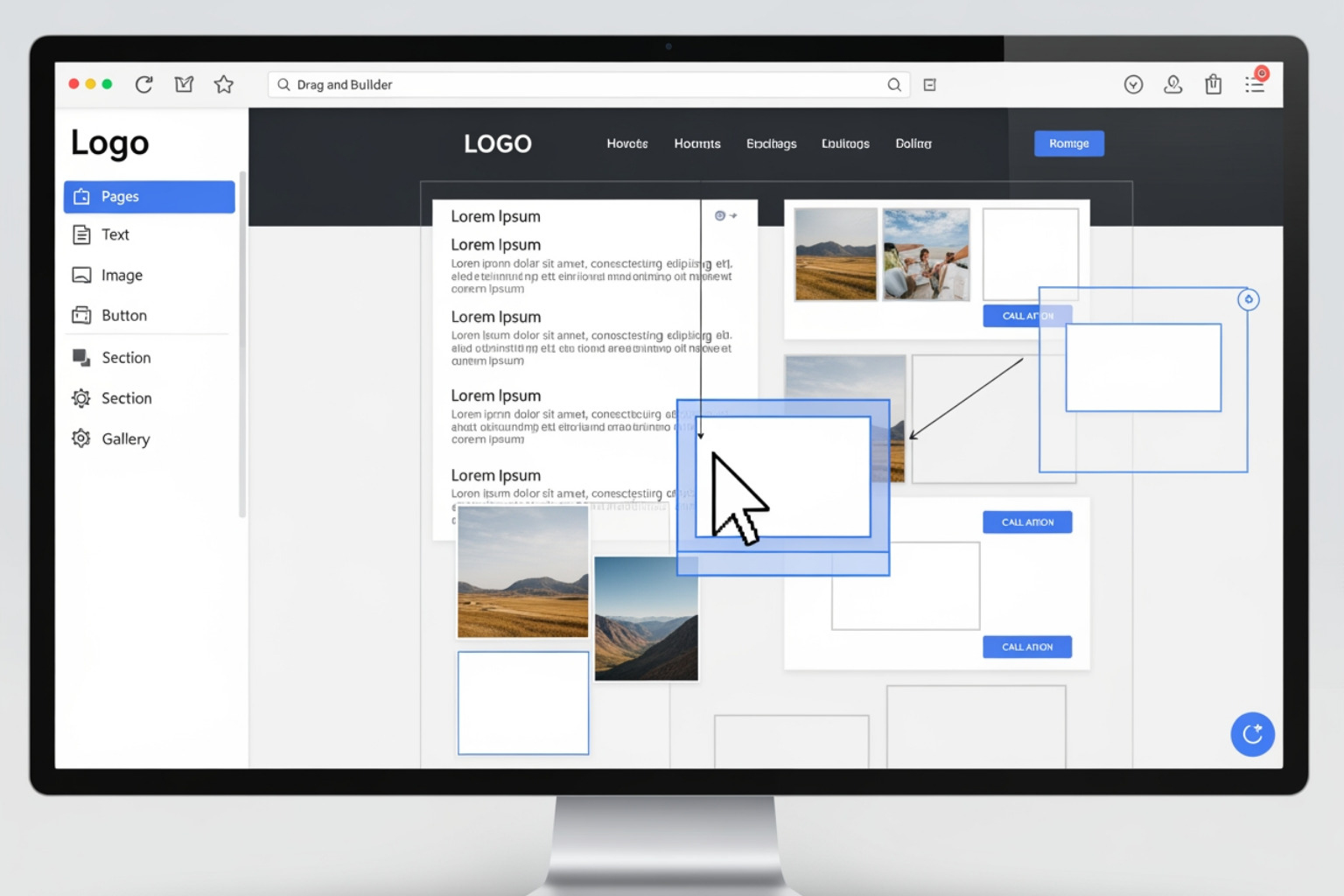
Choosing the right e-commerce platform is a very important decision. It's the foundation of your digital store, and getting it right makes everything easier.
My team and I specialize in Shopify, an all-in-one platform that I believe offers the best balance of power and simplicity for most businesses. You need a platform that won't limit your growth.
When choosing a platform, scalability is key. Can it handle traffic spikes? Can it support a growing product catalog? Your site needs to process orders smoothly during your biggest sales, not crash.
Security is equally very important. Look for PCI DSS compliance to protect customer payment data. A security breach can destroy trust overnight. Integrations also matter—your platform should connect with your marketing, shipping, and accounting tools.
The best platforms offer flexible, easy-to-use themes. You want to reflect your brand without hiring a developer for every small change. Built-in marketing tools for SEO, email, and social media also save you from managing multiple platforms.
My team offers Shopify setup services to get you running efficiently, handling the technical details so you can focus on your business.
Here's something that might surprise you: visitors decide whether to stay on your e-commerce site or leave in just 50 milliseconds. That's faster than a blink! Your website design isn't just about looks—it's about creating an immediate sense of trust and ease that makes visitors want to shop.
Key Steps to Build an E-commerce Website from Scratch
I walk clients through a proven process to build an e-commerce site from scratch. It starts with choosing your platform—as I mentioned, Shopify is a solid choice for most businesses.
Next, select a theme. Professional themes provide a solid, mobile-friendly foundation. Then you customize your design by adjusting colors, fonts, and layouts to highlight your products.
Adding products comes next—upload high-quality images, write helpful descriptions, and set up pricing and inventory.
Then you'll set up payment processing by integrating secure payment gateways. Most platforms offer their own solution or let you connect third-party options.
Setting up shipping involves setting up your shipping zones, carriers, and rates.
Before launch day, test thoroughly—place test orders, try different payment methods, and check that confirmation emails work correctly.
Finally, you launch your website! If you're considering a switch from another platform, my team can help with platform migration services to ensure a smooth transition.
Design Tips to Build an E-commerce Website That Converts
Good design makes it easy for customers to find what they need and click "Buy Now." Simple navigation is key. Keep your main menu clear and put secondary info like return policies in the footer.
Mobile-first design is a must. With over 60% of site visits from mobile, your site must function flawlessly on small screens.
High-quality images can improve conversions by up to 40%. Show products from multiple angles and in use. Since customers can't touch products online, your images must do the work.
Clear calls-to-action direct customers through their shopping experience. Buttons like "Add to Cart" should stand out and clearly state what happens next.
Brand consistency in colors, fonts, and tone of voice builds recognition.
Finally, trust signals are very important. Display customer reviews, secure payment badges, and an easy-to-find return policy. These elements build confidence in new visitors.
My team's e-commerce UX design services ensure your site doesn't just look good—it turns visitors into loyal customers.
Setting Up Your Store: Products, Payments, and Shipping
With your platform and design ready, it's time to add products and set up a smooth transaction process.

This is where your vision comes to life. How you present products, handle payments, and manage shipping directly affects customer satisfaction and your bottom line. It's like stocking the shelves and setting up the checkout counter of a digital store.
Best Practices for Product Listings
Your product listings are your 24/7 digital sales team. They must be informative and persuasive enough to get that "Add to Cart" click.
Product photography is very important. You need high-resolution photos from multiple angles. Don't just show the product on a white background; show products in use with lifestyle photos. This helps customers picture themselves using your product.
Your product descriptions are also very important. Include detailed specs like dimensions, materials, and care instructions. A great tip is to answer common questions directly in the description, like whether a jacket is waterproof. This reduces customer questions and builds confidence.
Video content is increasingly important. A short clip showing your product in action can really boost conversions. Authentic, clear demonstrations work best.
Don't forget product variants like size and color. Use SKUs (Stock Keeping Units) to track inventory efficiently.
Your pricing strategy also needs careful thought. Consider offering volume discounts, bundles, or sales. Our collateral design services help ensure your product images and descriptions tell a compelling story together.
Handling Payments and Shipping
Payments and shipping are the backbone of your site. Mistakes here can lose customers right at checkout.
Payment gateways are how you accept money. Many platforms, like Shopify, offer built-in options that simplify setup. Your processor must be PCI compliant to protect customer data.
Understand transaction fees. Most processors charge a small percentage plus a fixed amount per transaction. Some platforms add fees for using third-party processors, so do the math.
Offering multiple payment options is important, especially for international shoppers. Options like PayPal can make customers feel more secure.
Shipping can seem overwhelming, but it doesn't have to be. You can use real-time shipping quotes, flat-rate shipping, or weight-based rates. Free shipping, especially over a certain amount, is a powerful draw.
Order fulfillment is the process of picking, packing, and sending products. You can do this in-house or outsource it. For businesses with a physical location, in-store pickup is a great option.
Most platforms let you print shipping labels from your dashboard. My team offers Shopify shipping improvement support to help simplify fulfillment. For businesses with a physical store, our Shopify POS setup creates a seamless experience for both online and in-person shoppers.
Growing Your Business: Marketing, AI, and Integrations
Your site is live—great! Now the real work begins: attracting customers and building a loyal brand. This means smart marketing, using tools like AI, and expanding your reach.
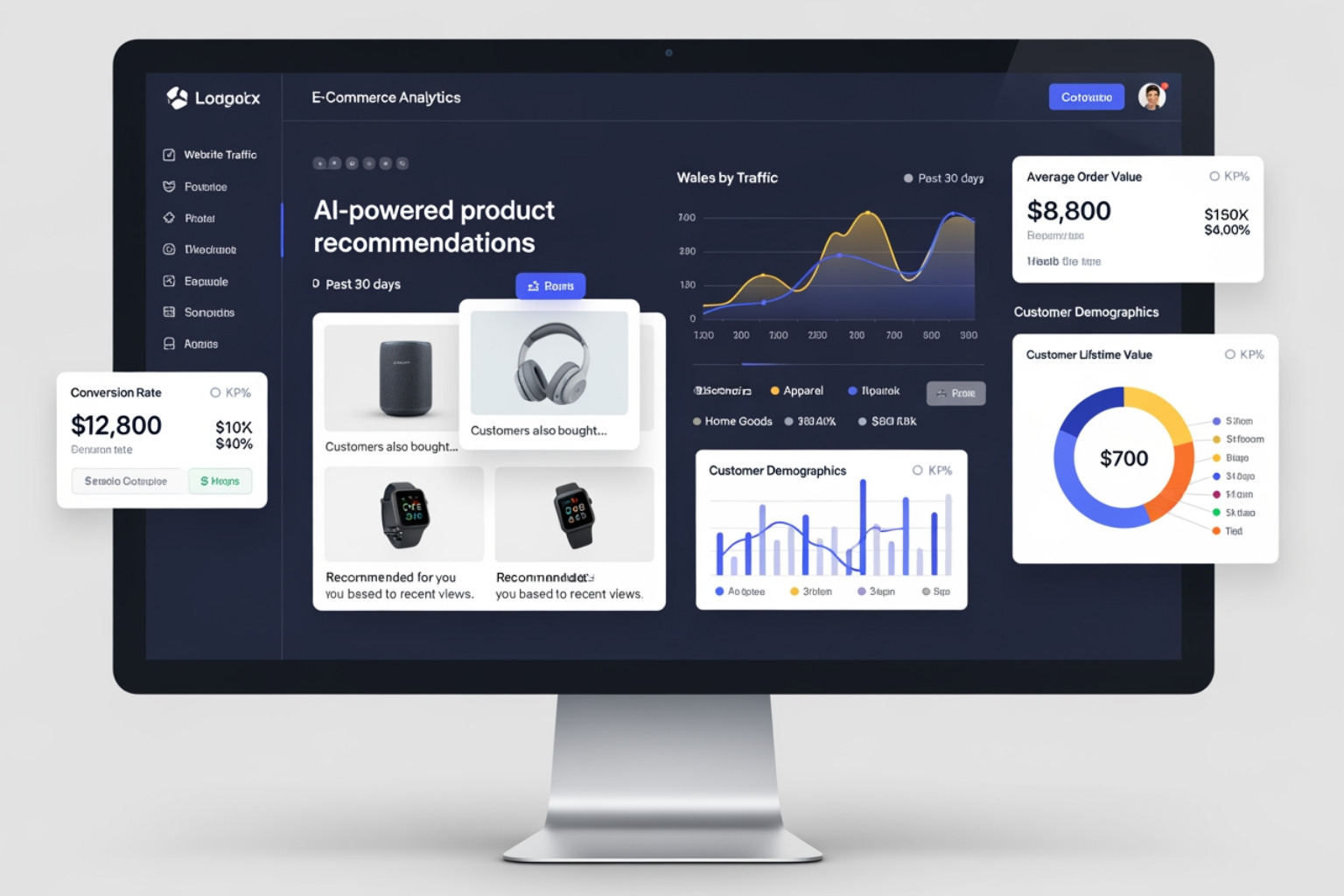
Getting your site live is just the start. The most successful businesses continuously improve how they reach and personalize experiences for customers, making it easy for people to find them anywhere online.
Using AI to Boost Sales
"How can AI be used to improve an e-commerce website and boost sales?" This question comes up constantly, as AI is changing how online businesses operate.
AI-powered recommendations are a great example. Suggesting products based on a customer's browsing history can increase your average order value. It's like having a personal sales associate for every visitor.
Personalized shopping experiences go even further. AI can change what each visitor sees on your site—from promotions to homepage layouts—based on their behavior.
Automated email campaigns offer huge wins. AI can automatically send personalized emails for abandoned carts, product suggestions, or reorder reminders. This is a powerful way to boost customer retention, and it works 24/7.
Chatbots for customer service can handle routine questions around the clock, like "Where's my order?" This frees up your team for more complex issues.
AI product descriptions are also becoming common. These tools can generate unique, SEO-friendly descriptions, saving you hours of writing time.
My team offers Shopify automation services to help clients use these powerful tools without being tech experts.
Expanding Your Reach with Multichannel Selling
"What are the benefits of connecting an e-commerce website with other online marketplaces and social media platforms?" The simple answer: more people see your products, which means more sales.
Your website is your home base, but your customers are elsewhere—on Instagram, Amazon, and Etsy. Meeting them where they already shop is smart.
Selling on social media is huge. Platforms like Instagram and Facebook let customers buy without leaving the app, making the path to purchase much shorter.
Integrating with online marketplaces like Amazon or Etsy exposes your brand to millions of potential customers. My team's marketplace feed management service can keep your inventory synced across all channels.
For businesses with a physical presence, in-person sales with POS systems create a seamless experience. We help with Shopify POS setup to connect your online and offline sales.
For those on a budget, I recommend a planned approach. Don't try to be everywhere. Start with the channels that best fit your audience. Focus on a few key platforms.
Key marketing areas include SEO, which my team can help with through our SEO services to improve your search rankings. Email marketing is a high-ROI channel for keeping your brand top-of-mind. Social media helps you build a community and connect with customers. When you're ready to grow faster, paid social media services can target the right audience.
The key is to start somewhere and keep improving. Combining a solid website with smart marketing, AI, and multichannel selling creates multiple paths for customers to find you.
To Sum Up: Launch and Grow Your Online Brand
Building a successful e-commerce site is an ongoing process of learning and growth. This guide has given you a solid roadmap to create something special.
We've covered defining your business model, budgeting, choosing a platform like Shopify, designing a converting store, setting up products, payments, and shipping, and marketing with smart approaches like AI.
Above all, focus on the customer. Every decision, from your "Add to Cart" button color to your return policy, should improve the customer experience. When you build your site with the customer at the center, you're already ahead of the competition.
My advice? Don't wait for perfection. Launch your site, start selling, and improve as you go. You'll learn more in your first month of sales than in six months of planning. Listen to customers, watch your analytics, and keep refining.
The online retail world moves fast. Stay curious, keep learning, and don't be afraid to try new things. That's how successful brands stay relevant and continue to grow.
At First Pier, we've spent two decades helping businesses in Portland, ME, and across the country build thriving online stores. We create strong foundations that support your brand and drive real growth. Whether you're starting out or scaling up, we're here to help.
If you're ready to turn your e-commerce vision into reality, I'd love to hear from you. Contact our award-winning Shopify e-commerce agency and let's talk about how we can help your business thrive in the digital marketplace.





.png)
.png)

