





Summary
- Ecommerce shipping and operations include order processing, inventory control, carrier selection, packaging, tracking, and returns.
- Shipping cost, delivery speed, and reliability directly affect conversion rates, repeat purchases, and profit margins.
- Software, automation, and clear workflows reduce errors, shorten handling time, and lower customer support volume.
- Multi-location inventory, 3PLs, and local carriers can cut transit times and shipping costs for many brands.
- Clear policies and accurate data on shipping, returns, and delivery expectations reduce disputes and support tickets.
Why Ecommerce Shipping & Operations Matter More Than Ever
Ecommerce Shipping & Operations is the backbone of getting products from your warehouse to your customer's door. It includes order fulfillment, inventory management, carrier selection, packaging, labeling, and tracking.
Here's what you need to know:
- Core Components: Order receiving, processing, picking, packing, labeling, and last-mile delivery
- Strategic Elements: Choosing carriers, setting shipping rates, managing customer expectations, and handling returns
- Tools and Systems: Warehouse management systems (WMS), shipping software, automation, and distributed inventory
- New Priorities: Sustainable packaging, risk management, and the use of tools like AI and IoT
The stakes are high. 48% of U.S. adults abandon their carts due to high shipping fees, and 85% of consumers won't reorder from a retailer after a poor delivery experience. Yet 42% of shoppers expect two-day shipping, and 74% value real-time package tracking. The hard part is meeting these expectations while staying profitable.
For ecommerce shoppers, the shipping process seems simple: they place an order, it's mailed, and it arrives in a few days. For ecommerce companies, the reality is more complex. Behind every "Order Confirmed" email is a chain of checks and handoffs—inventory checks, packaging, carrier selection, tracking updates—that all need to happen in the right order and on time.
Shipping isn't just logistics. It touches brand loyalty, profit margins, and day-to-day operations all at once. Customers expect fast, accurate, and affordable deliveries. If you miss on any of those, you risk lost repeat business and negative reviews. When you get it right, fulfillment supports growth, lowers support costs, and gives you room to plan instead of react.
I'm Steve Pogson, and here at First Pier, we've spent over two decades helping Shopify merchants build Ecommerce Shipping & Operations systems that can handle real-world volume. We work on everything from warehouse layout and automation to carrier contracts and tracking emails, and we see the same pattern: the businesses that treat shipping as a core system grow more steadily and with fewer crises.
The Foundation: Core Components of Ecommerce Shipping Operations
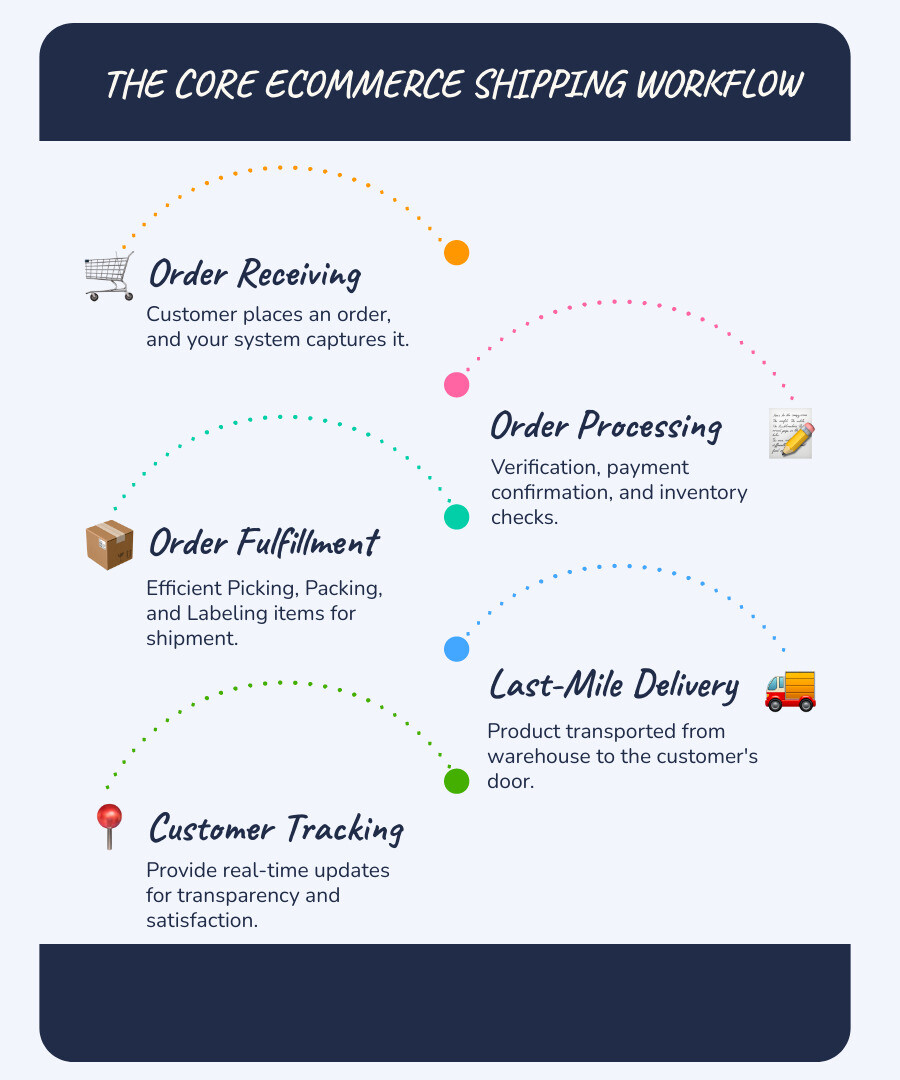
At its core, Ecommerce Shipping & Operations involves a series of interconnected stages to get a product from your inventory to your customer's hands. Think of it as a sequence where each step needs to happen precisely and efficiently. The main stages are:
- Order Receiving: This is where it all begins. A customer places an order on your online store, and your system captures it.
- Order Processing: Once received, the order is verified. This includes checking payment, ensuring the item is in stock, and preparing it for the next step.
- Order Fulfillment: This is the umbrella term for everything from when the order is ready to be picked to when it leaves your facility.
- Picking: Your team or automated system locates the specific items in the warehouse that were ordered.
- Packing: Items are carefully placed into appropriate packaging, often with protective materials.
- Labeling: Shipping labels, complete with addresses, tracking information, and carrier details, are generated and applied.
- Last-mile Delivery: This is the final, crucial leg of the journey, where the package travels from a local distribution center directly to the customer’s doorstep.
The Order Fulfillment Workflow: From Warehouse to Customer
The fulfillment workflow begins after an order is received and processed. Efficient order management systems (OMS) are key here, automatically verifying payment and checking stock. This prevents frustrating "phantom inventory" issues where an item appears available online but isn't actually in stock.
Once an order is ready, the picking and packing process begins. Picking involves retrieving the correct items from your warehouse. There are various methods, like batch picking (grouping similar orders), zone picking (dividing your warehouse into sections), or wave picking (scheduling picking runs based on carrier pickup times). The goal is speed and accuracy.
Next comes packing. This is more than just putting items in a box. It involves choosing the right size container and using appropriate dunnage (protective materials like bubble wrap, packing peanuts, or air pillows) to keep products safe during transit. Smart packaging decisions, like using the smallest possible box, can also lower shipping costs. This is also where you might consider kitting vs. bundling. Kitting involves pre-assembling individual items into a single, ready-to-ship package or kit before an order is placed (e.g., a "starter kit"). Bundling, on the other hand, is when multiple separate items are sold together as a single unit, but are picked and packed only after an order is placed.
Finally, label generation is critical. These labels contain all the necessary information for the carrier to transport the package and for your customer to track it. Automated label printing can drastically reduce human errors and speed up your workflow. If you're running a Shopify store, getting your Shopify Setup services right, including shipping configurations, is foundational to an efficient process.
Domestic vs. International Shipping: Key Differences
While the core components of shipping remain, the process changes significantly when you cross borders.
Local shipping (or domestic shipping) within a country is generally straightforward. You deal with national carriers, familiar regulations, and typically shorter transit times. My experience working with local businesses around Portland, Maine, shows that even here, local courier services can offer a competitive edge for faster, localized deliveries.
International shipping, however, is a different beast altogether. It introduces a complex web of considerations:
- Customs Declarations: You'll need to accurately declare the contents and value of your package for customs clearance. Incorrect declarations can lead to delays, fines, or even seizure of goods.
- Tariffs and Duties: These are taxes imposed by the destination country on imported goods. Deciding whether the customer pays (DDU - Delivered Duty Unpaid) or you pay (DDP - Delivered Duty Paid) can impact customer satisfaction and conversion rates.
- Cultural Nuances: Even something as simple as how an address is formatted or how delivery notifications are perceived can vary greatly by country. Understanding these can prevent miscommunications.
- Global Trade Agreements: These agreements dictate what can be shipped where, and under what conditions. Staying informed about shifting regulations is crucial for compliance.
Handling these complexities is a necessary step for international expansion. For many of my clients, robust Shopify Development services are essential to configure international shipping rules, currency conversions, and localized customer experiences.
Planning Your Shipping: Costs, Carriers, and Customer Expectations

Your shipping plan directly affects profitability, customer satisfaction, and brand perception. It requires careful consideration of shipping costs, your pricing strategy, and customer expectations. Choosing the right carrier and offering flexible shipping options are key decisions.
How Shipping Costs Impact Your Business and Customers
Shipping costs are a major factor in customer decisions. Research shows that 48% of U.S. adults abandon their carts due to high shipping fees, taxes and other extra costs. This statistic alone highlights how critical it is to manage and communicate these costs effectively.
When it comes to your pricing strategy, you have a few options for how to present shipping costs:
- Free Shipping: This is often considered the "holy grail" for customers. While it's not truly free (someone always pays!), you can build the cost into your product prices or offer it conditionally (e.g., "Free shipping on orders over $X"). This can significantly increase average order value.
- Flat-Rate Shipping: A fixed charge for shipping, regardless of the order size or weight. This works best if your products are relatively uniform in size and weight. It offers predictability for customers.
- Real-Time Carrier Rates: Your store integrates with carrier APIs to calculate exact shipping costs at checkout based on package weight, dimensions, destination, and chosen service. This provides transparency and allows customers to pick their preferred speed and price.
Balancing these options requires deep understanding of your margins and customer behavior. For brands offering subscription boxes, for instance, a well-thought-out Subscription Strategy Execution services can incorporate shipping costs into the recurring price, offering predictability for both you and your subscribers.
Choosing the Right Shipping Carriers
Selecting the right shipping carrier is a decision that impacts cost, speed, and reliability. There isn't a one-size-fits-all answer; the "best" carrier depends on your specific needs, product type, and customer base.
You'll typically look at major carriers like USPS, UPS, FedEx, and DHL. Each has its strengths:
| Carrier | Primary Strengths | Considerations |
|---|---|---|
| USPS | Affordable for small, light packages; delivers to P.O. boxes | Slower transit times for standard services; less detailed tracking |
| UPS | Dependable for various package types; strong tracking | Can be more expensive for lighter packages; residential surcharges |
| FedEx | Fast delivery, reliable tracking; good for time-sensitive shipments | Often higher cost than USPS; can have surcharges |
| DHL | Excellent for international shipping; strong global network | Primarily international focus; less common for domestic US |
You might also consider regional carriers, especially for localized deliveries around areas like Portland, ME. These carriers can sometimes offer more competitive rates or faster service within a specific geographic area.
When making your choice, think about:
- Cost: Compare rates for different package sizes, weights, and destinations. Use tools like the USPS Shipping Calculator or FedEx Shipping Calculator to get estimates.
- Speed: Does the carrier meet your desired delivery times?
- Reliability: What's their track record for on-time delivery and package handling?
- Services: Do they offer tracking, insurance, pickup services, or special handling for fragile items?
As your volume grows, you might be able to negotiate rates directly with carriers for better pricing.
Meeting Customer Expectations for Speed and Flexibility
Customers today expect more than just delivery; they expect options and transparency. The pressure for speed is real: 42% of shoppers expect two-day shipping, largely influenced by ecommerce giants. However, it's a delicate balance, as 32% of consumers say the cost of shipping is more important than delivery speed and convenience.
To meet these diverse needs, offering flexible shipping options is key:
- Same-Day Delivery: For urgent purchases, some customers are willing to pay a premium. 88% of customers are willing to pay more for same-day delivery. This can be a strong differentiator, though it requires robust local logistics.
- Expedited Shipping: Options like overnight or two-day delivery provide a balance between speed and cost for many customers.
- Standard Shipping: The most cost-effective option, typically taking 3-7 business days.
- In-Store Pickup/Curbside Pickup: If you have a physical presence, this can save customers shipping costs and drive foot traffic. It's also incredibly convenient.
- Choice of Delivery Date: 72% of consumers want the ability to choose delivery dates. This gives customers more control and helps prevent missed deliveries.
Clearly displaying these options on your product pages and at checkout is essential. My work often involves helping clients design their Ecommerce UX Design services to make these choices intuitive and transparent, reducing friction and improving conversion.
Improving Your Ecommerce Shipping & Operations with Technology and Best Practices
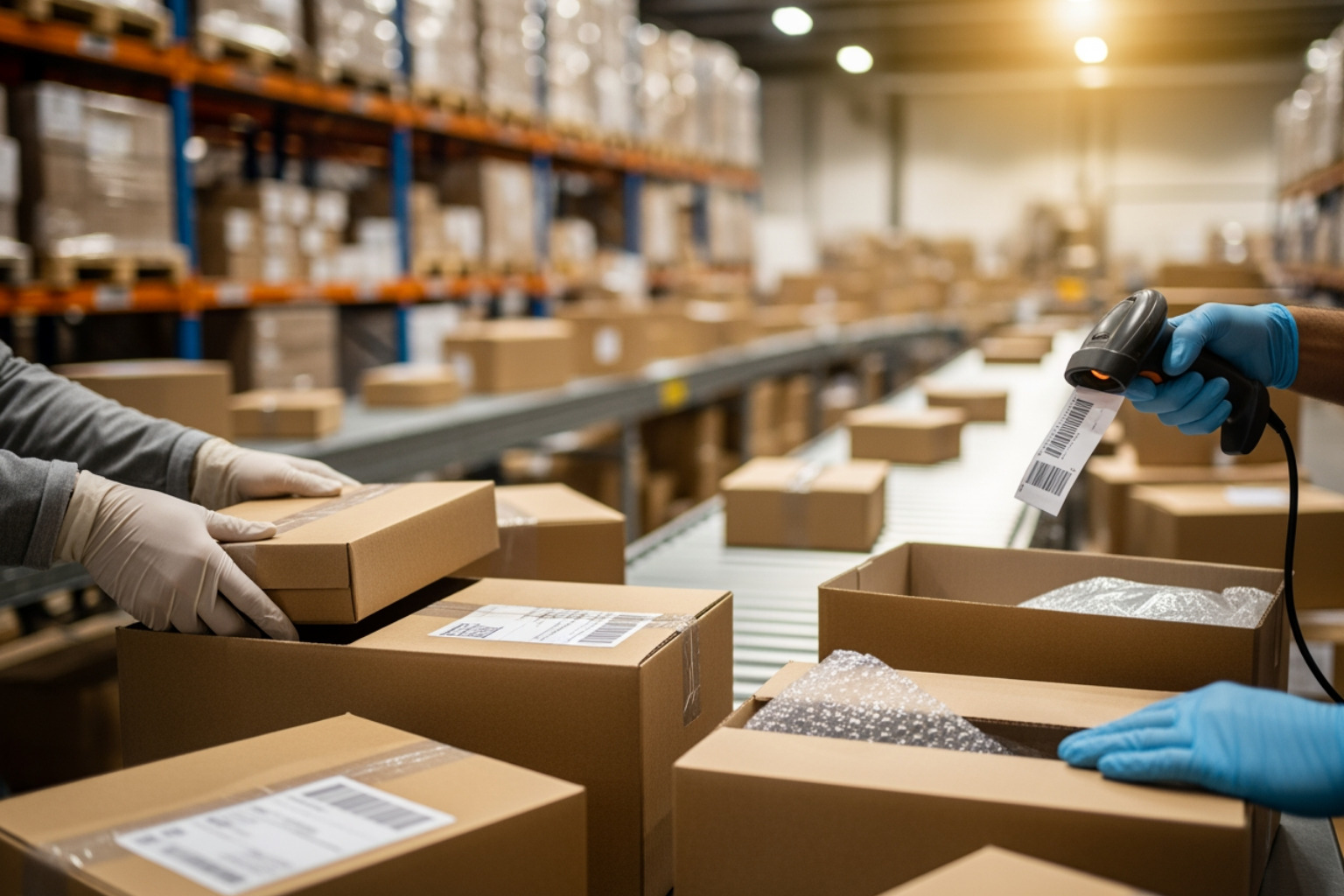
A basic shipping process is not enough. To stay competitive, you need to improve your Ecommerce Shipping & Operations. This means using automation and specialized shipping software, managing inventory distribution, and handling returns. It also involves adopting sustainable practices that are important to today's consumers.
The Role of Automation and Software in Ecommerce Shipping & Operations
Manual shipping processes are prone to errors and take up valuable time. This is where automation and specialized shipping software are most useful.
The benefits of shipping software are significant:
- Automated Order Processing: Orders flow directly from your store to your fulfillment system, reducing manual data entry and errors.
- Label Printing: Generate and print shipping labels in bulk, complete with carrier information and tracking numbers, significantly speeding up the packing stage.
- Carrier Rate Comparison: Many tools compare rates across multiple carriers in real-time, helping you find the most cost-effective option for each shipment.
- Tracking and Notifications: Automatically send tracking updates to customers, keeping them informed and happy.
- Warehouse Management System (WMS): For businesses with their own warehouses, a WMS provides real-time visibility into inventory, guides picking routes, and helps manage warehouse staff more efficiently.
One of my favorite benefits is how automation helps in reducing WISMO (Where Is My Order?) inquiries. These are the most commonly received customer support questions in ecommerce, making up 18% of incoming requests on average. By providing proactive tracking and clear communication, automation cuts down on these time-consuming inquiries, freeing up your customer service team. This is why I often recommend Shopify Automation services to my clients, ensuring their shipping processes are as automated and efficient as possible.
Strategic Inventory Management and Distribution
Where you store your inventory can dramatically affect your shipping costs and delivery times.
- Multi-Warehouse Inventory: Storing products in multiple locations, ideally closer to your customer base, can significantly reduce transit times and shipping costs, especially for ground shipping. For example, a business in Portland, ME, might benefit from a warehouse on the West Coast to serve customers there faster.
- 3PL Providers: Partnering with a Third-Party Logistics provider means outsourcing your warehousing, fulfillment, and shipping. They often have networks of warehouses and can use their volume to get better shipping rates.
- Dropshipping: This model involves selling products without holding any inventory yourself. When a customer places an order, you pass it to a third-party supplier who ships directly to the customer. Major players like Wayfair got its start as a dropshipping-only business. It's a great way to expand your product offering without the overhead of managing inventory.
- Demand Forecasting: Using historical sales data and market trends to predict future demand helps you decide where to place inventory and avoid stockouts or overstocking.
Effective inventory management, combined with smart distribution, is essential for efficient Ecommerce Shipping & Operations. It's a key area where our Integration & Operations services focus, helping businesses keep their inventory data consistent across all channels and locations.
Mastering Reverse Logistics and Customer Returns
Returns are an unavoidable part of ecommerce, and how you handle them (your reverse logistics) can significantly affect customer loyalty. A messy return experience can turn customers away for good.
Key elements of effective returns management include:
- Clear Returns Process: Make it easy for customers to initiate a return. This means clear instructions, readily available return labels, and transparent communication about the process.
- Customer Satisfaction: An easy return experience can turn a potentially negative interaction into a positive one, building trust and potentially leading to future purchases. Many customers even consider free returns a hallmark of a great experience.
- Restocking: Once returned, products need to be inspected, sorted, and either restocked, refurbished, or disposed of. Efficient processes here are important to keep your inventory accurate.
- Return Policy Best Practices: Your policy should be easy to find, clear, and fair. Consider offering automated return label generation and self-service portals. If you partner with a fulfillment provider, it's important to understand their returns process to ensure returned products are reinjected into the facility efficiently.
Managing returns well is a critical aspect of Enhancing Customer Retention & Loyalty solutions. It shows you stand behind your products and value your customers.
Advanced Topics: Risk, Sustainability, and the Future of Shipping
As ecommerce changes, so do the requirements for Ecommerce Shipping & Operations. I often discuss managing shipping risks, using sustainable practices, and preparing for new technologies with clients.
Managing Risk with Shipping Insurance and Security
Shipping comes with inherent risks, from lost or damaged packages to theft. Risk management is about protecting your business and your customers.
- Shipping Insurance Benefits: Insurance provides a financial safety net. It covers the cost of goods if a package is lost, stolen, or damaged in transit. This offers peace of mind to both you and your customers and shows a commitment to satisfaction.
- Carrier vs. Third-Party Insurance: Carriers often include basic insurance up to a certain value, but for higher-value items, you might need to purchase additional coverage directly from the carrier or through a third-party provider. Services like Route or ReturnGO offer broader benefits, sometimes even replacing lost packages or handling exchanges.
- Porch Piracy: This is a growing concern for customers. Over 119 million packages were stolen in 2023. To counter this, providing real-time tracking, delivery notifications, and allowing customers to set specific delivery times can help them retrieve packages promptly.
Transparent communication about insurance options and security measures builds customer satisfaction and trust.
Implementing Sustainable Shipping Practices
Consumers are increasingly conscious of their environmental impact, and this extends to their online purchases. Adding sustainability into your Ecommerce Shipping & Operations isn't just good for the planet; it's good for business. Nearly 80% of consumers say they'd be willing to wait at least one day for a package if that meant it was shipped sustainably, and 88.8% agree that companies should offer an 'eco-friendly shipping' option.
Key ways to use sustainable shipping include:
- Eco-Friendly Packaging: Opt for materials that are recyclable, compostable, or made from recycled content. Companies like Hero Packaging and Noissue offer great alternatives to traditional plastics.
- Route Planning: Using software to plan the most efficient delivery routes reduces fuel consumption and emissions.
- Carbon-Neutral Shipping: Some carriers or third-party services offer programs to offset the carbon emissions generated by your shipments.
- Consolidated Shipments: Encourage customers to combine purchases into a single order to reduce the number of packages sent.
Highlighting your eco-friendly efforts can be a significant differentiator, attracting environmentally conscious customers.
The Future of Ecommerce Shipping & Operations
The future of Ecommerce Shipping & Operations is being shaped by new technology.
- Emerging Technologies: New technologies are appearing that make shipping faster and more efficient.
- AI in Logistics: Artificial intelligence is already playing a role in demand forecasting, helping businesses predict what and when customers will buy, and helping with smarter inventory placement. It also helps with route planning and identifying potential delays before they happen.
- IoT for Tracking: Internet of Things (IoT) devices can be embedded in smart packaging to monitor conditions like temperature and humidity during transit, which is crucial for delicate or perishable goods.
- Drones and Autonomous Vehicles: While still in early stages for widespread commercial use, drones and autonomous ground vehicles show potential for last-mile delivery, possibly offering faster and more cost-effective deliveries in certain areas.
- Post-Delivery Analytics: Beyond just tracking, analyzing data after delivery shows carrier performance, customer satisfaction with delivery, and areas for improvement. This feedback is essential for improving your plan.
Using new technology is how businesses stay competitive. For my clients, using tools for Ecommerce Analytics & Analysis services is fundamental to understanding performance and preparing for what's next.
Frequently Asked Questions about Ecommerce Shipping
I often get asked specific questions about Ecommerce Shipping & Operations. Here are some common ones that I can help with:
What are the most common (and costly) mistakes in shipping operations?
In my experience, many businesses fall into common traps that drain resources and frustrate customers:
- Inaccurate Labeling: Incorrect addresses, missing tracking numbers, or improperly formatted labels lead to delays, misdeliveries, and additional carrier charges.
- Poor Inventory Tracking: Not knowing exactly what you have in stock, or where it is, causes overselling, backorders, and delays in fulfillment. This is often tied to "phantom inventory" issues.
- Not Insuring Packages: Especially for high-value items, skipping insurance is a gamble. A lost or damaged package without insurance means you're absorbing the full cost.
- Unclear Shipping Policies: Ambiguous or hard-to-find information about shipping costs, delivery times, and return procedures leads to customer confusion and higher support inquiries.
- Ignoring Dimensional Weight: Carriers often charge based on a package's size (dimensional weight) rather than just its actual weight. Using oversized boxes for small items can result in unexpectedly high shipping fees.
How can a small business offer competitive shipping rates?
It can feel tough to compete with large retailers, but small businesses have several options:
- Negotiating with Carriers: Even with lower volume, reaching out to carriers and discussing your specific needs can sometimes yield better rates or service terms.
- Using Regional Carriers: For local deliveries, regional carriers can often provide more competitive rates and faster service than national giants. This is particularly true for businesses operating in areas like Portland, ME.
- Offering Free Shipping Thresholds: Instead of universal free shipping, offer it for orders over a certain amount. This incentivizes larger purchases and helps you absorb the cost.
- Using Shipping Software to Find the Best Rates: Tools that compare rates across multiple carriers instantly can ensure you're always getting the best deal for each package.
- Using the Right Packaging: As I mentioned before, using the right-sized box and minimizing dunnage reduces both actual and dimensional weight, cutting costs.
What is the difference between shipping and fulfillment?
This is a great question I get all the time! They're related but not interchangeable:
- Fulfillment as the Entire Process: Think of fulfillment as the entire process your product goes through from the moment a customer clicks "buy" to when it arrives at their door. This includes order receiving, payment processing, inventory management, picking, packing, labeling, and the actual transportation. So, shipping is a part of fulfillment.
- Shipping as the Transit Part: Shipping specifically refers to the physical transportation of the package by a carrier from your warehouse or fulfillment center to the customer. It's the "on the road" portion of the process.
- Role of 3PLs: Third-Party Logistics (3PL) providers often handle the entire fulfillment process, including shipping. They manage warehousing, inventory, picking, packing, and then hand off to a shipping carrier.
In short, all shipping is fulfillment, but not all fulfillment is shipping.
How an Agency Can Help Your Shipping Operations
This article has covered the components of Ecommerce Shipping & Operations, including costs, carriers, customer expectations, and new logistics technology. The complexity of modern logistics means that managing this aspect of your business is no longer a simple task; it requires careful planning, knowledge of technology, and the ability to adapt.
For many growing brands, the challenge isn't just understanding these concepts, but putting them into practice while also running the rest of their business. This is where expert guidance can help. Here at First Pier, we have helped many Shopify merchants with these issues, helping them build efficient shipping plans that can grow with their business and keep customers satisfied. We understand the nuances of integrating systems, negotiating with carriers, and creating good customer experiences.
To build an efficient shipping operation for your Shopify store, explore our Integration & Operations services. I'm confident we can help you improve your shipping process.





.png)
.png)

