


Why Expert Ecommerce Web Design and Development Matters
Summary
- Ecommerce Web Design & Development is the creation of online stores for businesses to sell goods and services.
- The process includes user interface and experience design, front-end and back-end coding, and platform integration.
- Key aspects include mobile responsiveness, secure payment systems, high-quality product displays, and search engine optimization.
- Businesses can build stores using hosted platforms, CMS extensions, or custom development.
- A typical project includes planning, design, development, testing, launch, and ongoing site maintenance.

Ecommerce Web Design & Development involves building online stores where customers can directly buy products or services. The process combines two distinct disciplines: web design, which covers the visual layout and user experience (UX), and web development, which handles the back-end code, server logic, and payment integrations.
With nearly 15% of all sales happening online, a well-made online store is a requirement for growth. A planned Ecommerce Web Design & Development approach helps your online store do more than just process transactions—it builds a trustworthy brand and gives customers a direct, reliable way to buy from you.
A functional online store attracts visitors and converts them into buyers by offering a clear path to purchase and a convenient alternative to physical retail.
He leads a team that builds and improves high-performance Shopify stores for growing brands.
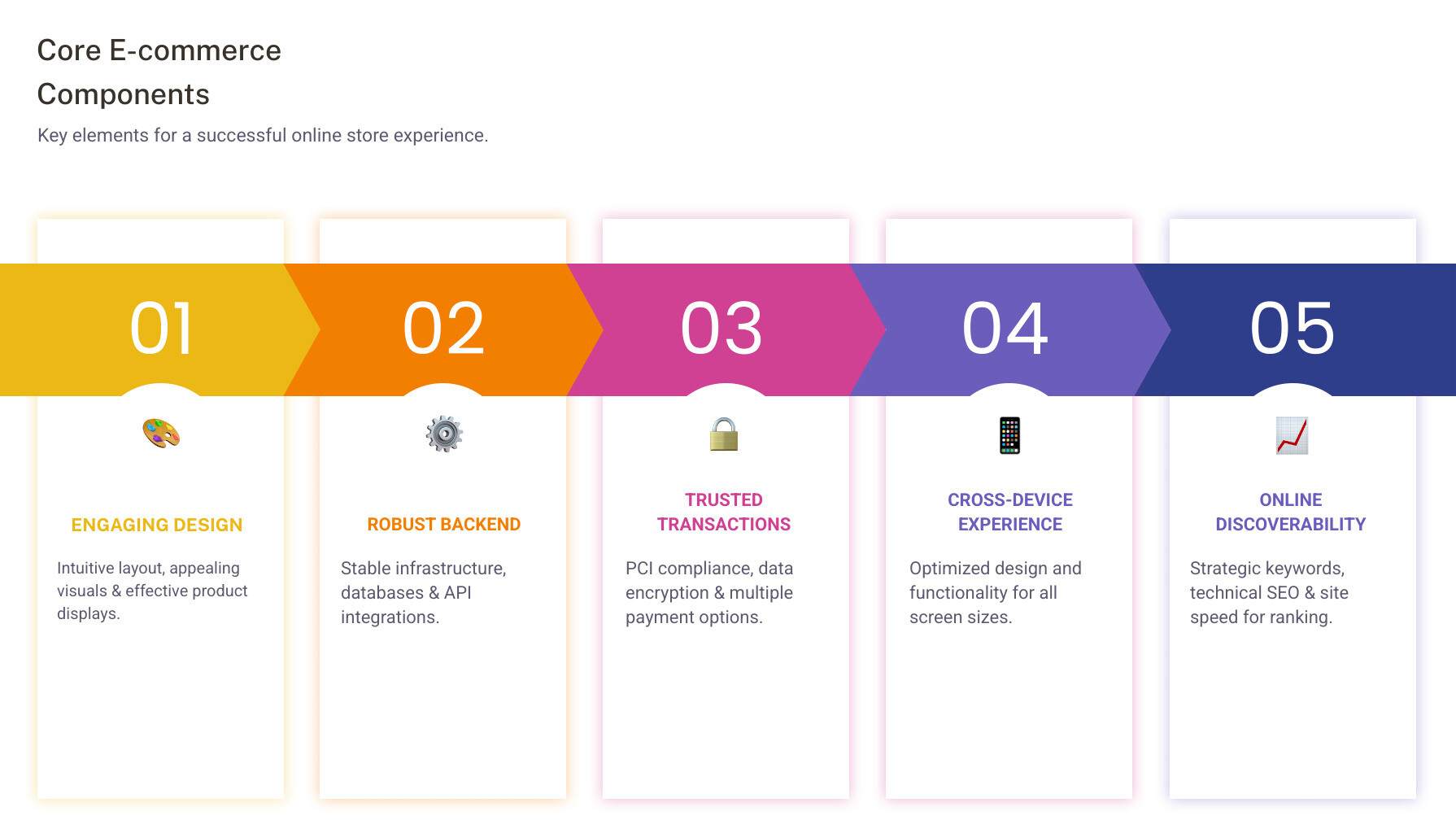
Foundations: Understanding E-commerce Design and Development
E-commerce development is the technical construction of an online store, while design is the plan for its look, feel, and user flow. Both are required to build a site that appears professional and functions correctly, guiding visitors toward a purchase. A well-built site builds trust and provides the convenience shoppers expect.
What is E-commerce Website Development?
At its core, Ecommerce Web Design & Development is the process of building an online platform for selling products or services directly to customers. The goal is to create a storefront that functions efficiently and is straightforward to use. This is different from a standard business website, which might only provide information. An e-commerce site needs specific functions to handle transactions and product management.
When I talk about e-commerce website development, I am referring to the creation of a system that includes several layers of functionality:
- Web Server for a Storefront: The foundation where your online store resides, making it accessible to customers 24/7.
- Payment Processing: A secure system to handle transactions, allowing customers to pay with credit cards, digital wallets, or other options.
- Inventory Database: A system to track all your products, quantities, and variations to manage stock and prevent overselling.
- Dispatch System: The logistics for sending products to customers, including order fulfillment, shipping calculations, and tracking.
- Product Catalogs: The organization of products into categories with detailed information for each item.
- Shopping Cart Functionality: A feature that lets customers collect items they wish to purchase before checkout.
- Order Processing: The workflow from when an order is placed until it is fulfilled and shipped.
Good e-commerce development provides convenience, allowing people to buy from home. This convenience can lead to higher conversion rates and helps a business expand its reach from local to global.
For businesses looking for specialized solutions, particularly on platforms like Shopify, I often recommend exploring dedicated Shopify development services. These services are designed to build out the specific features and integrations a Shopify store needs.
The Core of Ecommerce Web Design & Development: Front-End vs. Back-End
To understand Ecommerce Web Design & Development, it helps to break it down into two main parts: the front-end and the back-end. If you think of building a car, the front-end is what you see and interact with, while the back-end is the engine that makes it run.
Web Design (Front-End) focuses on the visual and interactive elements that users experience directly. This is everything a customer sees and interacts with when they visit your online store. My team focuses on making this aspect clear and easy to navigate. Key elements include:
- Visuals: The overall aesthetic, including colors, fonts, images, and branding.
- User Experience (UX): How users feel when interacting with your site. This involves easy navigation, clear calls-to-action, and a logical flow.
- User Interface (UI): The specific elements users interact with, such as buttons, menus, and forms.
- Layout: The arrangement of content on each page, ensuring information is presented clearly.
- Branding: Incorporating your brand's identity into the design to create a consistent experience.
Web Development (Back-End) deals with the infrastructure that makes the front-end functional. This is where the core logic resides, ensuring all systems work together correctly. This includes:
- Server-side logic: The code that runs on the web server, processing requests and managing data.
- Databases: Storage for all your product information, customer data, and orders.
- Application Programming Interfaces (APIs): Connectors that allow different software systems to communicate, such as your store with payment gateways or shipping services.
- Website functionality: All the features that make your e-commerce site work, from managing inventory to processing payments.
While web design makes your site appealing and easy to use, web development makes it functional. Both are crucial for a successful online store. For those interested in how design affects user interaction in e-commerce, I often point to resources on ecommerce UX design services.
Anatomy of a High-Converting Store
A high-converting e-commerce website combines specific design elements, clear functionality, and useful content. Each part, from the homepage layout to the checkout button, must be planned to guide the user toward making a purchase. Missing any of these core parts can lead to user frustration and lost sales.
Essential Components for Success
When I help a business build an online store, I focus on several key elements that are proven to increase sales. These components work together to create a functional and clear path to purchase.
- User-friendly Navigation: Customers need to find what they are looking for quickly. A clear, intuitive navigation system, like that on the Gymshark website, allows people to browse categories and use search functions without confusion. Disorganized design is a major deterrent.
- Clear Calls-to-Action (CTAs): Buttons and links that clearly tell customers what to do next, whether it's "Add to Cart," "Buy Now," or "Learn More." These should be visible and direct.
- High-quality Product Photography: Since customers cannot physically inspect products, high-quality images are critical. I advise clients to use clear, well-lit photos that show products from multiple angles, with zoom options to view details. For example, the Kulala website uses a clean design, well-chosen colors, and modern typography to help visitors focus on the products.
- Detailed Product Descriptions: Beyond images, customers need information. Product descriptions should include clear titles, prices, and all relevant details. Managing stock information and grouping items into collections also makes browsing easier.
- Customer Reviews: Displaying customer reviews and ratings builds trust and helps potential buyers make informed decisions.
- Search Functionality: A good search bar helps customers quickly find specific items, especially on sites with large product catalogs.
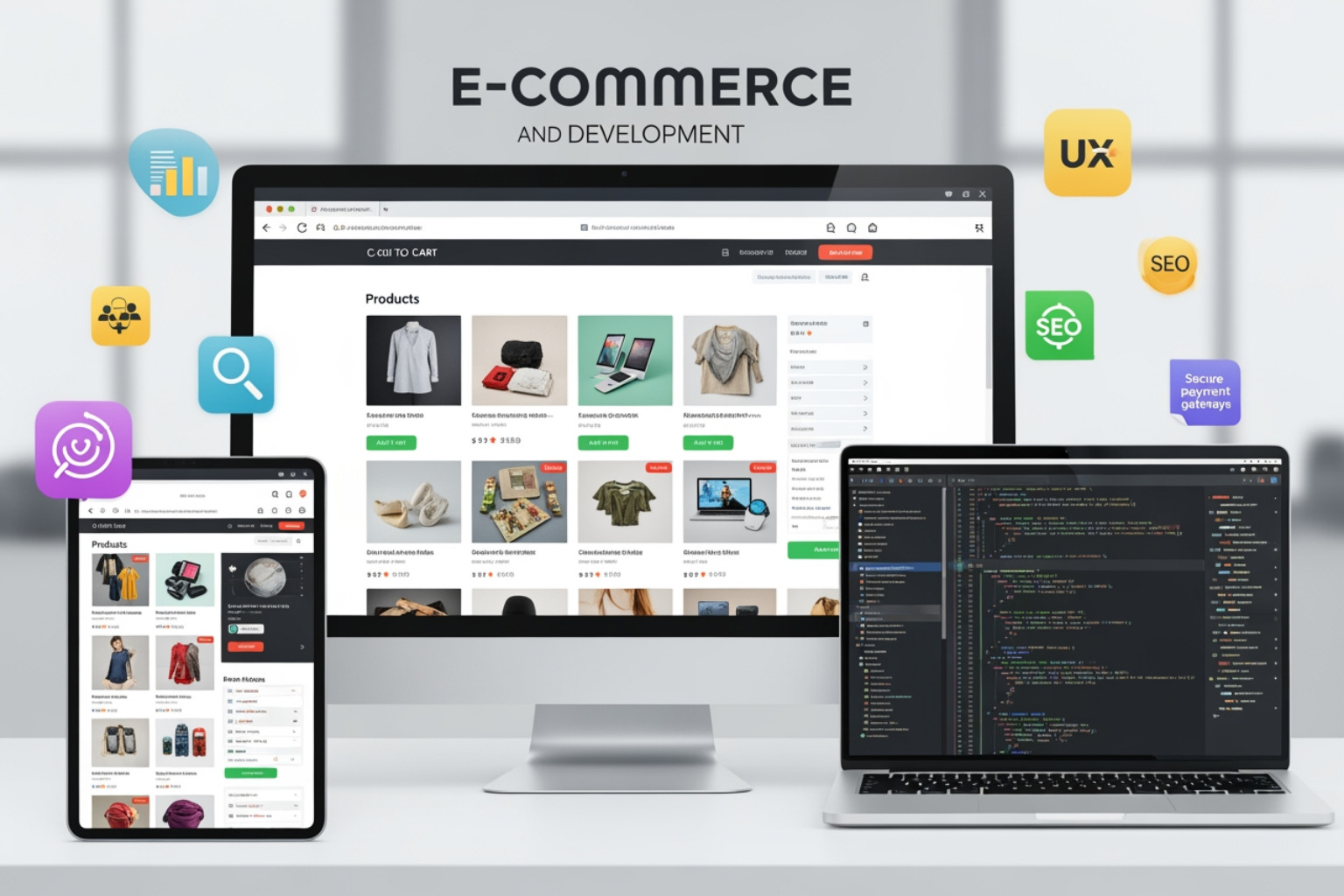
Building a strong brand identity is also connected to these components. A consistent visual style and clear messaging across your site reinforce your brand. Here at First Pier, we understand that effective branding and identity services are foundational to a memorable and effective e-commerce site.
The Critical Role of Mobile-Responsive Design
Most website traffic now comes from mobile devices, and online shoppers are no different. In fact, 56% of website traffic is from mobile, a number that continues to increase. This trend makes mobile-responsive design a necessity for any e-commerce business.
- Consistent Experience Across Devices: A mobile-responsive website adjusts its layout to fit various screen sizes, from desktops to smartphones. This provides a good shopping experience regardless of how a customer accesses your site.
- Improved User Experience: Sites that are hard to use on a phone, with tiny text or difficult buttons, drive customers away. Mobile-responsive design means touch-friendly navigation, readable text, and properly sized images.
- Fast Loading Speeds: Mobile users expect speed. Responsive design, when done correctly, helps your site load quickly on mobile devices, reducing bounce rates.
- SEO Benefits: Google uses mobile-friendliness as a ranking factor. E-commerce websites that are mobile-responsive have an advantage in search results. If your site isn't mobile-friendly, you're missing out on potential traffic.

Ignoring mobile responsiveness means turning away a majority of your potential customers and losing search engine visibility.
Optimizing the Checkout to Reduce Cart Abandonment
A high cart abandonment rate is a common problem for e-commerce businesses. Customers add items to their cart but leave before completing the purchase, often because of a complicated checkout process. My goal is to make this process as simple as possible to convert more browsers into buyers.
Here are the strategies I use to optimize the checkout experience:
- Guest Checkout Option: Many customers don't want to create an account for a single purchase. A guest checkout option lets them proceed with minimal friction. You can ask them to create an account after the purchase is complete.
- Multiple Payment Methods: Providing a variety of payment options caters to different preferences. This includes major credit cards, digital wallets like Apple Pay, and third-party options like Shop Pay. Retailers like Culture Kings offer Shop Pay as an express checkout option.
- Progress Indicators: A visual progress bar shows customers how close they are to finishing.
- Clear Shipping Costs: Unexpectedly high shipping costs are a major reason for abandonment. Displaying these costs early in the process builds trust.
- Minimal Form Fields: Only ask for essential information. Long, complex forms can overwhelm customers.
- Trust Signals: Reassure customers that their information is secure by displaying security badges, privacy policy links, and having an SSL/TLS certificate.
- One-Click Checkout: For registered customers, a one-click checkout option makes repeat purchases much faster.
A simple checkout flow directly increases sales and improves brand perception. Improving conversion rates at this critical stage is something we focus on here at First Pier, and you can learn more about our approach to improving conversion rates.
Choosing Your Path: Platforms and Process for Ecommerce Web Design & Development
Building an e-commerce website involves a series of decisions, starting with the right platform. Your choice will affect your site's scalability, features, and long-term maintenance. Understanding the development process helps you plan resources, set timelines, and work with a development team to build the site.
Comparing Your Build Options
When I consult with businesses, one of the first discussions is about the best platform. The right choice depends on your business size, budget, technical expertise, and specific requirements. Here's a breakdown of the main options:
| Option | Cost | Technical Skill Required | Customization | Scalability |
|---|---|---|---|---|
| Hosted E-commerce Platforms | Monthly subscription | Low | Moderate (themes, apps) | Good for small to mid-sized businesses |
| CMS with E-commerce Features | Hosting + plugin costs (variable) | Moderate | High (code, plugins) | Good for mid-sized to large businesses |
| Custom Development | High upfront, ongoing maintenance | High | Total | Excellent for unique, complex needs |
- Hosted E-commerce Platforms (e.g., Shopify): These are often the easiest and fastest way to get an online store running. Platforms like Shopify are reasonably priced and include hosting, security, and store management features. They offer easy product uploads and many customizable options through themes and apps. This is often my recommendation for businesses that need a feature-rich platform without deep technical knowledge. Shopify provides free TLS certificates when you buy a custom domain, which is a great out-of-the-box security feature.
- Content Management Systems (CMS) with E-commerce Features (e.g., WordPress with WooCommerce): This option offers more flexibility and control. A CMS like WordPress allows you to build a content-rich website and add e-commerce functionality through plugins like WooCommerce. While it offers greater customization, it also requires more technical skill to set up, maintain, and secure. You're responsible for your own hosting and updates.
- Open-Source Platforms (e.g., Magento, PrestaShop): These platforms offer a high degree of customization, making them suitable for larger businesses with complex needs. However, they require significant technical expertise for development, hosting, and maintenance. While the software is free, the development and infrastructure costs can be substantial.
- Custom-built Solutions: For businesses with highly unique requirements, a custom-built solution offers the most flexibility. This involves coding the entire website from scratch. It also comes with the highest cost, longest development time, and requires continuous development support.
The best choice depends on your specific circumstances. I help clients assess their needs to pick the platform that best supports their current operations and future growth. Sometimes, a business outgrows its initial platform, and that's where platform migration services become essential.
The E-commerce Development Lifecycle: From Plan to Launch
Building a successful e-commerce website is a systematic process. Here at First Pier, we follow a structured lifecycle to cover every aspect, from initial ideas to a fully functional online store.
- Discovery & Planning: This is the foundational stage. I work with clients to define their business goals, identify their target audience, and determine the must-have features for their site. This includes outlining the project scope, brand details, and budget.
- Sitemap & Wireframing: Once we understand the goals, we plan the website's structure. A sitemap maps out all the pages and how they connect, while wireframes create a visual blueprint of each page's layout.
- Visual Design: This stage defines the site's visual identity. We focus on the layout, color schemes, typography, and branding to create a visually appealing and user-friendly interface.
- Back-End Development: The technical engine of the site is built here. This involves setting up servers, databases, payment gateway integrations, and other critical functionalities that operate behind the scenes.
- Front-End Development: We then build the user-facing elements based on the approved visual designs. This includes coding the layout, implementing responsive design, and ensuring all interactive elements work as intended.
- Testing & Quality Assurance: Before launch, rigorous testing is essential. We check for functionality, loading speed, mobile responsiveness, and the entire checkout process. Every link, form, and payment flow must work correctly.
- Launch & Post-Launch Support: Once testing is complete, the site goes live. The work continues with setting up analytics (like Google Analytics) to monitor performance and providing ongoing maintenance, updates, and support.
For businesses just starting on Shopify, the setup process can be daunting. That's why I often recommend specialized Shopify setup services to help with a smooth and efficient launch.
Post-Launch: Growth and Stability
Launching your website is just the start. Long-term results depend on a steady approach to security, a plan for attracting new customers, and a way to measure what works. By connecting your store with other business systems and reviewing performance data, you can make decisions that support growth.
Securing Your Store and Customer Data
In e-commerce, the security of your store and customer data is critical. A single breach can destroy trust and lead to significant financial and reputational damage. I prioritize strong security measures from the outset.
Here's what I consider essential for securing an e-commerce website:
- SSL/TLS Certificates and HTTPS Protocol: This is non-negotiable. An SSL or TLS certificate encrypts data exchanged between a customer's browser and your server. This is shown by a padlock icon and a URL starting with "https://". Sites like Manitobah visibly display this padlock, reassuring customers. Browsers also warn users when a site is not secure, which can deter purchases.
- PCI Compliance: If you handle credit card information directly, you must adhere to Payment Card Industry Data Security Standard (PCI DSS) requirements. Most hosted platforms and secure payment gateways manage much of this for you.
- Secure Payment Gateways: Always use reputable payment processors that handle sensitive financial information securely.
- Regular Software Updates: Keep all e-commerce platforms, plugins, and server software updated. Updates often include security patches that address newly found vulnerabilities.
- Data Encryption: Sensitive customer data stored in your databases should be encrypted for an added layer of protection.
- Strong Password Policies: Enforce strong, unique passwords for all administrative accounts.
- Antivirus and Anti-Malware Software: Ensure all company devices used to manage the store are protected with up-to-date security software.
A high level of security helps build customer confidence and protects your business. Here at First Pier, we also assist clients with Shopify accessibility and data compliance, making sure their stores meet security standards and are accessible to all users.
The Role of SEO in Ecommerce Web Design & Development
Building a functional e-commerce website is not enough; people need to find it. Search Engine Optimization (SEO) is essential for making your online store visible in search engine results and driving organic (unpaid) traffic to your products.
I integrate SEO from the beginning of the development process:
- Keyword Research: Understanding the terms your target customers use to search for products guides content creation for product pages, category pages, and blog posts.
- On-page SEO for Product Pages: Each product should have a unique, optimized page with clear titles, detailed descriptions with keywords, and relevant meta descriptions.
- Technical SEO: This involves optimizing the website's technical aspects to help search engines crawl and index your content. This includes a logical site architecture and no broken links.
- Site Speed: Fast-loading websites offer a better user experience and are favored by search engines. I check that images are optimized and code is clean to reduce load times.
- Mobile-friendliness: As mentioned, Google uses mobile-friendliness as a ranking factor. A mobile-responsive site has a significant advantage in search rankings.
- URL Structure: Clean, descriptive URLs are easier for both users and search engines to understand.
- Internal Linking: Linking between your own product pages and categories helps guide users and search engines to relevant products.
Monitoring your website's performance with tools like Google Analytics and Google Search Console is crucial for understanding traffic and identifying issues. By applying these SEO practices, your e-commerce website can appear in more searches. Here at First Pier, our SEO services are designed to make your e-commerce presence strong and visible.
Integrating Business Systems and Measuring Success
A high-performing e-commerce website should connect with other essential business systems for efficiency and accuracy. This integration also provides the data needed to measure success.
Here are some critical integrations I often implement:
- Inventory Management Systems: Connecting your store to your inventory system ensures real-time stock updates, preventing overselling.
- Shipping and Fulfillment Software: Integrating with shipping carriers automates label generation, tracking, and order status updates.
- Customer Relationship Management (CRM) Systems: A CRM integrates customer data from your online store, which helps personalize marketing and improve customer service.
- Enterprise Resource Planning (ERP) Systems: For larger businesses, integrating with an ERP system can unify various business functions like finance and supply chain.
Once systems are connected, the next step is to measure performance using analytics tools and Key Performance Indicators (KPIs):
- Analytics Tools: Platforms like Google Analytics (especially GA4) provide data on website traffic, user behavior, and conversion paths.
- Key Performance Indicators (KPIs):
- Conversion Rate: The percentage of visitors who complete a purchase.
- Average Order Value (AOV): The average amount spent per order.
- Cart Abandonment Rate: The percentage of customers who add items to their cart but don't complete the purchase.
- Website Traffic: The number of visitors to your site, segmented by source.
- Customer Lifetime Value (CLTV): The total revenue a business can expect from a single customer.
By monitoring these metrics and using data from integrated systems, I help businesses understand what's working and make informed decisions to support growth. This analysis is a core part of our ecommerce analytics services here at First Pier.
Partner with Experts to Build Your Online Business
Building a strong e-commerce website takes knowledge of design, technical development, and digital marketing. While the process is detailed, the result of a well-built store is clear: increased sales, stronger brand loyalty, and a foundation for future growth. Working with an experienced agency like First Pier means every part of your site is built to meet your business goals.
Here at First Pier, our team builds and improves e-commerce stores that look good and deliver results. From the initial plan and visual design to back-end development and ongoing improvements, we handle every aspect of your online presence. We focus on creating high-performance Shopify stores that attract customers and encourage repeat purchases. If you want to build an online store that supports growth, we can help.
Explore our award-winning Shopify e-commerce agency services





.png)
.png)

