



Why Online Advertising Campaigns Matter for Growth
Summary
- Online advertising campaigns require clear, measurable goals like increasing sales, generating leads, or building brand awareness.
- Campaign effectiveness depends on audience research, authentic brand messaging, and selecting appropriate channels and ad formats.
- Performance is measured by tracking key metrics, including click-through rate (CTR), conversion rate, and return on ad spend (ROAS).
- Ethical practices, such as data privacy and ad transparency, are necessary for building consumer trust.

Online advertising campaigns are structured efforts to promote products, services, or brands through paid digital placements. Unlike traditional advertising, online campaigns offer precise targeting, real-time adjustments, and detailed tracking. You can reach working professionals aged 28-40 interested in wellness on Instagram, or show up when someone searches "emergency plumber near me" on Google. This measurability is a key advantage: the more data you collect about how people interact with your ads, the easier it is to improve results at lower costs.
Yet most campaigns fail to break through the background noise. The ones that work—like Apple's #ShotoniPhone with over 16 million posts—do something different. They don't just disrupt; they entertain, take a stand, or solve a genuine problem, earning attention by becoming part of consumer conversation.
A well-structured campaign can drive a high ROI. CeraVe's anti-advertising Super Bowl strategy, for example, delivered 32 billion earned impressions—32 times their target. But success isn't random. It comes from a systematic approach that includes clear objectives, deep audience knowledge, smart channel selection, resonant messaging, and constant measurement, all grounded in ethical practices.
I'm Steve Pogson, founder of First Pier, and over the past two decades, I've helped e-commerce businesses build and grow online advertising campaigns that drive real growth on Shopify. Here at First Pier, we've seen what separates campaigns that get clicks from campaigns that build brands and deliver sustainable ROI.

Laying the Foundation: Define Your Goals and Audience
A campaign without clear goals is like a ship without a rudder. Before you spend a dollar, you must define what success looks like. Is it driving sales, generating qualified leads, or increasing brand awareness? Your goal dictates your strategy, channels, and messaging. Equally important is knowing who you're talking to. Deep audience insights are required for effective campaigns. For example, knowing that 36% of Arsenal fans are interested in fashion allows for more specific and effective targeting.
What Defines a Successful Campaign?
A successful online advertising campaign starts with clear objectives. These are specific, measurable goals, such as increasing sales by 15% or acquiring 1,000 new email subscribers. Without these, you can't gauge if your efforts are paying off.
Key Performance Indicators (KPIs) are the metrics you track to measure progress. If your goal is to increase sales, your KPIs might include conversion rate, average order value, and return on ad spend (ROAS). If it's brand awareness, you'd look at impressions, reach, and social media engagement.
Beyond numbers, successful campaigns align with your brand's core identity. They tell a story that connects with your audience and create engagement that goes beyond a simple transaction. The CeraVe campaign that generated over 32 billion earned impressions didn't just sell a product; it integrated the brand into consumer conversations. These campaigns show that success is about deep audience engagement and brand alignment. More info about building and refining brands can be found here.
The Importance of Brand Authenticity and Purpose
Consumers today expect transparency and authenticity from the brands they support. Brand authenticity is a requirement for building trust and lasting loyalty. A successful online advertising campaign reflects your brand's true values and mission, connecting with an audience that seeks genuine connections.
Consider Liquid Death, a company that sells water in cans with death metal branding and sketch comedy marketing. This approach is authentic to its niche and has earned a cult following. Similarly, Arsenal's "No More Red" campaign uses an unsellable white shirt to address youth violence. This mission-driven messaging positions the brand as a force for social change.
When a brand stands for something beyond its products, it builds a stronger emotional connection with its audience. Flo Health, a popular women’s health app, built its success on purpose-driven content with daily stories customized to pregnancy stages. This commitment to user well-being fosters trust. My experience here at First Pier has shown me that campaigns rooted in genuine purpose consistently perform better because they create a deeper bond with the customer. More info about branding identity services can be found here.
Structuring Your Online Advertising Campaigns for Success
The structure of your campaign is its skeleton, involving where your ads will live and what they will look like. The digital world offers a vast array of options, each with unique strengths. Unlike traditional advertising, digital campaigns allow for precise targeting, real-time adjustments, and detailed performance tracking. Choosing the right mix of channels and formats is crucial for reaching your specific audience and achieving your campaign goals.
| Feature | Traditional Marketing Campaigns | Digital Marketing Campaigns |
|---|---|---|
| Targeting | Broad (TV, radio, print) | Highly specific (demographics, interests, behaviors, location, intent) |
| Cost | High upfront investment | Flexible, scalable, often lower entry cost |
| Measurement | Difficult to track direct ROI (surveys, sales lift estimates) | Real-time, granular data (clicks, conversions, impressions, cost per action) |
| Interactivity | One-way communication | Two-way, engaging (comments, shares, direct messaging, user-generated content) |
| Adaptability | Slow to change | Agile, can be optimized and adjusted in real-time |
| Reach | Geographically limited or mass market | Global or hyper-local, reaching specific niches |
Choosing Formats for Your Online Advertising Campaigns
The digital world offers a wide variety of ad formats, each designed for different goals and audiences. Understanding these options is key to building effective online advertising campaigns.
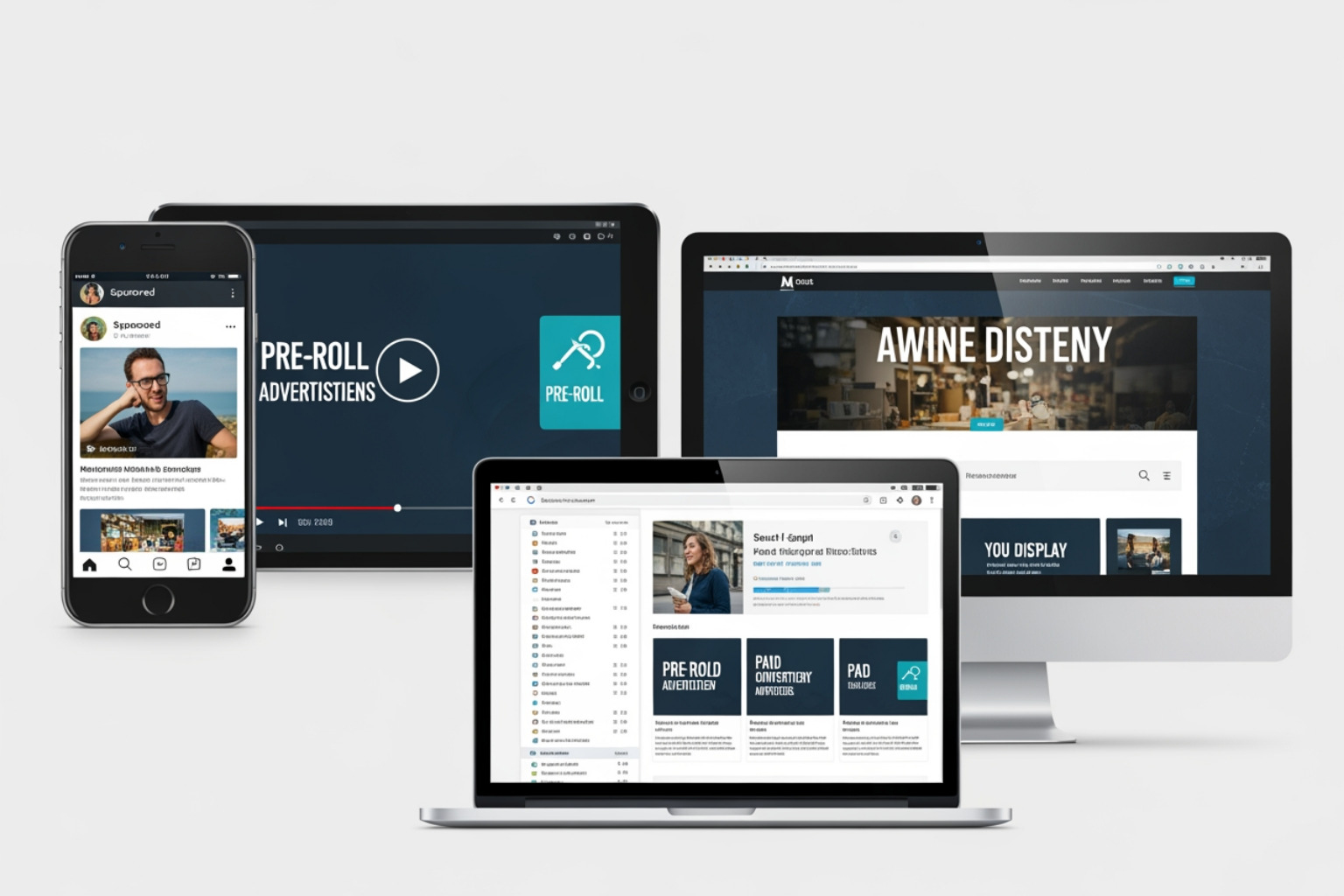
- Paid Search (SEM): These text-based ads appear at the top of search engine results, like on Google Ads. They are ideal for capturing high-intent users actively searching for products or services. If someone in Portland, ME searches for "Shopify development agency," a paid search ad can put First Pier directly in front of them. I always remind clients that Google Ads is best for high-intent, bottom-funnel traffic. More info about paid search (SEM) services can be found here.
- Paid Social: Platforms like Meta Ads (Facebook/Instagram), LinkedIn Ads, and TikTok Ads allow for precise audience targeting. These ads can take many forms—image carousels, video, text—and are more about generating interest than capturing it. A business selling sustainable clothing could target Instagram users interested in eco-friendly fashion.
- Video Ads: These play on platforms like YouTube or TikTok and are excellent for storytelling and product demos. Red Bull's "Stratos" campaign, with 8 million live viewers, showed the power of video to captivate an audience.
- Display Ads: These are banner-style visuals seen across websites and apps. While not always conversion-focused, they are great for brand awareness and retargeting, keeping your brand top-of-mind.
- Native Advertising: These blend into content like blog posts, appearing as part of the page rather than a disruptive ad. They drive traffic without interrupting the user experience.
- Influencer & User-Generated Content (UGC) Campaigns: These involve working with creators to share content about your product. People often trust recommendations from individuals more than brand logos. Swiggy's #VoiceOfHunger campaign, with over 150,000 participants, used UGC to create massive engagement.
Targeting Audiences in Online Advertising Campaigns
Effective targeting allows me to show your ads to the people most likely to be interested in your products or services, rather than casting a wide, expensive net.
- Demographics: Basic targeting includes age, gender, income, and education to define your core audience.
- Geolocation: This is useful for local businesses. For a business in Portland, ME, I can target ads to people within a certain radius. Monzo Bank's campaign, with ads like "Well done Milton Keynes: you went to Nandos more than anywhere else in the UK," shows how localized data can feel personal.
- Interests & Behaviors: Digital platforms track user interests (e.g., fashion, gaming) and online behaviors (e.g., websites visited). This allows for granular targeting. For instance, knowing 37% of future Hilton Hotels guests use TikTok monthly makes it a prime channel for their campaigns.
- Lookalike Audiences: Platforms can find new users who share characteristics with your existing customers, expanding your reach to relevant audiences.
- Retargeting: This is a crucial strategy that involves showing ads to people who have previously interacted with your brand online. It reminds them of their interest and encourages conversion. As Forbes notes, retargeting is important for reaching previous website visitors. I believe every e-commerce business should be running retargeting campaigns all the time. More info about paid social services can be found here.
Crafting the Message: Storytelling, Emotion, and Participation
The most effective ads don't just sell; they tell a story. They create an emotional connection that makes a brand memorable. Whether through humor, inspiration, or a shared purpose, storytelling separates a forgettable ad from a cultural moment. Campaigns that invite audience participation—through user-generated content (UGC) or contests—turn passive viewers into active brand advocates. Apple’s #ShotoniPhone campaign, with over 16 million posts, is a prime example of how giving users a platform can be an effective marketing tool.
Using Storytelling and Emotional Connection
A compelling narrative can cut through the noise of constant advertising. Storytelling in online advertising campaigns allows brands to connect with their audience on a personal level, moving beyond product features to explore shared values and experiences.

Take Dove's "Real Beauty Sketches" campaign. Instead of directly selling soap, it told a powerful story about women's self-perception. An FBI-trained sketch artist drew women based on their own descriptions and then a stranger's, highlighting a universal struggle that connected with a global audience.
Chipotle's "Back to the Start" animation told a story about the brand's commitment to responsible food, appealing to consumer values without a hard sell. Coca-Cola's "Share a Coke" campaign replaced its logo with popular names, creating a personal story that encouraged sharing and was successful in over 80 countries. Red Bull's "Stratos" campaign sponsored Felix Baumgartner's space jump, creating a gripping story of human ambition that earned massive media attention. These examples show that when you tell a story that evokes strong emotions, your brand becomes part of your audience's story. More info about e-commerce community and loyalty can be found here.
Encouraging Audience Participation and Co-Creation
Digital advertising has shifted from monologue to dialogue. Brands that invite their audience to participate and co-create content often build stronger communities and more loyal customers.
User-generated content (UGC) is authentic, trustworthy, and scalable. Apple's #ShotoniPhone campaign is a perfect illustration. By encouraging users to share photos taken with their iPhones, Apple turned millions of customers into content creators.
Influencer marketing, when done well, builds on the trust creators have with their followers. Swiggy's #VoiceOfHunger campaign, which had users record their hunger pangs on Instagram, turned an everyday feeling into an interactive experience that drew over 150,000 participants.
Brands can also create contests or interactive experiences. Old Spice created a Choose Your Own Adventure game on Instagram. Lyft's referral program allows users to invite riders and drivers with meaningful incentives. Slack's "Wall of Love" (@SlackLoveTweets) retweets positive user experiences, making customers feel valued. These strategies don't just advertise; they build a community around your brand.
Execution and Innovation: Technology, Timing, and Tactics
Great execution is about bringing the strategy and creative to life. This means using technology to your advantage and being agile enough to act on real-time events. The impact of AI is growing, helping with everything from audience segmentation to creative optimization. Some of the most memorable campaigns have been born from quick action during cultural moments, like Oreo’s “You can still dunk in the dark” tweet, which was conceived, designed, and approved within minutes. Differentiating in a competitive market requires innovative approaches that surprise your audience.
The Impact of AI and New Technologies
Artificial Intelligence (AI) is reshaping online advertising campaigns. It's a tool that helps me make campaigns more efficient, personalized, and effective.
- AI-powered Targeting: AI can analyze vast amounts of data to identify precise audience segments and predict behaviors, which means less wasted ad spend and more relevant ad delivery.
- Programmatic Advertising: AI drives programmatic advertising, which automates the buying and selling of ad space in real time for hyper-targeted placements.
- AR/VR Experiences: Augmented Reality (AR) and Virtual Reality (VR) are creating immersive ad experiences. Sephora, for example, uses AR in its app to let users virtually try on cosmetics, creating a rich, interactive shopping experience.
- Widespread Personalization: AI can dynamically generate personalized ad creatives and messages for individual users. Netflix's promotional "Streamberry" site, inspired by Black Mirror, used images of real viewers in its marketing, showing a highly personalized approach.
The Orange France "Les Bleues" campaign is a prime example of innovative tech use. It used AI and deepfake technology to superimpose male soccer stars' faces on female players' bodies, only to reveal the truth later. This powerfully highlighted gender bias in sports and went viral globally. More info about Shopify automation can be found here.
Using Real-Time Events and Cultural Moments
Some of the most impactful online advertising campaigns are born from quick, agile responses to real-time events. This requires a team that's always listening and ready to react.
- Agile Marketing: The classic example is Oreo’s "You can still dunk in the dark" tweet during the 2013 Super Bowl power outage. This witty response became an instant viral hit.
- Newsjacking: Dippin’ Dots turned a critical comment from Sean Spicer into a viral sensation with their "Open Letter to Sean Spicer" campaign. This response reached 1.4 billion people and led to an 8,000% increase in brand mentions on X (formerly Twitter).
- Social Listening: Brands that actively listen to online conversations can find opportunities to join in. Burger King's "Whopper Detour" campaign used geolocation to offer a one-cent Whopper to customers near a McDonald's, generating significant buzz.
- Creating Cultural Moments: Heineken's "The Boring Phone" campaign was a strong example of cultural positioning. They released a limited-edition "dumb phone" to encourage people to disconnect and enjoy real-life interactions. This generated 9.5 billion impressions and proved that sometimes, less tech is more impactful.
Differentiating in a competitive market often means being brave or quick enough to act on a fleeting moment. It’s about being part of the conversation, not just interrupting it.
Measuring What Matters: Analytics, ROI, and Ethics
You can't improve what you don't measure. The final, ongoing step of any campaign is to track performance, analyze data, and calculate your return on investment (ROI). Key metrics like click-through rate (CTR), conversion rate, cost per acquisition (CPA), and return on ad spend (ROAS) provide a clear picture of what's working. This data-driven approach allows for continuous improvement. Finally, all advertising must be conducted ethically. Respecting user privacy and being transparent are fundamental to building a trustworthy brand.
How to Measure Success and ROI
Measuring the success of your online advertising campaigns is essential. I always set up clear Key Performance Indicators (KPIs) from the outset, tied directly to the campaign's goals.
Key Performance Indicators (KPIs): These are the metrics that tell you if you're hitting your targets.
- Click-Through Rate (CTR): The percentage of people who see your ad and click it. A low CTR might indicate your ad copy or targeting needs work.
- Conversion Rate: The percentage of people who complete a desired action (like a purchase) after clicking your ad. A high CTR with low conversion points to a problem with your landing page or offer.
- Cost Per Action (CPA): How much it costs to get one conversion. This is key to understanding efficiency.
- Return on Ad Spend (ROAS): The revenue generated for every dollar spent on advertising. This directly measures profitability.
Tools: Platforms like Google Analytics are essential for tracking user behavior on your website and linking ad performance to on-site actions.
- Budgeting: To estimate your ad budget, I often work backward from conversion goals. For example, if you need 10 conversions per day and each costs $10, that's a $3,000 monthly budget. You also need to allow platforms 4-6 weeks to learn before making big changes.
- Continuous Optimization: Campaigns are never "done." You need to constantly analyze data and adjust keywords, ad copy, landing pages, and bids. This process ensures your campaigns improve over time. My experience has taught me that continuous optimization is key to a positive ROI. More info about e-commerce analytics and analysis can be found here.
Ethical Considerations in Digital Advertising
Online advertising campaigns come with significant ethical responsibilities. Building a sustainable brand means building trust, which can be quickly eroded by unethical practices.
- Data Privacy: This is paramount. Regulations like GDPR and CCPA underscore the importance of protecting user data. Brands must be transparent about what data they collect and how they use it, and give users control over their information. Here at First Pier, we prioritize ensuring our clients' practices are compliant and respectful of user privacy.
- Ad Transparency: It should always be clear when content is an advertisement. Native ads must be clearly labeled to avoid deceiving consumers.
- Misleading Claims: Ads must be truthful. False or exaggerated claims risk legal action and damage brand credibility.
- Targeting Vulnerable Groups: Advertisers must avoid targeting children or other vulnerable populations with inappropriate content.
- Brand Safety: Ensuring your ads appear alongside appropriate content is vital. You need proactive measures to prevent ads from appearing in unsafe environments.
Ethical advertising is about respecting your audience. It helps to improve customer retention rates and builds a positive brand reputation.
To Sum Up
An effective online advertising campaign requires clear goals, deep audience understanding, strategic channel selection, and a creative message that connects with them. By executing with precision, measuring performance, and upholding ethical standards, you can create campaigns that achieve business objectives and build lasting brand equity. Here at First Pier, we help e-commerce businesses steer this process to build high-performance campaigns that drive growth. If you're ready to move beyond the click, explore our paid search and SEM services to see how we can help.





.png)
.png)
