



Why Shopify B2B Web Design Matters for Modern Wholesale Growth
Summary
- Shopify B2B is a native feature suite available on Shopify Plus that enables businesses to sell to other businesses through custom pricing, catalogs, and payment terms.
- B2B buyers now expect the same fast, intuitive online experience as B2C shoppers, with 71% of B2B purchasing decision-makers being millennials.
- Effective Shopify B2B web design requires balancing self-service functionality with complex features like bulk ordering, net payment terms, and company-level account management.
- The global B2B ecommerce market is five times larger than B2C, with 80% of B2B sales projected to occur through ecommerce websites by next year.
- Shopify's unified platform approach allows businesses to manage both B2B and D2C sales from a single backend, reducing operational complexity and costs.
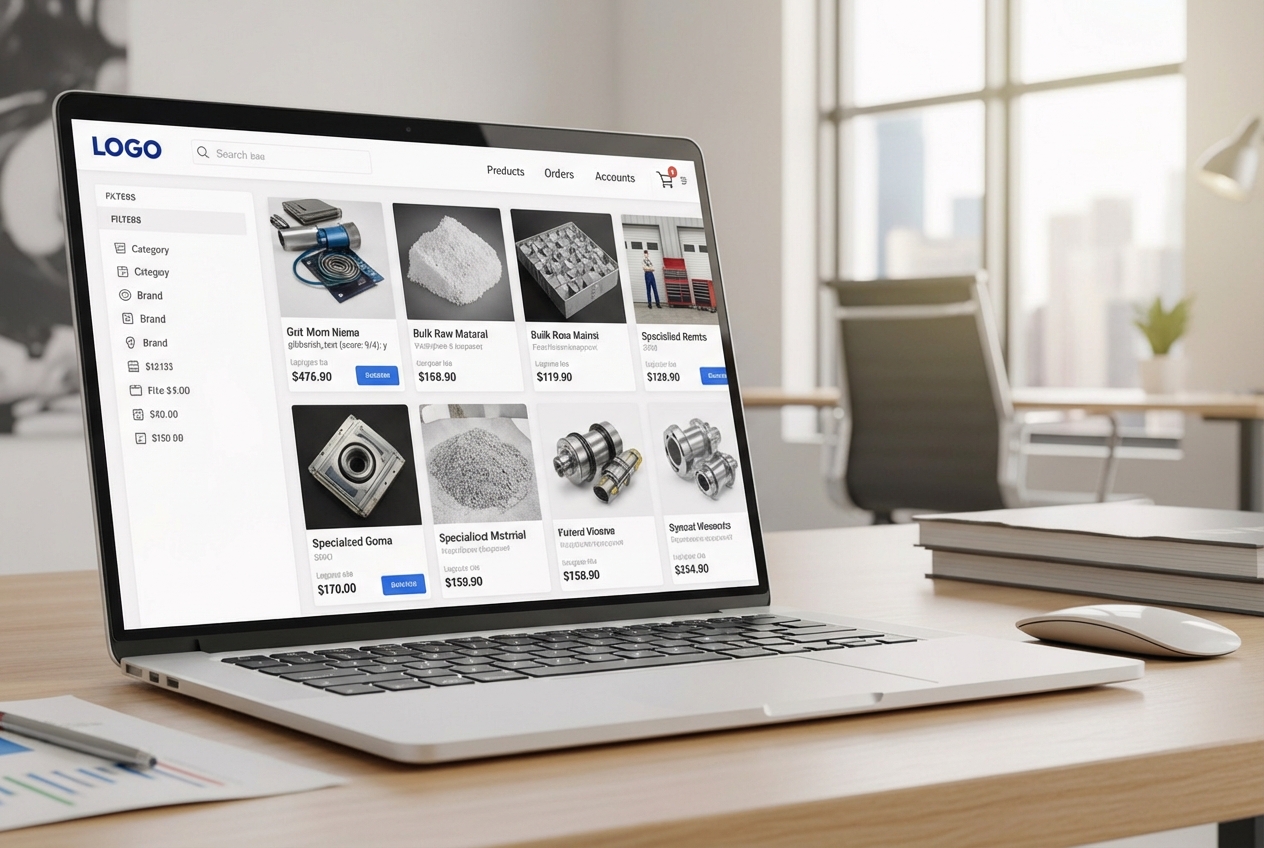
Shopify B2B web design is the process of creating and optimizing an online wholesale experience on Shopify that meets the complex needs of business buyers while maintaining the intuitive user experience they expect from modern ecommerce.
The wholesale landscape has changed. B2B buyers—many of them millennials—now browse from their phones, expect transparent pricing, and want to place orders without picking up the phone. They're comparing your site to Amazon, not to your competitors' outdated catalogs. If your wholesale channel still relies on manual phone orders, PDF price lists, and email back-and-forth, you're losing sales to businesses that have moved online.
By next year, 80% of B2B sales will be completed through ecommerce websites. The B2B ecommerce market is worth $7.7 trillion—more than double the size of direct-to-consumer sales. Yet 93% of industrial sales still happen offline, and up to one-third of B2B transactions are completed via phone, fax, and email. That gap represents a massive opportunity for businesses ready to build a modern wholesale experience.
Shopify recognized this shift. In June 2022, Shopify announced a major overhaul of its B2B capabilities, introducing native features that previously required custom development or workarounds. The platform was later named a Leader in the Forrester Wave™: Commerce Solutions for B2B Vendor Assessment in 2024. Today, Shopify Plus merchants can set up company profiles, assign custom catalogs, offer net payment terms, and manage complex pricing structures—all from the same admin that powers their D2C operations.
I'm Steve Pogson, and I've spent over two decades helping businesses build high-performing ecommerce stores on Shopify. At First Pier, we specialize in Shopify B2B web design that balances the technical demands of wholesale operations with the clean, intuitive experience that modern buyers expect.
The Foundations of Shopify for B2B Commerce
The B2B ecommerce landscape is experiencing rapid growth, far surpassing its direct-to-consumer (D2C) counterpart. The global B2B ecommerce market is five times the size of the B2C one, indicating a significant shift in how businesses transact. This growth is largely driven by evolving buyer demographics. According to Forrester, 71% of those involved in B2B purchasing decisions today are millennials. These buyers grew up with Amazon and expect a similar level of convenience, transparency, and self-service in their professional purchasing experiences.
Shopify Plus is the enterprise-level solution that powers Shopify B2B web design. It offers the robust infrastructure and native features necessary to meet these modern B2B demands.
What is Shopify B2B?
Shopify B2B is a suite of native features that allows businesses to sell directly to other businesses through the Shopify admin and online store. Before the June 2022 Editions announcement, many B2B functionalities required third-party apps or custom development. Now, key B2B features are built directly into Shopify Plus, making it a comprehensive solution for wholesale operations. This commitment to B2B capabilities led Shopify to be named a Leader in the Forrester Wave™: Commerce Solutions for B2B Vendor Assessment in 2024.
At its core, Shopify B2B provides tools to:
- Set up company profiles for your wholesale customers.
- Create custom catalogs with specific pricing and product access.
- Assign flexible payment terms to orders.
- Offer a custom buying experience within your existing Shopify store.
These features are primarily included with Shopify Plus plans, offering a solid foundation for your wholesale operations.
B2B vs. D2C: Key Differences on Shopify
While Shopify is widely known for its D2C capabilities, the B2B market has distinct needs that require a different approach to web design and functionality. When I help clients with Shopify B2B web design, I often highlight these key differences:
- Complex Pricing: B2B often involves tiered pricing, volume discounts, customer-specific pricing, and negotiated rates, unlike the largely fixed pricing of D2C.
- Bulk Orders: Wholesale customers typically purchase in much larger quantities, requiring features like quick order forms, minimum order quantities (MOQs), and case pack requirements.
- Longer Sales Cycles: B2B purchasing decisions can involve multiple stakeholders and approvals, extending the sales cycle beyond a simple D2C checkout.
- Relationship-Based Selling: While D2C focuses on individual transactions, B2B thrives on long-term relationships, demanding features like customer portals and personalized support.
- Multiple Decision-Makers: A B2B purchase might involve procurement, finance, and end-users, each with different needs from the website.
- Gated Access: Many B2B stores restrict product and pricing visibility to approved, logged-in wholesale customers.
- Purchase Orders: B2B transactions frequently involve purchase orders and specific payment terms, which are not common in D2C.
Shopify's B2B features directly address these complexities, allowing businesses to create a custom experience that respects the nuances of wholesale commerce.
Core Benefits of Using Shopify for Your B2B Store
Choosing Shopify for your B2B ecommerce brings several key advantages, especially when considering a holistic Shopify B2B web design strategy:
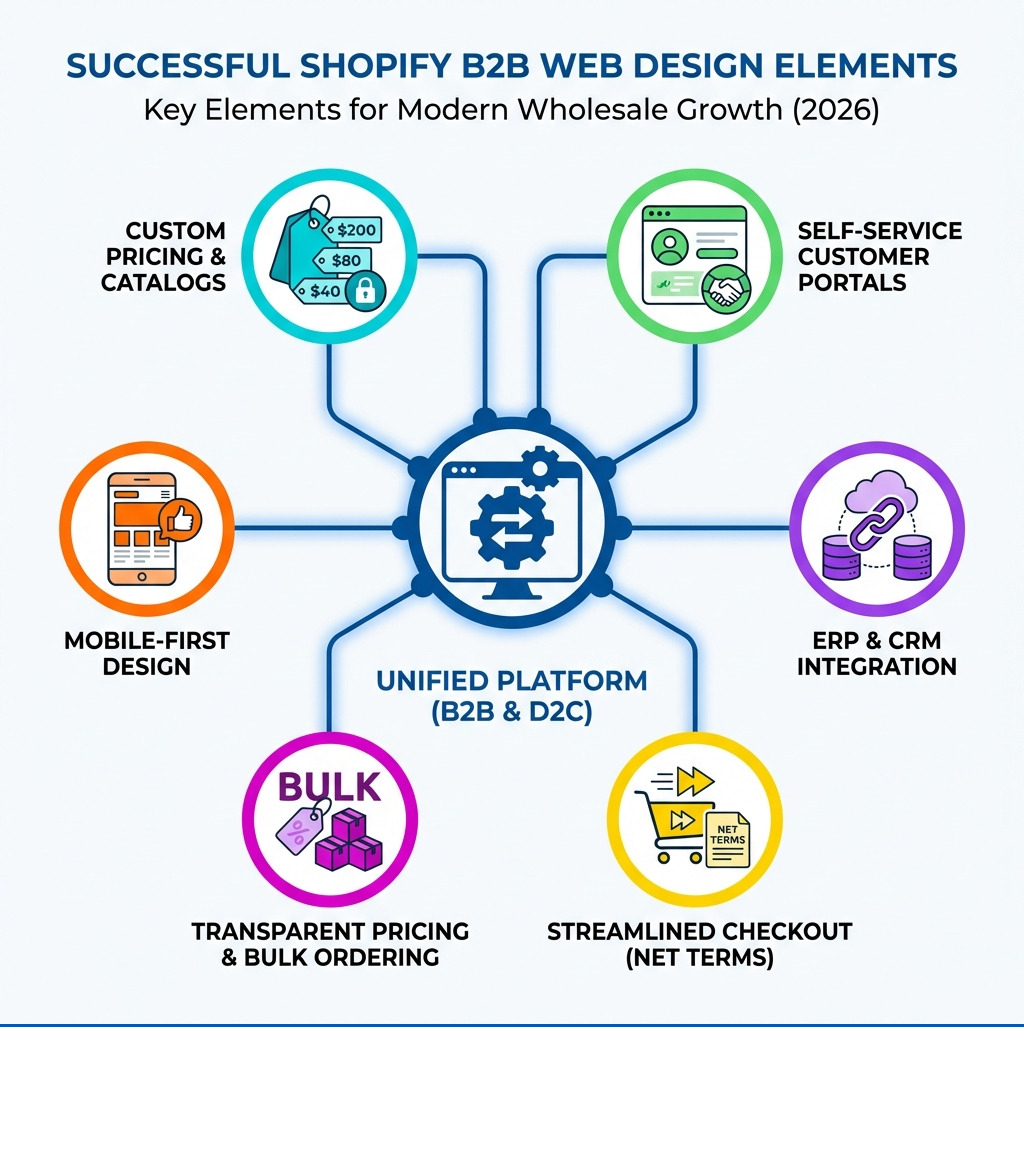
- Unified Platform: One of the most significant benefits is the ability to manage both your B2B and D2C operations from a single Shopify store and administrative backend. This simplifies inventory management, order processing, and customer data, providing a single source of truth for your business.
- Lower Total Cost of Ownership: By using native Shopify features instead of disparate systems or extensive custom development, you can reduce the complexity and ongoing maintenance costs associated with managing multiple platforms.
- B2C-Like User Experience: Modern B2B buyers expect the intuitive, easy-to-use interfaces they encounter in their personal online shopping. Shopify’s D2C foundation means your B2B store can offer a familiar and pleasant experience, reducing friction and training time for your wholesale customers.
- Scalability: Shopify Plus is designed to grow with your business, handling high volumes of traffic and orders without performance issues. This means your B2B store can scale as your wholesale operations expand.
- Centralized Data: All customer, product, and order data resides in one place, which makes reporting, analytics, and customer relationship management much more efficient.
For more information on optimizing your Shopify Plus experience, you can find details on our Shopify Plus optimization services.
Understanding the Costs
When planning your Shopify B2B web design project, understanding the associated costs is crucial. While I cannot discuss specific pricing details, I can tell you about the categories of expenses you'll consider:
- Shopify Plus Subscription: The native B2B features are part of Shopify Plus, which is an enterprise-level plan. This subscription fee is a primary component of your ongoing platform cost.
- Transaction Fees: While Shopify Payments can help reduce these, there might be transaction fees depending on your payment gateway and Shopify plan.
- App Costs: While many core B2B features are native, you might still need specialized apps for unique functionalities or deeper integrations. These come with their own subscription or one-time fees.
- Theme Development: Whether you opt for a premium theme or custom development, there's an investment in the design and functionality of your store's frontend.
- Agency Fees: Working with an experienced agency like First Pier for Shopify B2B web design and implementation is an investment in expertise, efficiency, and a high-quality outcome. Our fees cover strategic planning, design, development, and ongoing support.
For details on getting your Shopify store set up correctly from the start, you can explore our Shopify setup services.
Strategic Shopify B2B Web Design and User Experience

A successful Shopify B2B web design goes beyond just allowing wholesale transactions; it creates an intuitive, efficient experience that mirrors the best of D2C. This means focusing on self-service portals, intuitive navigation, powerful search capabilities, and a mobile-first design.
Key Considerations for Your Shopify B2B Web Design
When I approach a Shopify B2B web design project, I emphasize several key design considerations to ensure the site meets the unique needs of business buyers:
- User Personas: Understanding your B2B buyers—their roles, goals, and pain points—is fundamental. Are they procurement managers, small business owners, or field technicians? Their needs will dictate the design and functionality.
- Clear Value Proposition: Immediately communicate why your products are the best choice for their business. Highlight benefits like quality, reliability, and support.
- High-Quality Product Imagery: Just like in D2C, professional images are crucial. For B2B, this might also include lifestyle shots showing products in a business context.
- Detailed Technical Specifications: B2B buyers often need precise information. Product pages should include comprehensive specs, datasheets, and potentially CAD files for engineers and technical buyers.
- Easy Reordering: B2B purchases are often repetitive. Features that allow customers to quickly reorder past purchases, or use quick order forms with SKUs, are essential.
- Mobile-First Design: With many B2B buyers accessing sites from various devices, a responsive, mobile-first design is no longer optional. Field sales teams and technicians need to be able to order from their phones.
These considerations contribute to a user experience that reduces friction and supports your customers' purchasing process. Learn more about how we approach user experience with our ecommerce UX design services.
Blended vs. Dedicated Stores: Which Model is Right for You?
One of the first strategic decisions in Shopify B2B web design is whether to operate a blended store or a dedicated B2B store. Each has its advantages:
- Blended Store Efficiency: A blended store uses a single Shopify instance for both D2C and B2B sales. This offers significant efficiency gains by combining inventory, customer data, and administrative tasks into one backend. You can still customize experiences, showing unique content, products, pricing, and payment/delivery options to B2B and D2C customers. Shopify often recommends this approach for its streamlined management.
- Dedicated Store Branding: A dedicated B2B store is a separate Shopify instance exclusively for wholesale customers. This allows for a completely distinct brand experience, separate inventory management, and a highly custom environment focused solely on B2B needs. This might be ideal if your B2B and D2C brands are vastly different or if your inventory allocation is strictly separate.
The choice depends on your specific business model, branding strategy, and operational complexities. If you're considering migrating from an older system or evaluating your store structure, our team can help with platform migrations.
The Role of Premium and Custom Themes
The visual appeal and functionality of your Shopify B2B web design are heavily influenced by your theme choice.
- Premium Theme Features: Shopify's premium themes are designed by world-class user experience designers. They offer more sections and customization options than free themes, are fully responsive, and are tested across various product categories. They can help you launch a professional-looking B2B store faster.
- Customization Options: Even with premium themes, you can often customize layouts, colors, and fonts to align with your brand.
- When to Choose Custom Development: For businesses with highly unique requirements, complex B2B workflows, or a strong desire for a distinct online presence, custom Shopify theme development is the answer. A custom theme provides unique architecture, functions, and features custom to your specific business needs, helping you stand out from competitors. It allows for deeper integration and a truly tailored experience.
Here at First Pier, we specialize in both using premium themes and crafting custom solutions through our Shopify development services.
Implementing Essential B2B Features on Your Store
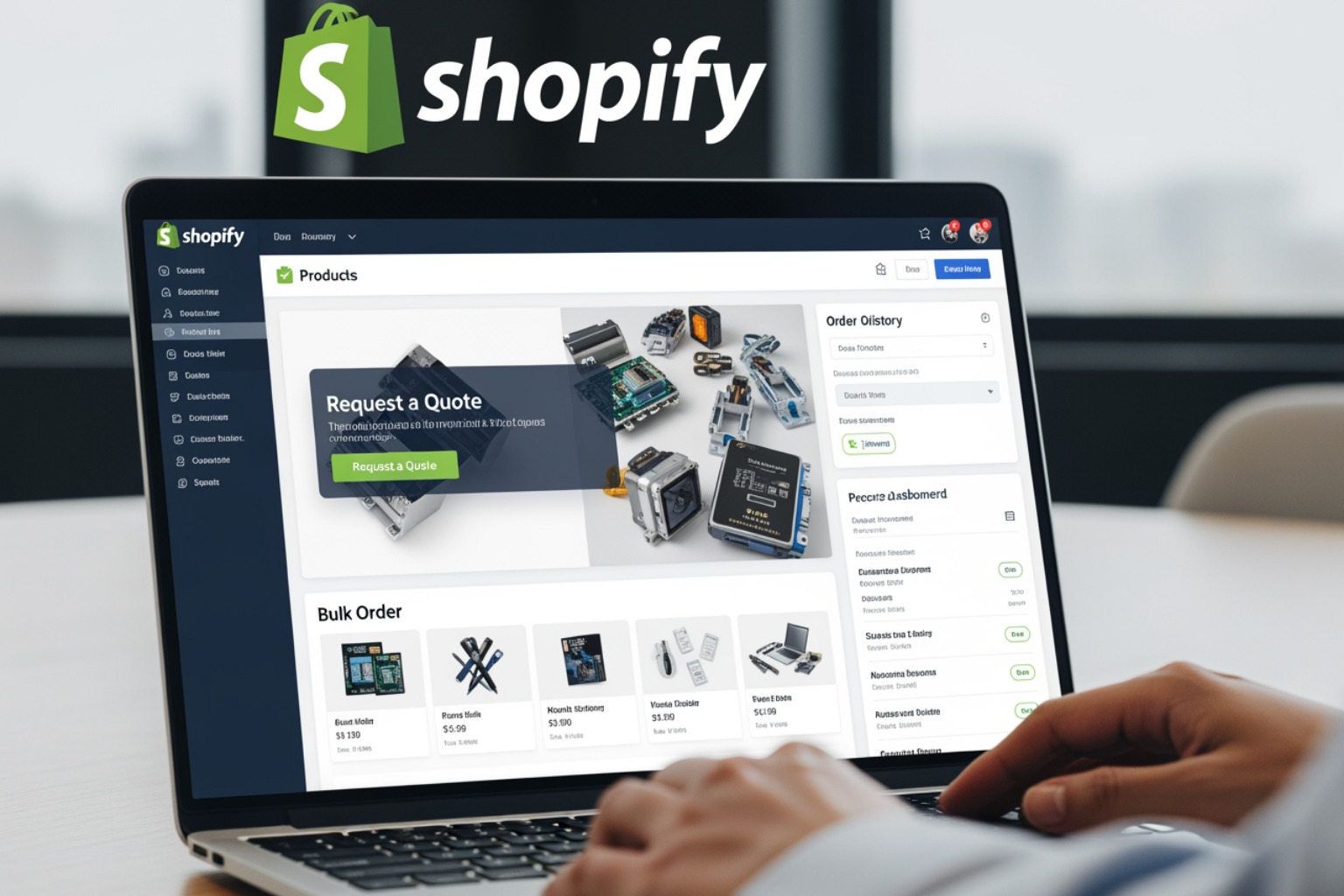
The real value of Shopify B2B web design lies in its ability to implement robust wholesale features that streamline operations and improve the buyer experience.
Managing Custom Pricing, Catalogs, and Discounts
B2B pricing is rarely one-size-fits-all. Shopify’s native B2B features allow for granular control:
- Company Profiles: You can create detailed profiles for each B2B customer, assigning them specific pricing, payment terms, and product access.
- Shopify's B2B Catalogs: These allow you to create unique price lists for different customers or customer groups. When a buyer logs in, they see only the products and pricing relevant to them.
- Quantity Rules: Set minimum order quantities (MOQs) or case-pack requirements directly on the site, ensuring every order is compliant.
- Fixed vs. Percentage Pricing: Offer either fixed prices per product or percentage-off discounts applied across an entire catalog.
- Volume-Based Discounts: Implement tiered pricing automatically based on the quantity purchased, providing incentives for larger orders.
- Customer-Specific Product Visibility: Control which products or collections each B2B customer can see, tailoring their shopping experience.
Streamlining Customer Accounts and Sign-In
B2B customer accounts need to handle more complexity than D2C accounts. Shopify B2B web design prioritizes self-service and control:
- Gated Content: You can restrict access to certain products, collections, or even your entire store until a customer logs in or is approved.
- Company-Level Accounts: Instead of individual customer accounts, B2B allows for company accounts with multiple contacts, each potentially having different permissions.
- Contact Permissions: Assign specific roles and permissions to each contact within a company, such as order approver or buyer.
- Tax Exemptions: Easily manage and apply tax exemptions for eligible B2B customers.
- Self-Service Account Management: Allow B2B customers to manage their company details, contacts, shipping addresses, and view their order history without needing to contact your sales team. A great example of a functional self-service portal is Tiger Products' dealer portal, which makes it easy for business customers to register and log in.
Simplifying Checkout, Payments, and Order Management
The B2B checkout process needs to be efficient and flexible to accommodate common wholesale practices:
- Net Payment Terms: Automatically assign payment terms (e.g., Net 30, Net 60) to orders, allowing customers to check out with the agreed-upon terms and track upcoming payments.
- Draft Orders: Sales representatives can create custom orders with negotiated prices and terms, then send a secure checkout link directly to the customer. This simplifies the quoting process.
- Quick Reorders: Integrate a "Buy Again" button into customer accounts, allowing them to instantly reorder previous purchases, ideal for recurring stock.
- Shopify Payments: Use Shopify's integrated payment solution for secure and efficient transaction processing, often with competitive rates.
- Purchase Order Numbers: Allow customers to add their internal purchase order numbers during checkout for easier reconciliation.
Advanced Integrations and Growth Strategies
For a Shopify B2B web design to be effective, it needs to integrate with your existing business systems and be part of a clear growth plan.
Integrating with ERP and CRM Systems
Integrating your Shopify B2B store with Enterprise Resource Planning (ERP) and Customer Relationship Management (CRM) systems is crucial for data synchronization and workflow automation.
- Shopify’s Global ERP Program: This program supports integrations with leading ERP providers, helping businesses automate critical workflows.
- NetSuite and Salesforce Integration: These are common examples of ERP and CRM systems that can be integrated with Shopify. This allows for centralized inventory management, real-time order processing, and a unified view of customer interactions.
- Centralized Inventory: Ensure your online store reflects accurate stock levels by syncing with your ERP.
- Automated Order Processing: Automate the flow of orders from your Shopify store directly into your ERP for fulfillment, reducing manual entry and errors.
Here at First Pier, we provide dedicated Shopify ERP services to ensure these critical systems work together effectively.
SEO Best Practices for Your Shopify B2B Web Design
Visibility is key, even in B2B. Optimizing your Shopify B2B web design for search engines ensures that potential wholesale customers can find you.
- Indexable B2B Sites: Unlike older wholesale channels, modern Shopify B2B sites are indexable by search engines, allowing for organic findability (though you can still gate content if needed).
- Keyword Strategy for Wholesale: Research and target B2B-specific keywords. For example, instead of "silver beads," a B2B buyer might search for "wholesale silver glass beads."
- Technical SEO: Ensure your site has a fast loading speed, mobile responsiveness, and a clear site structure.
- Content Marketing for B2B Audiences: Create valuable content like detailed product guides, industry articles, and how-to's that address the specific needs and questions of your business buyers.
- Rich Product Data: Include comprehensive product descriptions, specifications, images, and potentially videos. For technical products, datasheets and CAD files are highly valued by engineers and technical buyers.
Our team offers in-depth SEO services to help your B2B store rank higher and attract the right customers.
Managing Multi-Location and International Sales
For businesses with multiple locations or international aspirations, Shopify B2B web design offers tools to manage these complexities:
- Shopify Markets: This feature helps simplify international selling by managing currencies, languages, and local payment methods.
- Location-Specific Catalogs: Tailor product availability and pricing based on the customer's location or your warehouse capabilities.
- Currency Settings: Display prices in the local currency for international buyers.
- International Domains: Use local domains or subdomains to create a localized experience.
- Warehouse Inventory Management: Connect your store to various warehouse locations to provide accurate stock levels and shipping estimates.
Effective shipping is vital for B2B. We can help you manage these complexities through our Shopify shipping optimization support.
Using Analytics for B2B Sales Reporting
Understanding your B2B performance is crucial for growth. Shopify B2B web design includes detailed analytics capabilities:
- B2B-Specific Filters: Use filters within Shopify Analytics to segment your B2B sales data.
- Custom reports for B2B sales: Shopify Plus allows you to build custom reports to track key wholesale metrics directly within the platform.
- Tracking Wholesale Performance: Monitor metrics relevant to B2B, such as B2B conversion rates, average order value for wholesale customers, and the performance of specific catalogs.
- Customer Lifetime Value (CLTV): Analyze the long-term value of your B2B accounts.
- Average Order Value (AOV): Track AOV for B2B orders to identify trends and opportunities.
For detailed analysis of your sales data, our ecommerce analytics and analysis services can provide the clarity you need.
Real-World Examples and Overcoming Common Problems
Learning from successful Shopify B2B web design implementations can be very instructive. Here are a few examples and what they teach us:
- Branch (service-oriented): Branch sells premium office furniture and offers a comprehensive service including space design. They use quizzes to guide customers to custom furniture bundles, making a complex B2B purchase feel effortless. Key takeaway: Blend product sales with useful services.
- Picky Bars (blended B2C feel): Picky Bars sells energy bars and uses a B2B storefront that maintains a colorful, B2C-like feel. They offer quick order options for bulk purchases and provide brand assets for retailers. Key takeaway: A B2C-like aesthetic can improve the B2B experience.
- Dermalogica Pro (educational hub): Dermalogica Pro provides professional-grade skincare and their B2B site serves as an extensive educational hub. It includes learning libraries, workshops, and product fact sheets, supporting their B2B customers with resources to better serve their own clients. Key takeaway: Offer detailed educational content to support your B2B buyers.
Common B2B Development Challenges and Shopify's Solutions
Shopify B2B web design helps address many common frustrations in wholesale ecommerce:
- Complex Checkout: Traditional B2B checkouts can be long and cumbersome. Shopify's efficient checkout, supporting net payment terms and quick reorders, significantly reduces cart abandonment. Nearly 70% of online shopping carts are abandoned due to complex processes.
- Hidden Pricing: Forcing customers to request a quote or call for pricing is a major pain point for B2B buyers. Shopify's custom catalogs allow you to display transparent, customer-specific pricing for logged-in users.
- Poor Search Functionality: B2B buyers often need to find very specific items. Shopify's platform supports advanced search apps and filtering capabilities, making it efficient to find products. A lack of effective search can lead to frustrated buyers and lost sales.
Catering to Different B2B Business Models
Shopify's flexibility makes it adaptable to various B2B business models:
- Wholesale: This is the most common model, where businesses sell products in bulk to retailers or distributors. Shopify's native B2B features are designed to support complex pricing, MOQs, and custom catalogs for wholesale.
- B2B2C (Business-to-Business-to-Consumer): Here, you sell to businesses who then resell to consumers. Shopify supports this by allowing integration with ERP and CRM systems to manage complex pricing and user types, crucial for partners or white-label products.
- B2C2B (Business-to-Consumer-to-Business): This involves selling to consumers who then resell to other businesses (e.g., crafting suppliers). Shopify helps with clear segmentation, consistent brand experiences, and easy reseller onboarding.
- Manufacturing: For industrial companies, Shopify provides the ability to handle complex product configurations, custom pricing, and integrations with industrial ERP systems. The flexibility of Shopify, especially through its APIs, allows for extensive customization to meet the unique needs of each model.
Building Your B2B Store on Shopify
Shopify B2B offers a capable and flexible platform to meet the demands of modern business buyers. By focusing on a B2C-like user experience, clear design, and capable backend features, you can create a wholesale channel that drives growth and builds lasting customer relationships. Here at First Pier, we specialize in translating complex B2B requirements into high-performing Shopify stores. If you're ready to build a wholesale strategy that converts, we can help. Explore our wholesale strategy services.





.png)
.png)
