


Why Shopify Infor Integration Matters for Growing Businesses
Shopify infor integration connects your online store with your back-office systems to make everything work together as one. Here's what you need to know:
Key Benefits:
- Automated data flow between your store and ERP
- Real-time inventory sync across all channels
- Reduced manual entry errors (from 4.7% down to near zero)
- Faster order processing and fulfillment
- Single source of truth for all business data
Integration Options:
- Pre-built connectors (faster, lower cost)
- Custom API development (more control, higher investment)
- Middleware platforms (flexible, scalable)
Typical Costs & Timelines:
- Simple integrations: Starting around $15k, 2-4 weeks
- Complex integrations: $30k-$100k, 2-6 months
If your Shopify store and Infor ERP operate in silos, you're likely dealing with manual data entry, inventory errors, and slow order processing. This disconnect costs you time, money, and customer satisfaction.
The solution is integration. Connecting Shopify with Infor ERP systems like M3, CloudSuite Distribution, or Syteline automates workflows for products, inventory, orders, and customer data in real time. This eliminates double entry, stockouts, and pricing discrepancies.
The business impact is clear: fewer errors, faster fulfillment, and a single source of truth for your data. Your team can focus on growth, and your customers get better service. However, the right approach depends on your Infor version, business needs, and growth plans. Some require simple connections, while others need complex, custom workflows.
This guide will help you understand your options and make the best choice for your company.
Why Connect Shopify and Infor? The Core Benefits for Your Business
Connecting your Shopify store with your Infor ERP system builds a single, connected foundation for your entire business. Without it, your team is stuck manually entering orders, updating inventory in multiple places, and correcting pricing mistakes. It's inefficient and expensive.

Shopify infor integration automates this data exchange. Orders, inventory levels, and customer details sync in real time between your store and back-office. This gives you one source of truth, making your data reliable. Manual data entry has a 4.7% error rate, leading to lost orders and unhappy customers. Integration nearly eliminates these errors, speeds up order processing, and improves the customer experience. As you grow, this integrated foundation scales with you.
More info about Shopify ERP services
Boost Operational Efficiency and Accuracy
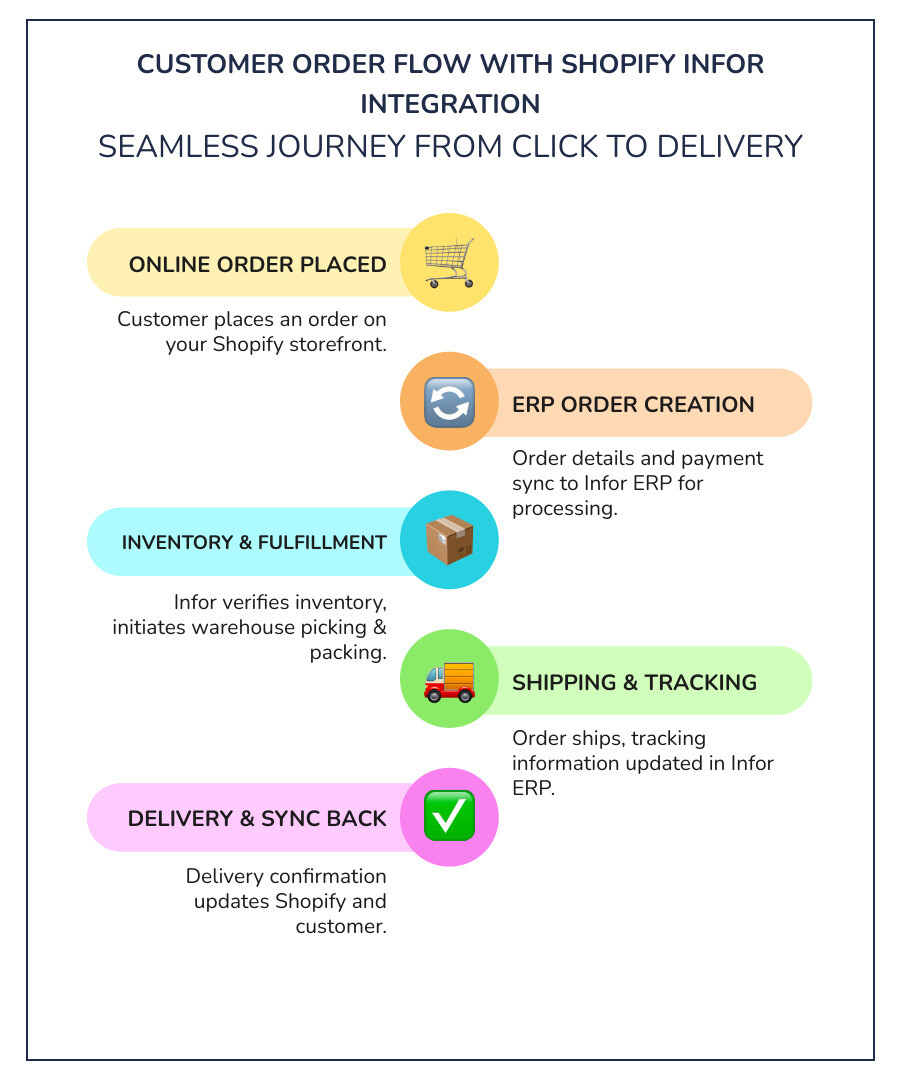
When your systems work together, a customer order on Shopify automatically flows into your Infor ERP. The system checks inventory, creates a sales order, and triggers fulfillment without anyone having to do it manually. When the order ships, tracking information syncs back to Shopify, and the customer is notified.

These automated workflows free your team from data entry to focus on growth. Your inventory levels stay accurate in real time across all systems and warehouses. This means fewer stockouts, almost no overselling, and customers who trust your stock information. The result is a faster, more efficient operation from top to bottom.
More info about Shopify Automation
Improve the Customer Experience
Though backend systems are invisible to customers, their impact is not. Integration means customers see accurate stock information and don't order out-of-stock products. They receive real-time order status updates automatically, reducing "where's my order?" calls.
Pricing remains consistent across all channels, and faster fulfillment becomes standard as orders flow directly to your ERP. Most importantly, customer data stays in sync, allowing your team to provide personalized service with a complete view of each customer's history. This smooth, reliable experience builds loyalty and encourages repeat business.
More info about eCommerce UX Design
Exploring Your Shopify Infor Integration Options
When connecting your Shopify store with your Infor ERP, you have several paths. The right approach depends on your Infor version, business processes, budget, and need for customization. Some businesses need a simple connection to get running quickly, while others have complex workflows that require a custom solution.

At First Pier, I help businesses find the integration method that makes sense for where they are now and where they're headed. Let's walk through your main options.
More info about Platform Migrations
Using First Pier's Pre-built Connectors
Pre-built connectors are often the fastest and most cost-effective way to achieve shopify infor integration. They are ready-made solutions that handle core data flows—products, inventory, orders, and customers—out of the box. First Pier works with trusted platforms that offer these connectors for various Infor ERP systems.
The main benefits are faster implementation time (weeks, not months) and a lower initial investment. However, they offer limited flexibility. If your business has highly unique processes, you may need to adapt them to fit the connector's standard workflows. For businesses with straightforward needs, a pre-built connector is an excellent starting point.
Find more about Shopify ERP connectors
Custom API Development with First Pier
When off-the-shelf solutions don't fit, custom API development offers a custom approach. This involves building a unique connection using Shopify's GraphQL APIs and Infor's ION APIs and Business Object Documents (BODs).
This method gives you complete control to build workflows that match your exact business processes, no matter how complex. It's also highly scalable, adapting as your business grows. While custom development requires more technical expertise and a higher initial investment, it's often the best long-term solution for businesses with specific needs. Our team at First Pier has deep experience building strong, custom integrations.
Explore Shopify's developer documentation
Checking Compatibility: Supported Versions
Compatibility is a crucial first step in planning your shopify infor integration. We need to confirm which versions of Shopify and Infor you're using.
Most modern Infor ERPs can be integrated. We commonly work with Infor M3, Infor CloudSuite Distribution, Infor Syteline, and Infor LN, but also support many others like Baan, FACTS, SX.e, and Lawson.
On the Shopify side, both Shopify and Shopify Plus have powerful APIs for integration. Shopify Plus is a particularly great fit for complex ERP connections due to its improved API access. Confirming compatibility early on prevents future problems.
Watch a video on supported versions
The Core of Your Shopify Infor Integration: Key Data Syncs
In a shopify infor integration, the magic is in how data moves between systems. It's about creating a smooth, reliable flow of business-critical information that keeps your operations running efficiently. Getting this data mapping right is the key to success.
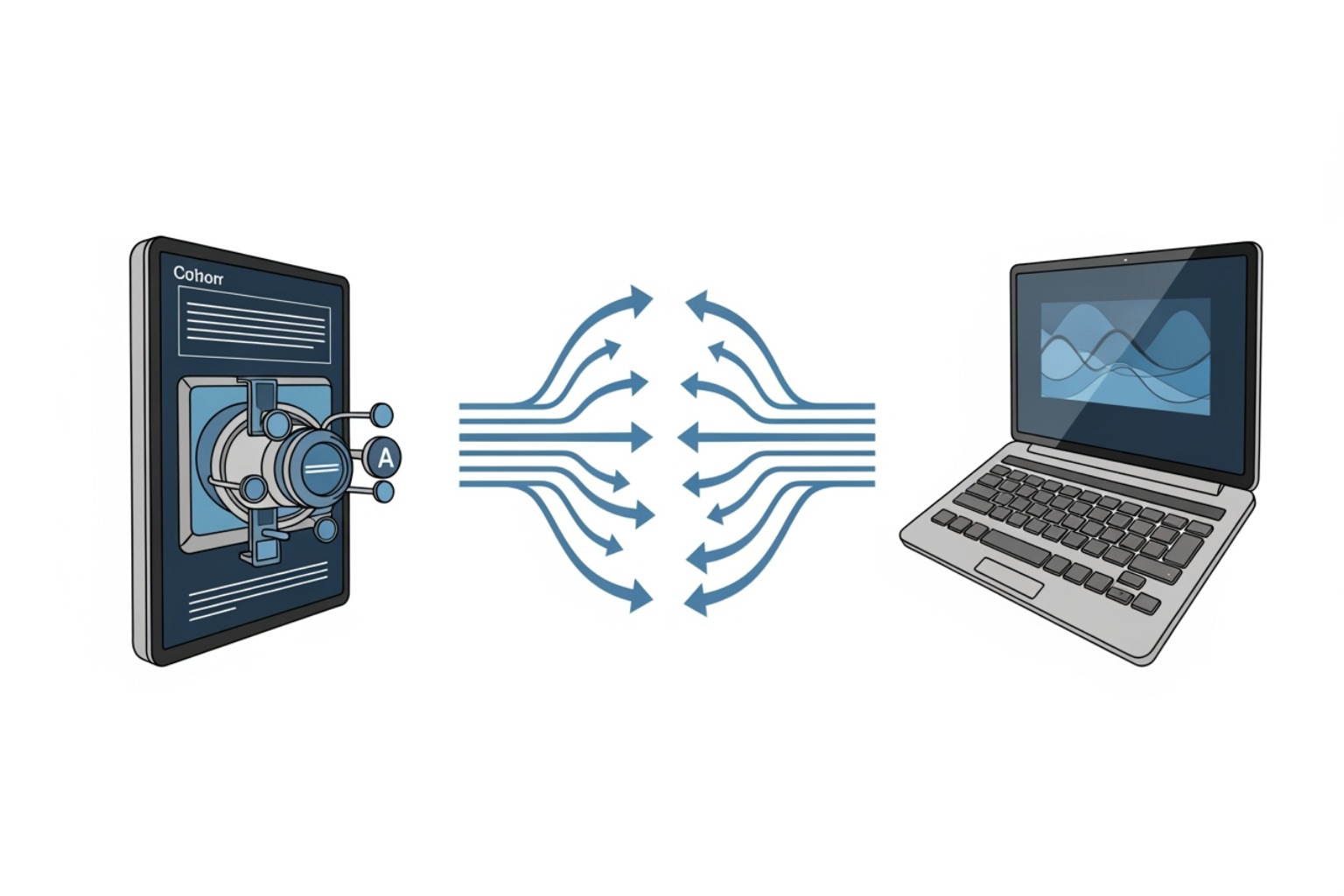
This data exchange happens through APIs. Infor systems often use ION APIs and Business Object Documents (BODs), while Shopify offers its powerful GraphQL API. When these are mapped correctly, your systems can communicate seamlessly.
Products and Inventory
Product and inventory sync is a key part of a successful integration. Your Infor ERP acts as the master source for product information. Details like descriptions, specs, and images are synced to Shopify, so updates only need to be made in one place.
Correct SKU mapping is critical to ensure both systems recognize the same products. The biggest benefit is real-time inventory sync, which displays accurate stock levels from your Infor ERP on your Shopify store, even across multiple warehouses. This prevents overselling. Pricing, including standard, promotional, and tiered structures, can also be managed in Infor and automatically updated in Shopify.
More info about Wholesale Strategy
Orders and Fulfillment
When a customer places an order on Shopify, the integration automatically creates a sales order in your Infor ERP. This eliminates manual entry and speeds up processing. Your warehouse team sees the order instantly in their existing system.
As the order is fulfilled, status updates like "shipped" flow back to Shopify. Tracking information is also synced, and customers are notified automatically. The integration can manage complex situations like partial shipments. Returns and cancellations can also be synced, though the exact workflow may vary depending on the integration method.
More info about Shopify Shipping Optimization Support
Customers and Financials
A shopify infor integration also brings together customer and financial data. New customer accounts created in Shopify can be automatically synced to Infor, creating a single customer database. This allows for better service, as your team has access to a complete order history, regardless of the sales channel.
Financially, sales data, taxes, and payment information flow from Shopify into Infor's accounting modules. This makes it easier to match up your numbers and provides accurate financial reporting, freeing up your finance team to focus on work that helps grow the business.
More info about eCommerce Analytics Analysis
Planning Your Integration: Costs, Timelines, and Common Problems
Planning your shopify infor integration requires understanding the costs, timelines, and potential roadblocks. Going into your project with realistic expectations and a clear plan is essential for a smooth launch. As a Portland, ME-based agency, I help businesses think through these details.
More info about Shopify Plus Optimization
Understanding Costs and Timelines for a Shopify Infor Integration
The cost and timeline for your integration depend on its complexity. A simple integration syncing orders and inventory might start around $15,000 and take a few weeks. A complex project with multiple workflows (customers, tiered pricing, returns) could range from $30,000 to $100,000+ and take several months.
| Integration Approach | Typical Cost Range | Typical Timeline |
|---|---|---|
| Pre-built Connector (Simple) | Starting around $15,000 | A few weeks to 1 month |
| Custom Middleware (Moderate) | $30,000 - $60,000 | 1-3 months |
| Custom API Development (Complex) | $60,000 - $100,000+ | 3-6 months+ |
Factors influencing the cost include integration complexity and the number of automated workflows. Remember to also budget for any platform license fees and ongoing maintenance costs.
Overcoming Common Challenges
Integration projects can have challenges, but they are manageable with proper planning. Common issues include:
- Data mapping issues: Making sure fields in Shopify and Infor line up correctly.
- API limitations: Standard APIs may not support a unique business rule, requiring a workaround.
- On-premise systems: Connecting cloud-based Shopify to an on-premise Infor ERP requires secure network configuration.
- Legacy system constraints: Older ERPs may have less flexible APIs.
- Lack of technical expertise: Integration is complex, and finding the right partner who understands both Shopify and Infor is key to avoiding lost orders and customer frustration.
More info about Shopify Development
Key Security Considerations for your Shopify Infor Integration
Security must be a priority from the start of your shopify infor integration. You are handling sensitive customer and financial data.
Key measures include:
- Data encryption: All data must be encrypted in transit and at rest.
- API security: Use strong authentication to ensure only authorized systems can access data. Infor's ION API Gateway helps with this.
- Secure gateways: A protected connection is needed when linking cloud-based Shopify to an on-premise ERP.
- Access control: Set up role-based permissions to limit data access to only those who need it.
- Compliance: Make sure your integration complies with data protection regulations like GDPR and CCPA to protect customer data and maintain trust.
To Sum Up: Building a Future-Proof E-commerce Operation
A solid shopify infor integration is one of the smartest investments for your e-commerce business. As we've covered, it eliminates manual tasks, reduces errors, and creates a better customer experience, making your operation more accurate and scalable.
The key is careful planning. You need to know your Infor ERP version, map your data flows, set a realistic budget, and prioritize security. Whether you choose a pre-built connector or a custom API solution, the goal is a single system that strengthens your business.
Future trends like AI and headless commerce will build on these integrated foundations. The work you do now prepares you for what's next.
At First Pier, we specialize in building these future-ready operations. With years of experience in Shopify and ERP integrations, we guide our partners through every step of the process. We're not just developers; we're a team invested in your long-term success.
If you're ready to run a more efficient and profitable e-commerce business, let's talk.
Contact our award-winning Shopify ecommerce agency to get started





.png)
.png)

