




Why Shopify Store Conversion Rate Optimization Matters for Your Bottom Line
Shopify store conversion rate optimization is the process of increasing the percentage of website visitors who make a purchase. Here's what you need to focus on:
- Calculate your baseline: Use the formula (Total Orders ÷ Total Sessions) × 100
- Industry standard: Average Shopify conversion rates are between 1.5% and 2.5%
- Top performers: Stores with rates above 3.2% are in the top 20%
- Key strategies: Improve site speed, simplify checkout, add social proof, optimize product pages, and recover abandoned carts
- Continuous testing: Use A/B testing and analytics to find friction points and confirm improvements
You're already getting traffic. But if you're converting at the average rate of 1.5%, 98.5% of your visitors leave without buying. A small improvement—from 1.5% to 2.5%—can mean 67% more revenue from the same traffic. That's the power of conversion rate optimization.
Research shows only 22% of Shopify stores are happy with their conversion rates. Many businesses focus on driving more traffic while ignoring the easier win: converting more of the visitors they already have. For example, a one-second improvement in site speed can boost mobile conversions by up to 27%.
I'm Steve Pogson, founder of First Pier, a Shopify Expert Agency in Portland, Maine. For two decades, I've helped brands use data-driven shopify store conversion rate optimization strategies that turn browsers into buyers and significantly boost revenue without increasing ad spend.
Understanding Your Store's Performance
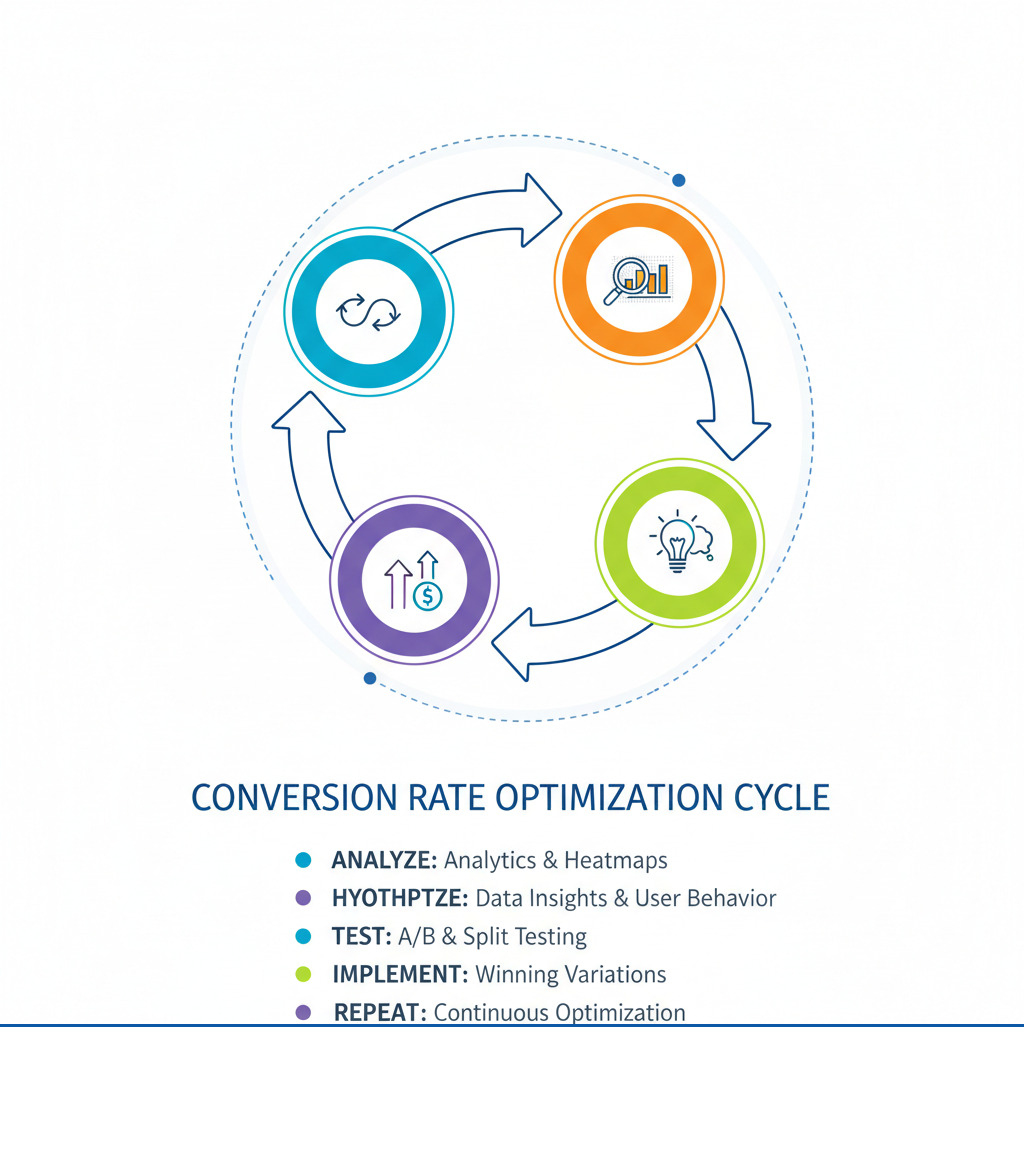
Before you can improve your Shopify store's conversion rate, you need to understand what's happening with your visitors. Think of it like fixing a leaky boat—you have to find the leak before you can patch it. Shopify store conversion rate optimization starts with knowing your numbers and measuring where you are right now.
How to find your current conversion rate
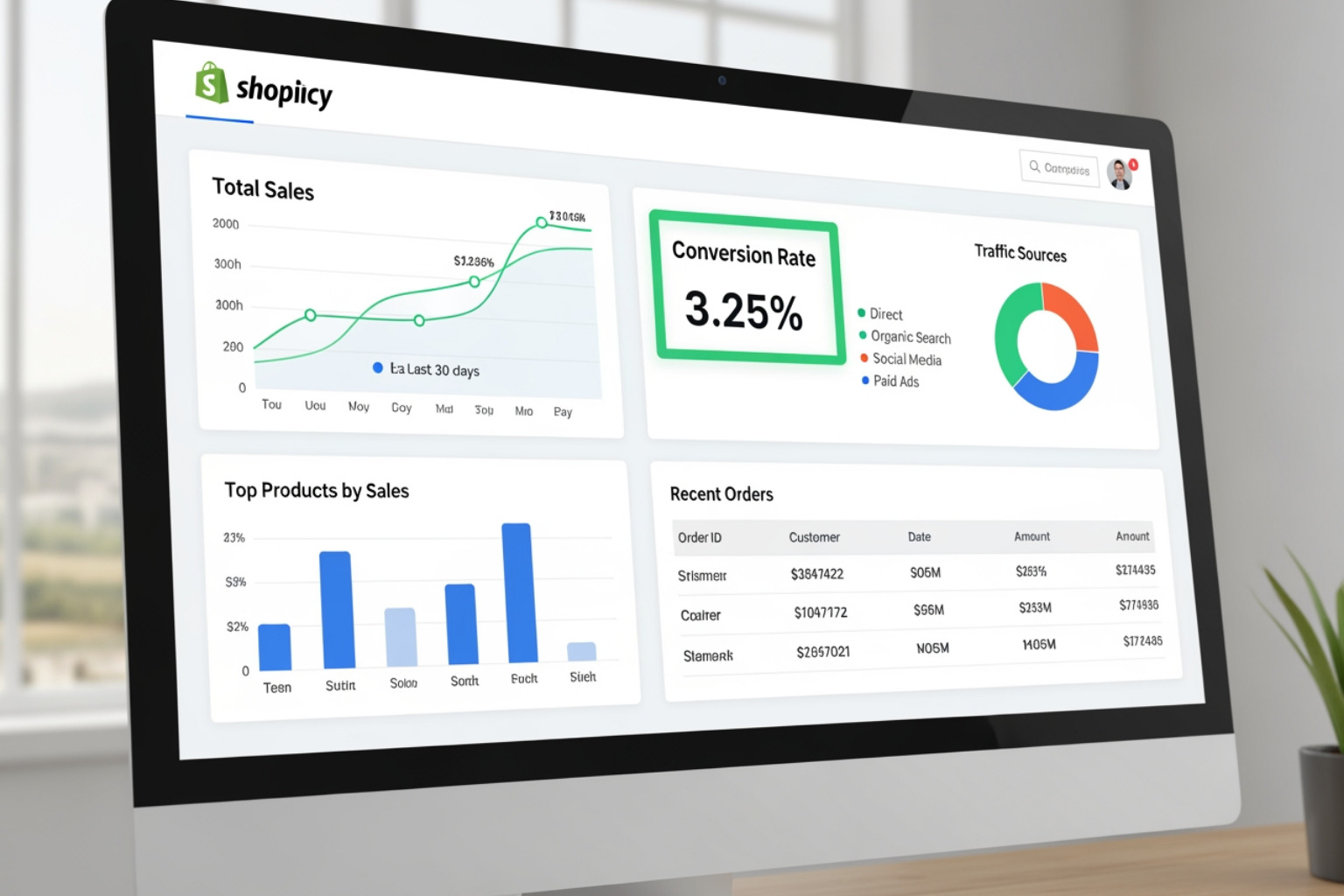
Calculating your conversion rate is simple. Use this formula:
Conversion Rate = (Total Orders ÷ Total Sessions) × 100
You can find these numbers in your Shopify dashboard. Divide your total orders by your total sessions over the same period. This gives you a baseline to measure future efforts against. Without it, you're flying blind.
So what's a good rate? Recent data shows the average is between 1.95% and 3%. If your rate is over 3.1%, your store is in the top 20%. However, a "good" rate depends on your industry, product price, and traffic source. A store selling $20 t-shirts will convert differently than one selling $2,000 furniture. The goal is always to exceed your own baseline.
A study on average ecommerce conversion rates provides helpful standards for setting realistic goals.
Using analytics to spot problem areas
Once you have your baseline, it's time to find where you're losing customers. Analytics are your best friend here. Shopify Analytics is great, but pairing it with Google Analytics gives you a more complete picture.
I start with behavior reports to see what people do on your site—which pages they visit, how long they stay, and where they get stuck. To find specific friction points, I use several tools:
- Heatmaps visually show where users click and scroll. Cold spots or sudden drop-offs can point to confusing sections.
- Session recordings are videos of user sessions. Watching a few can show you exactly where users get frustrated or abandon their carts. It helps explain the "why" behind the numbers.
- Purchase funnel analysis shows the path users take to purchase and where they drop off. A common friction point is the payment page. By comparing your funnel's performance to industry standards, we can find the top drop-off pages that need attention.
My team at First Pier specializes in helping businesses understand and act on these insights. We believe improving your website's user experience is key to increasing conversions. More info about ecommerce analytics services and UX design services can help you turn these insights into real results.
Building a High-Converting Foundation
Before advanced tactics, let's ensure your Shopify store has a solid foundation. A fast, mobile-friendly site that's easy to steer with product pages that sell is essential. This sets the stage for a shopping experience customers will want to complete.

Speeding up your site and improving mobile experience
Nothing kills a sale faster than a slow website. With over 58% of web traffic coming from mobile, a fast, mobile-optimized store is crucial. Page load time directly impacts shopify store conversion rate optimization. A one-second load time difference can nearly double conversions. Almost 70% of consumers say site speed influences their decision to buy.
- Compress images: This is an easy win. Use a tool like ImageOptim to reduce file sizes without losing quality. Large images slow your site down.
- Improve mobile experience: Shopify themes are responsive, but you can do more. Simplify mobile navigation and make buttons easy to tap. Use Google's free mobile-friendly test to find issues. A one-second speed improvement can boost mobile conversions by up to 27%.
My team at First Pier specializes in making Shopify stores technically sound and fast. More info about Shopify development services
Optimizing product pages for sales
Your product pages are where browsers become buyers. Every element should build confidence and desire.
- High-quality images and videos: Use multiple high-resolution photos from different angles with zoom. Product videos are even better, as they can show products in action. Apps like EasyVideo can help.
- Persuasive descriptions: Go beyond features. Talk to your target customer, address their concerns, and use sensory words. Make it easy to skim. Shopify Magic can help generate ideas.
- Clear call-to-action (CTA): Your "Add to Cart" button must stand out. Use strong, actionable language.
- Sizing guides: For clothing or sized items, a detailed sizing guide is essential to build confidence and reduce returns.
At First Pier, we help brands create a store experience that truly connects with their audience. More info about branding and identity services
Making your site easy to steer
Great navigation can increase conversions by 18.5%. If customers can't find what they want, they'll leave.
- Simple navigation: Use a clean main menu. For stores with many categories, a mega menu works well. A hamburger menu is best for mobile.
- Smart search bar: Shoppers who use search have high purchase intent. An 80% will leave after a bad search experience. Use an app like Searchanise to add predictive search that handles typos and shows product images.
- Product filters: Let customers quickly narrow choices by size, color, or price on category pages.
Improving website navigation can increase conversions by 18.5%
Advanced Shopify Store Conversion Rate Optimization Strategies
With a solid foundation, we can move to advanced shopify store conversion rate optimization. These tactics build trust, streamline the buying process, and recapture lost sales.
Building trust with social proof
Nearly half of consumers trust customer reviews as much as personal recommendations. Seeing that others had a good experience gives shoppers the confidence to buy.
- Customer reviews: Getting reviews can increase conversions by 3% to 37%. Nearly 70% of shoppers read reviews before buying. Use apps like Yotpo or Loox to add reviews to product pages.
- Testimonials and UGC: Feature testimonials on your homepage and product pages. Encourage customers to share user-generated content (UGC)—photos of your products in use—for authentic social proof.
- Ratings and trust badges: Display star ratings clearly. Add trust badges for secure payments, money-back guarantees, or free shipping on product pages and at checkout to reassure customers.
My team can help you build customer communities that generate this valuable social proof. More info about community and loyalty services
Creating a frictionless checkout
More than two-thirds of shoppers abandon their carts. A complicated checkout is a common reason. When visitors are ready to buy, remove any friction.
- Offer guest checkout: Don't force customers to create an account.
- Use Shop Pay: Shopify's accelerated checkout, Shop Pay, can increase conversions by up to 50% over guest checkout. Over 150 million buyers are pre-opted in for one-click checkout.
- Simplify forms: Keep your checkout form short. 18% of shoppers abandon carts because of a long checkout process. Collect only essential information.
- Show progress: A progress bar reduces anxiety by showing customers how many steps are left.
- Provide payment options: Offer credit cards, PayPal, and other popular digital wallets.
Shop PayResearch shows 18% of shoppers abandon carts due to a long checkout
Recovering lost sales with abandoned cart emails
As many as 85% of mobile shoppers leave without checking out. These sales aren't lost forever. Abandoned cart emails can bring interested shoppers back.
Set up an email automation to trigger within an hour of abandonment. Use a compelling subject line and a single, clear call-to-action button to return to the cart. Sometimes, a small discount or a reminder that an item might sell out is all it takes to complete the sale.
My team are experts in crafting email and SMS campaigns that turn abandoned carts into sales. More info about email and SMS marketing services
The Future of CRO: AI and Personalization
The world of shopify store conversion rate optimization is changing fast, thanks to Artificial Intelligence. We can now create personalized shopping experiences for thousands of customers at once, a task that used to be impossible.

How to use AI for shopify store conversion rate optimization
AI is changing how we approach CRO. What used to take weeks of manual analysis can now happen in hours. AI-powered tools can test multiple variables at once and learn continuously, helping us find winning combinations faster.
Shopify Sidekick is a great example. It's a smart assistant built into Shopify that monitors your store. It might suggest adding a free shipping banner if it notices high cart abandonment due to shipping costs. It learns from your customers' behavior over time.
Generative AI also speeds up content creation, letting us test more headlines and product descriptions to see what connects with your audience. But the real power of AI is in predictive analytics. It can process huge amounts of customer data to spot patterns and predict what a customer might do next. This allows us to adjust our strategy in real-time and focus on what matters.
My team stays on top of these developments to help our clients stay ahead. More info about Shopify automation services
Delivering personalized experiences at scale
89% of business leaders believe personalization will be crucial to their success. Customers now expect it. AI makes it possible to show visitors products that match their style and budget.
- AI-powered recommendations: Instead of showing the same featured products to everyone, AI can analyze a visitor's behavior and show them what they're most likely to buy. This can increase revenue by 5% to 15%.
- Targeted pop-ups: AI can trigger specific pop-up messages based on behavior. A first-time visitor might see a welcome offer, while someone about to leave with items in their cart might see a last-minute incentive. These convert at over 9% on average.
- Dynamic content: The homepage banner, product layouts, and even messaging can change based on who is visiting. This creates a unique experience for each shopper.
Personalization can lift revenue by 5% to 15% according to McKinsey
This isn't a passing trend—it's the future of e-commerce. The tools are becoming more accessible, and my team at First Pier can help you figure out which AI and personalization strategies will work best for your store and audience.
Frequently Asked Questions about Shopify CRO
I often get asked similar questions about shopify store conversion rate optimization. Here are some of the most common ones.
What is a good conversion rate for a Shopify store?
The average Shopify conversion rate is around 1.5% to 2.5%. If you're above 3.2%, you're in the top 20% of stores, and above 4.8% puts you in the top 10%. However, a "good" rate really depends on your niche, product price, and traffic sources. A high-end jewelry store will have different numbers than a fast-fashion brand. My advice is to focus on consistently improving your own baseline rather than chasing an arbitrary number.
What are the most common CRO mistakes to avoid?
I've seen many businesses make the same mistakes. Here are the big ones to avoid:
- Not testing changes: Making changes based on gut feeling instead of data is a gamble. Every change should be an idea you test.
- Copying competitors blindly: What works for a competitor might not work for you. Their audience and brand are different.
- Ignoring mobile users: Most traffic is mobile. A poor mobile experience tells the majority of your visitors to shop elsewhere.
- Having a slow website: A slow site is a top conversion killer.
- Complicating the checkout: Too many steps or form fields will cause customers to abandon their carts.
- Focusing only on the homepage: Friction often occurs on product pages and during checkout, not just on the homepage.
How often should I run A/B tests on my store?
You should always be testing. Shopify store conversion rate optimization is a continuous process, not a one-time project. Start with your highest-impact pages, like your homepage, product pages, and checkout. Create a clear idea for each test (for example, "Changing the CTA button color to green will increase clicks"). Run the test until you have a statistically significant result, which usually takes a week or two depending on traffic. Once a winner is found, implement it and move to the next test. The goal is constant improvement.
Start Improving Your Conversions Today
Shopify store conversion rate optimization isn't a buzzword; it's the most cost-effective way to grow your revenue without spending more on ads. You've already paid to get visitors to your store. Why not make sure more of them buy?
The stores that truly thrive are the ones that treat CRO as a continuous process. Small, consistent improvements add up over time. Moving from a 1.5% to 3% conversion rate doesn't just double revenue—it fundamentally changes a business.
Here are the key takeaways:
- Let data guide you: Your gut instinct is valuable, but analytics tell you what's actually happening.
- Prioritize user experience: A fast, intuitive, mobile-friendly store is the foundation of trust.
- Build trust with social proof: Customer reviews and testimonials are powerful persuaders that can boost conversions significantly.
- Simplify your checkout: Every extra step is a chance for a customer to leave.
- Use AI wisely: Tools for personalization and automated testing can help you optimize at a scale that was previously impossible.
My team at First Pier has spent years perfecting these strategies for Shopify store owners. We're based in Portland, Maine, and we're passionate about helping brands build high-performance online businesses. Whether you need a detailed site audit, full-scale optimization, or just want to talk through where to start, we're here to help you turn more browsers into buyers.
More info about Shopify CRO services
The best time to start optimizing your conversion rate was yesterday. The second best time is right now.





.png)
.png)

