


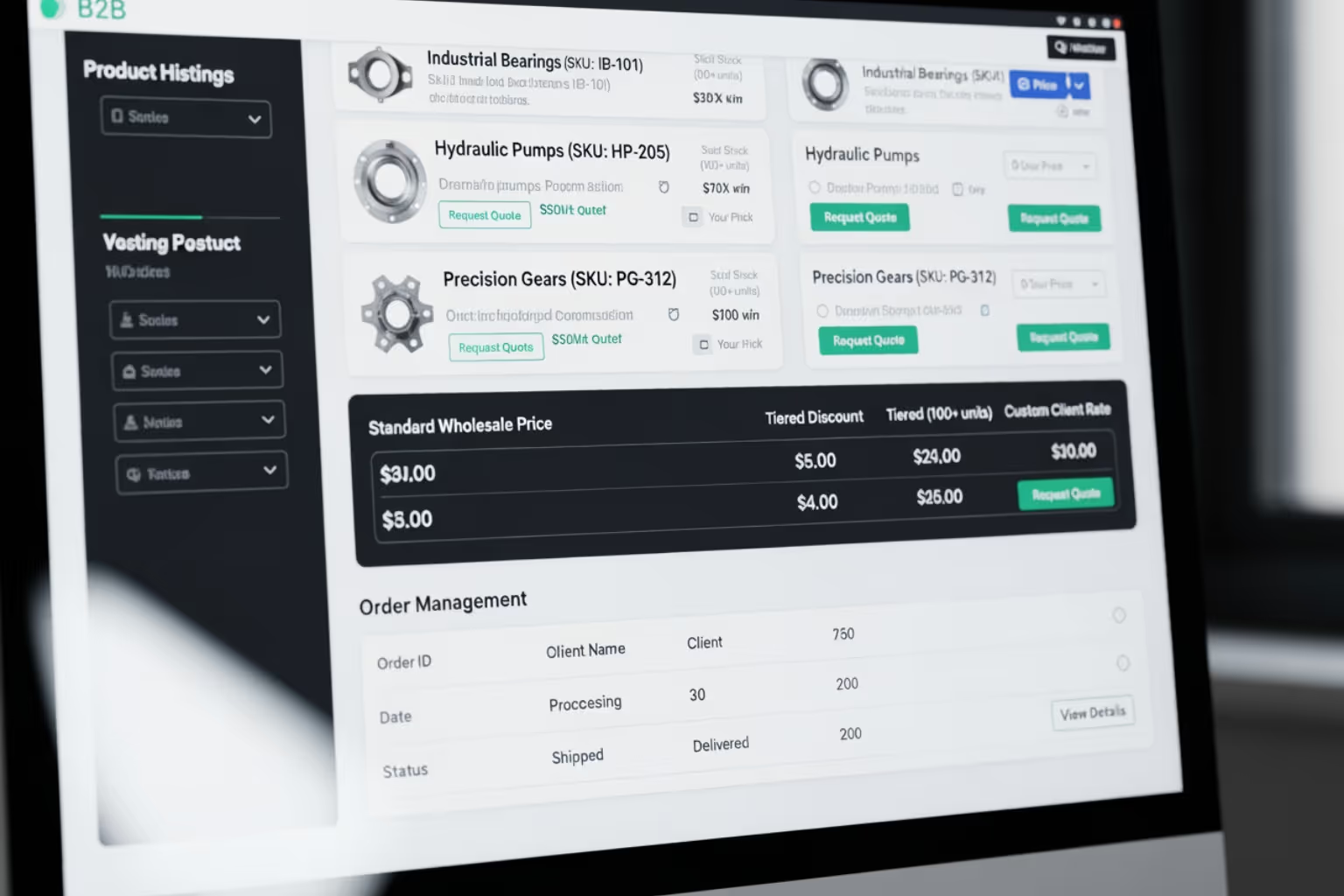

Why Every Growing Business Needs a Shopify Wholesale Portal
A Shopify wholesale portal is a B2B ecommerce solution for selling to wholesale buyers with custom pricing and payment terms, all managed within your Shopify store. You can use Shopify's built-in B2B features (on the Plus plan) or third-party apps on any plan. The main benefit is managing both retail (B2C) and wholesale (B2B) from one platform, which cuts down on complexity and cost.
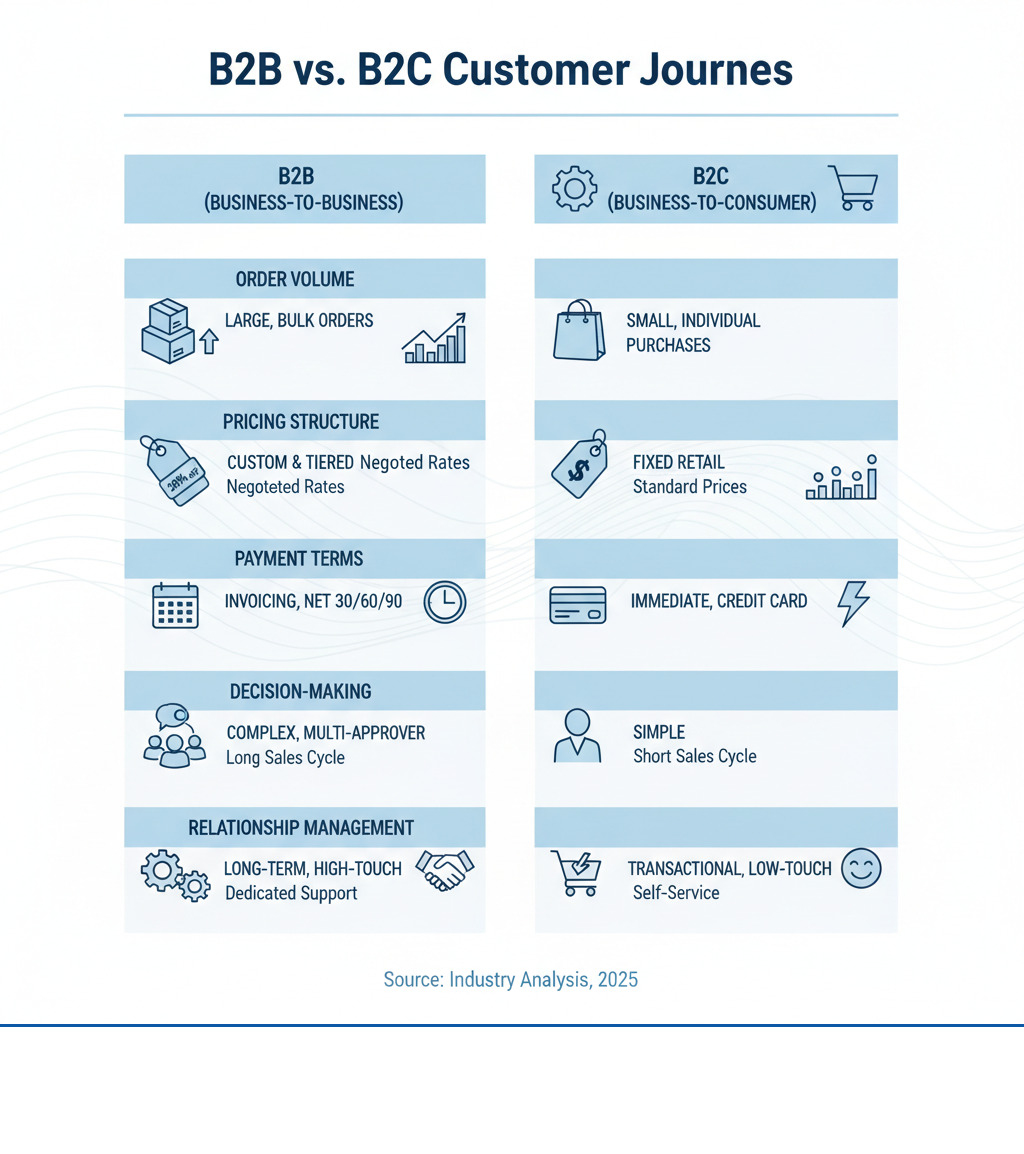
The B2B ecommerce market is huge and growing. For businesses with a Shopify store, adding a wholesale portal opens a new sales channel and builds a scalable, unified commerce experience. The old method of running separate systems for retail and wholesale creates extra work, duplicate inventory, and higher costs. A well-made Shopify wholesale portal lets you serve both B2C and B2B customers from one platform while giving each group the personalized experience they expect.
B2B buyers increasingly want the same smooth experience they get as consumers. Research shows 65% of B2B buyers complete high-quality deals when they can manage their own purchasing process, compared to just 24% when sales reps are involved. Your wholesale portal can become a real competitive advantage.
At First Pier, we've set up countless Shopify wholesale portal solutions for brands needing to grow their B2B sales without disrupting their retail experience.
Choosing Your Path: Native B2B vs. App-Based Solutions
When setting up a Shopify wholesale portal, you have two main choices: use Shopify's built-in B2B features (on Shopify Plus) or use third-party apps on your current plan. Both paths work, but they suit different business needs. The right choice depends on your current Shopify plan, budget, and how complex your wholesale operations are.
If you're on Shopify Plus or handle high volumes, the native features offer a smooth, built-in experience with a lower overall cost. However, if you're on a basic plan and want to test wholesale without a big investment, apps provide a flexible way to start.
Here's how these two approaches compare:
| Feature/Consideration | Native B2B (Shopify Plus) | App-Based Solutions (All Shopify Plans) |
|---|---|---|
| Cost | Included with Plus plan | Monthly app subscriptions add up |
| Setup | Integrated, less complex | Requires configuring multiple apps |
| Key Features | Company profiles, custom catalogs, payment terms, B2B checkout, etc. (built-in) | Custom pricing, access control, quick ordering, payment terms (via apps) |
| Scalability | Enterprise-grade | Scalable, but can become complex with many apps |
| Integration | Seamless with Shopify core | Requires apps to work together |
| Customization | Highly customizable with themes, APIs, Liquid | Depends on app flexibility, custom code for deeper changes |
Using Shopify's Native B2B Features on Shopify Plus
For businesses with serious wholesale goals, Shopify Plus offers a fully integrated Shopify wholesale portal inside your admin. You manage retail and wholesale from one place, avoiding separate systems and inventory problems. This unified approach keeps your data in sync automatically as you grow.
With Shopify Plus, you get company profiles for wholesale accounts with multiple locations and buyers. Each company can have its own payment terms, price lists, and tax exemptions. Custom catalogs let you show different products and prices to different buyers. For example, the fragrance label WHO IS ELIJAH used this to increase their international wholesale revenue by 50% year over year.
Payment terms like Net 30 or Net 60 are built-in, which is important since 81% of B2B buyers value choosing their own invoicing schedule. The B2B checkout is also streamlined, showing buyers their custom pricing automatically after they log in. You can learn more about these features at Shopify's B2B features information. If you need help with this setup, my team at First Pier specializes in Shopify Plus optimization.
Building a Portal with Third-Party Apps
Not on Shopify Plus? You can still build a powerful Shopify wholesale portal using apps on any Shopify plan. This method is great for testing wholesale before upgrading to Plus.
The key is customer tagging. You assign tags like "wholesale" or "VIP_tier1" to your B2B customers. These tags then open up different pricing, products, and payment options through apps.
Gated content apps hide your wholesale section from retail shoppers, ensuring only approved, tagged B2B buyers can see wholesale pricing. This keeps your pricing private. Custom pricing rules give you control over pricing based on tags, collections, or quantity, allowing for volume discounts and tiered pricing.
Two helpful apps are the Wholesale Pricing Discount B2B app for detailed price control and the Wholesale Lock Manager app for restricting access. While app subscriptions add to your monthly costs, they offer flexibility without the full investment of a Plus plan. If you need help with app integration, we offer Shopify development services at First Pier.
Step-by-Step: Setting Up Your Shopify Wholesale Portal
Building a Shopify wholesale portal is simpler than you might think. Whether you use Shopify Plus or apps on a standard plan, the setup follows a clear order to give B2B customers a smooth, custom buying experience. Here is an explanation of each step.
Step 1: Onboarding and Approving B2B Customers
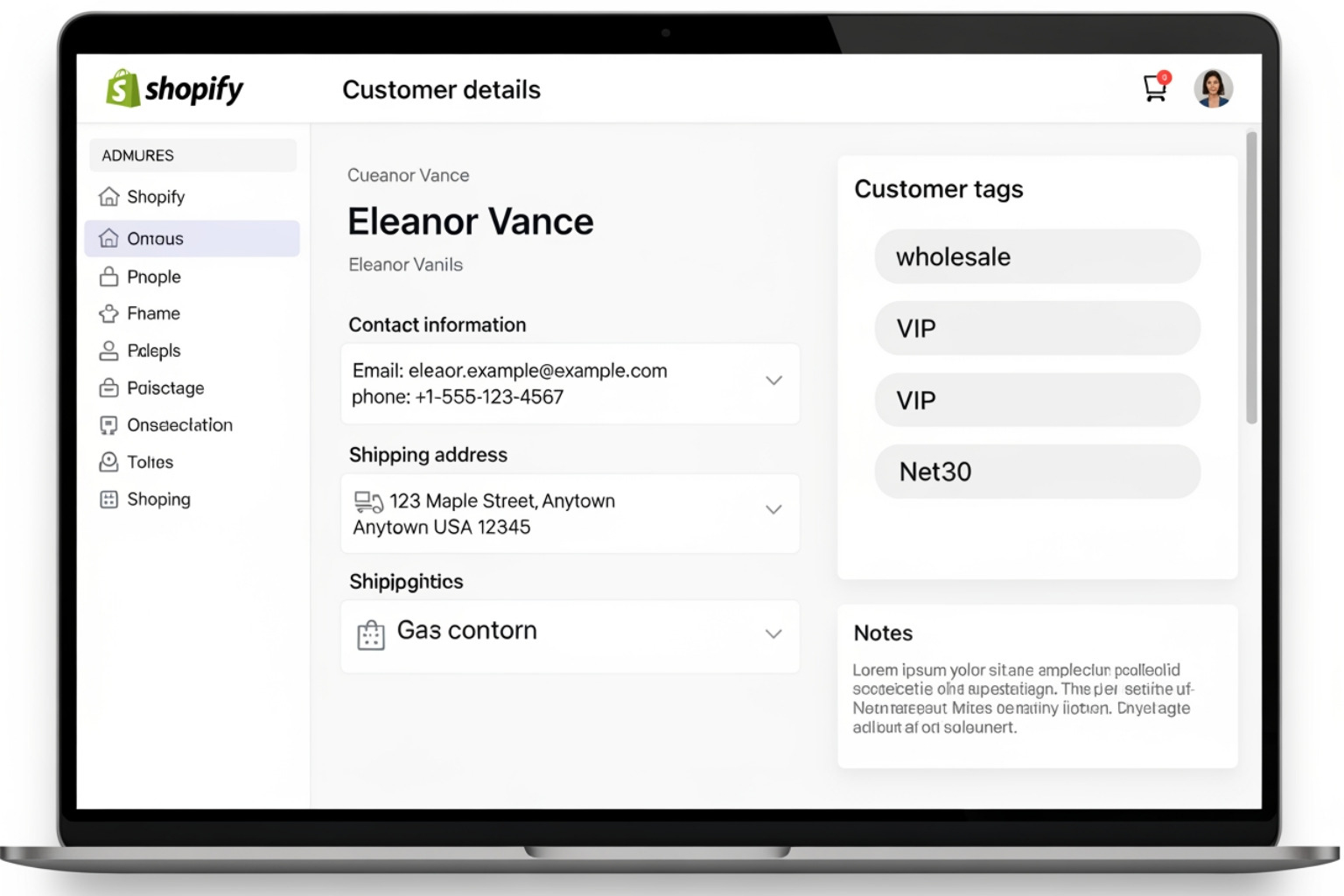
First, create a wholesale signup form to collect applications from potential B2B customers. The free Shopify Forms app works well for this, letting you build custom forms to gather business details like company names and tax IDs.
Once you approve an application, the key step is customer tagging. You assign tags like "Wholesale" or "B2B-Approved" to their customer profile in Shopify. These tags control what products, prices, and payment terms they see.
As your business grows, you can use an automation tool like Shopify Flow to automatically tag new customers, send approval emails, and trigger welcome messages. This can save a lot of time. If you're interested in automation, check out our Shopify automation services.
Step 2: Restricting Access and Gating Content
After approving and tagging your B2B customers, you need to ensure they are the only ones who see your wholesale products and pricing. This creates a members-only section within your store.
The goal is to prevent retail customers from seeing wholesale prices. A simple method is using password-protected pages, but this is less flexible. A more advanced approach uses customer tag rules with an access control app. Tools like Wholesale Lock Manager let you show or hide products and collections based on a customer's tags. When a customer with a "Wholesale" tag logs in, they see the B2B catalog; everyone else sees the standard retail store.
Step 3: Managing Customer-Specific Pricing and Catalogs
This is where your Shopify wholesale portal becomes truly useful. Not all wholesale customers are the same, so you need to offer different pricing and product selections.
Custom pricing is the core of this. Whether you use Shopify Plus or an app like Wholesale Pricing Discount B2B, you can set specific prices that only appear for approved wholesale customers.
Tiered pricing and volume discounts are very important for B2B. You can offer better prices for larger quantities, which encourages bigger orders. Custom catalogs take this further by letting you create unique product selections for different buyer types, making their shopping experience more relevant.
Another key B2B feature is payment terms. Offering Net 30, Net 60, or Net 90 terms allows partners to order now and pay later. This is highly valued by B2B buyers and is supported by both Shopify Plus and many third-party apps.
Step 4: Improving Inventory and Order Management
The last step is to make the ordering process as smooth as possible while keeping your operations running well.
Running retail and wholesale from one Shopify store means your inventory is automatically synced. This is a huge benefit, as it prevents overselling and builds trust with B2B buyers who can see real-time stock availability.
Minimum order quantities (MOQs) help ensure wholesale orders are profitable. You can set these with Shopify Plus or specific apps. Quick order forms allow buyers to add multiple items to their cart at once, which is great for repeat customers. Reorder functionality is also a big time-saver, letting buyers duplicate past orders with a few clicks.
For larger businesses, ERP and CRM integration is necessary. Connecting your Shopify portal to your other business systems ensures smooth data flow for orders, customers, and inventory. Shopify's APIs make these integrations possible. If you need help connecting your systems, my team at First Pier offers Shopify ERP services.
Key Features and Benefits of a Great Shopify Wholesale Portal
A good Shopify wholesale portal is about more than just features; it's about delivering a great experience that meets the unique needs of B2B buyers. Your B2B customers are busy and need speed, clarity, and control—your portal should provide all three.

Core Features Your B2B Buyers Expect
B2B buyers want a self-service experience similar to how they shop for themselves. They want to log in, find what they need, and buy it quickly without back-and-forth emails. Here are some essential features:
- Quick Ordering: A bulk order form lets buyers add many products and quantities to their cart from a single page.
- CSV Uploads: For very large orders, buyers can upload a spreadsheet to instantly fill their cart.
- Easy Reordering: A one-click reorder option for past items or entire carts saves buyers a lot of time.
- Customer-Specific Pricing: Each buyer sees only the prices and discounts for their account, including volume-based tiers.
- Flexible Payments: Besides credit cards, offering net payment terms (Net 30, 60, 90) is standard in the wholesale world.
- Self-Service Accounts: A personal dashboard lets buyers manage their company info, shipping addresses, and user permissions.
- Order Tracking & Invoice Management: Buyers need real-time order status updates and access to downloadable invoices for their records.
How a Shopify Wholesale Portal Improves the B2B Customer Experience
When these features work together, they create a smooth and helpful experience for your B2B customers. The process changes from difficult and slow to easy and fast.
Self-service control is the main benefit. B2B buyers prefer to work on their own time. A portal gives them the ability to browse, order, and manage their accounts 24/7. Personalization makes each buyer feel important. When they see a catalog and pricing made just for them, it builds repeat business.
The speed and time savings are a huge plus. Quick order forms and easy reordering cut down on administrative work. Clarity builds trust. When buyers see clear pricing, available inventory, and real-time order status, they feel sure about their purchases. This reduces friction and frees up your sales team to focus on building relationships.
Customization and Brand Identity
Your Shopify wholesale portal should be a part of your brand, not a plain, generic solution. Every interaction with your B2B customers is a chance to strengthen your company's identity.
Brand consistency is just as important in B2B as it is in B2C. Your wholesale portal should use the same colors, fonts, and tone as your retail store. This builds trust and looks professional.
Shopify themes and Liquid customization provide the tools to do this. You can adjust the look and feel of your portal to match your brand. For more advanced changes, you can use Liquid, Shopify's templating language, to control every part of the user interface.
For brands that need the most freedom, headless commerce offers great options. This approach separates the front-end (what customers see) from Shopify's back-end system. You can build a completely custom front-end while still using Shopify for your main sales functions, thanks to its strong Storefront APIs. At First Pier, we can help with branding and identity to ensure your portal reflects your unique brand.
Overcoming Challenges and Looking Ahead
Setting up a Shopify wholesale portal can have its challenges, but most have simple solutions. The B2B ecommerce world is also changing quickly, with new technologies making it easier to serve wholesale buyers.
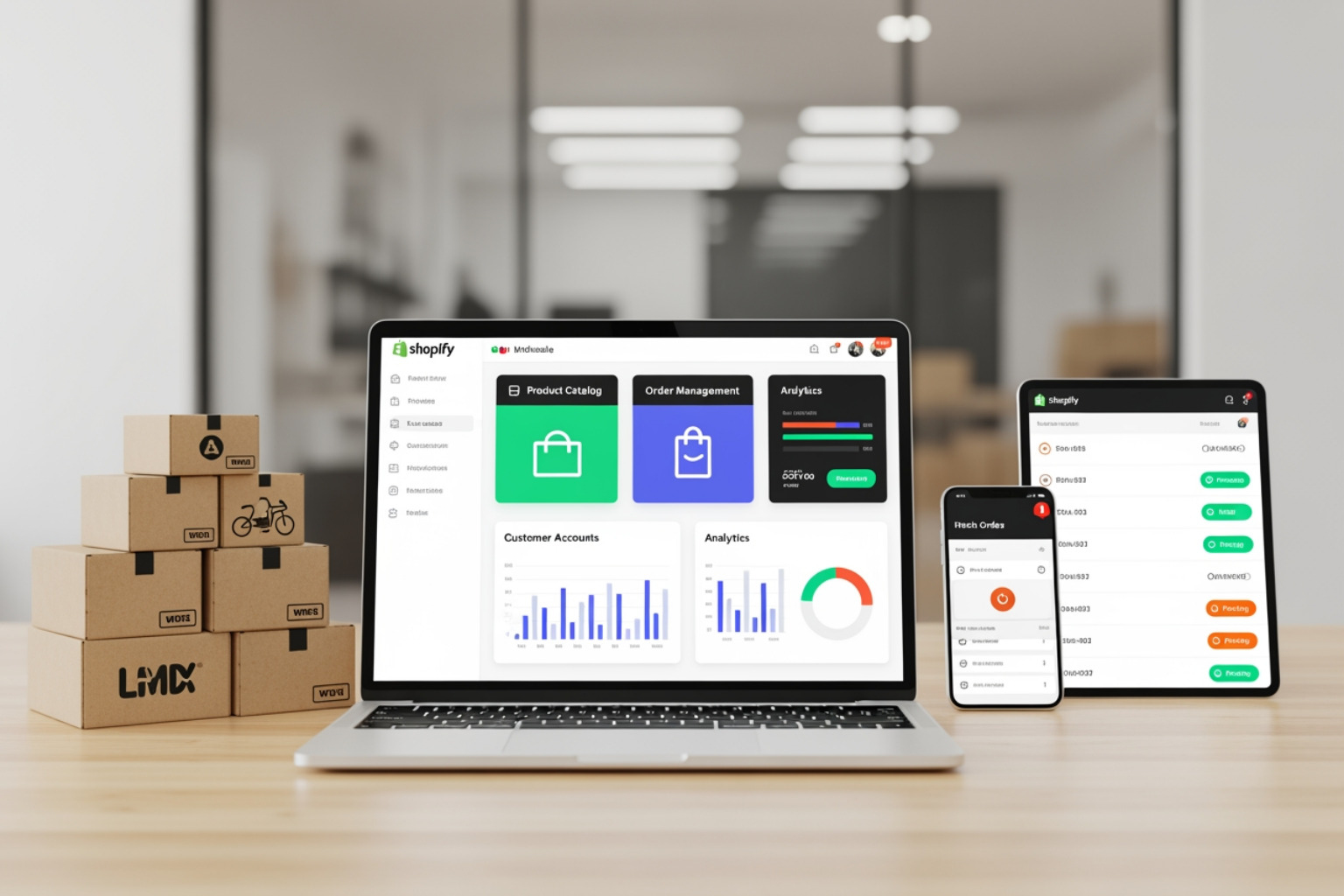
Common Challenges and How to Solve Them
Here are a few common issues and their fixes:
- Inventory Syncing: Selling the same products to retail and wholesale can risk overselling. Solution: Running both from a single Shopify store automatically syncs inventory in real-time, preventing this.
- Technical Setup: Combining multiple apps can feel difficult. Solution: Plan your app choices carefully. For those on Shopify Plus, the built-in B2B features remove most of this difficulty.
- Customer Adoption: Your B2B buyers may be used to ordering by phone or email. Solution: Show them the benefits of the portal, like faster ordering and 24/7 access. Make it easy to use and offer support during the change.
- Managing Price Lists: You may need different prices for different customer groups. Solution: Both Shopify Plus and advanced wholesale apps are designed to handle this, letting you assign price lists to customer tags.
How Shopify's B2B Features Compare
Shopify's biggest B2B advantage is unified commerce—running your retail and wholesale business from one platform. This means one set of products, one inventory system, and one order dashboard. This unified approach leads to fewer problems and more time to grow your business.
The financial side is also a factor. Shopify's overall cost can be lower than competitors because you're building on a system you already have. The Shopify App Store also gives you access to thousands of apps to meet almost any B2B need.
Best of all, Shopify grows with you. The platform can handle your business whether you're just starting with wholesale or managing thousands of B2B customers.
Future Trends in Wholesale Ecommerce
The B2B world is changing fast. Staying ahead of these trends can give you a competitive edge.
AI integration is already changing B2B buying. Many procurement teams now use AI for tasks like finding suppliers. Your Shopify wholesale portal may soon need AI-powered features like smart product recommendations and automated customer service.
Deep customization will go beyond custom prices. Future portals will recommend products based on purchase history and show content relevant to each buyer's industry.
Mobile-first B2B ordering is no longer a choice. Buyers expect to place orders from their phones, and your portal needs to work perfectly on every device. A great example is WHO IS ELIJAH, a fragrance brand that used custom catalogs in Shopify to grow its wholesale revenue by 50% year over year by creating custom experiences for different markets.
Frequently Asked Questions about the Shopify Wholesale Portal
Do I need Shopify Plus to create a wholesale portal?
No, you don't need Shopify Plus. While Plus offers powerful, built-in B2B features ideal for larger operations, you can build a great Shopify wholesale portal on any standard plan using third-party apps from the Shopify App Store. This app-based approach is perfect for smaller businesses or those just starting with B2B.
How do I hide wholesale prices from my retail customers?
This is a common and important question. You can hide wholesale pricing and products using customer tags along with an access control app. First, you apply a tag like "Wholesale" to your approved B2B customers. Then, you use an app like Wholesale Lock Manager to show certain products or prices only to logged-in customers with that tag. This way, retail shoppers see your standard site, while wholesale buyers get a private, personalized experience.
Can I offer different payment terms like Net 30 to wholesale customers?
Yes, absolutely. Offering flexible payment terms like Net 30, Net 60, or Net 90 is a key feature for B2B sales. If you're on Shopify Plus, you can set up these payment terms directly for specific company profiles. On standard Shopify plans, many third-party wholesale apps also offer this. Since 81% of B2B buyers find it important to choose their own invoicing schedule, offering these terms in your Shopify wholesale portal can give you a real edge.
Final Thoughts on Your B2B Success
Creating a Shopify wholesale portal is a smart move for your business's future. The B2B market is growing, and the key is to add wholesale features in a way that helps your customers and makes your operations more efficient. A well-made portal benefits everyone: your B2B buyers get the easy, self-service experience they want, and your team can stop manually processing orders and focus on growth.
You have two good paths. For larger businesses, Shopify Plus offers a powerful, all-in-one solution with its built-in B2B features. For those on standard plans, an app-based approach offers great flexibility to build what you need without a large initial cost.
What's most important is having a clear plan. Think about how you'll onboard customers, set up pricing, and control access. A thoughtful setup now will prevent problems later and create a better experience for your wholesale buyers.
My team and I at First Pier have years of experience helping businesses solve these exact challenges. We know how to build a Shopify wholesale portal that works well. Whether you need help choosing the right path, setting up pricing, or connecting your systems, we're here to help. If you're ready to see how a wholesale plan could change your business, check out our wholesale strategy services.
The B2B ecommerce world keeps changing, but the basics are the same: give customers a great experience, make it easy for them to buy from you, and build systems that can grow with your business. A well-done wholesale portal does all three.





.png)
.png)

