


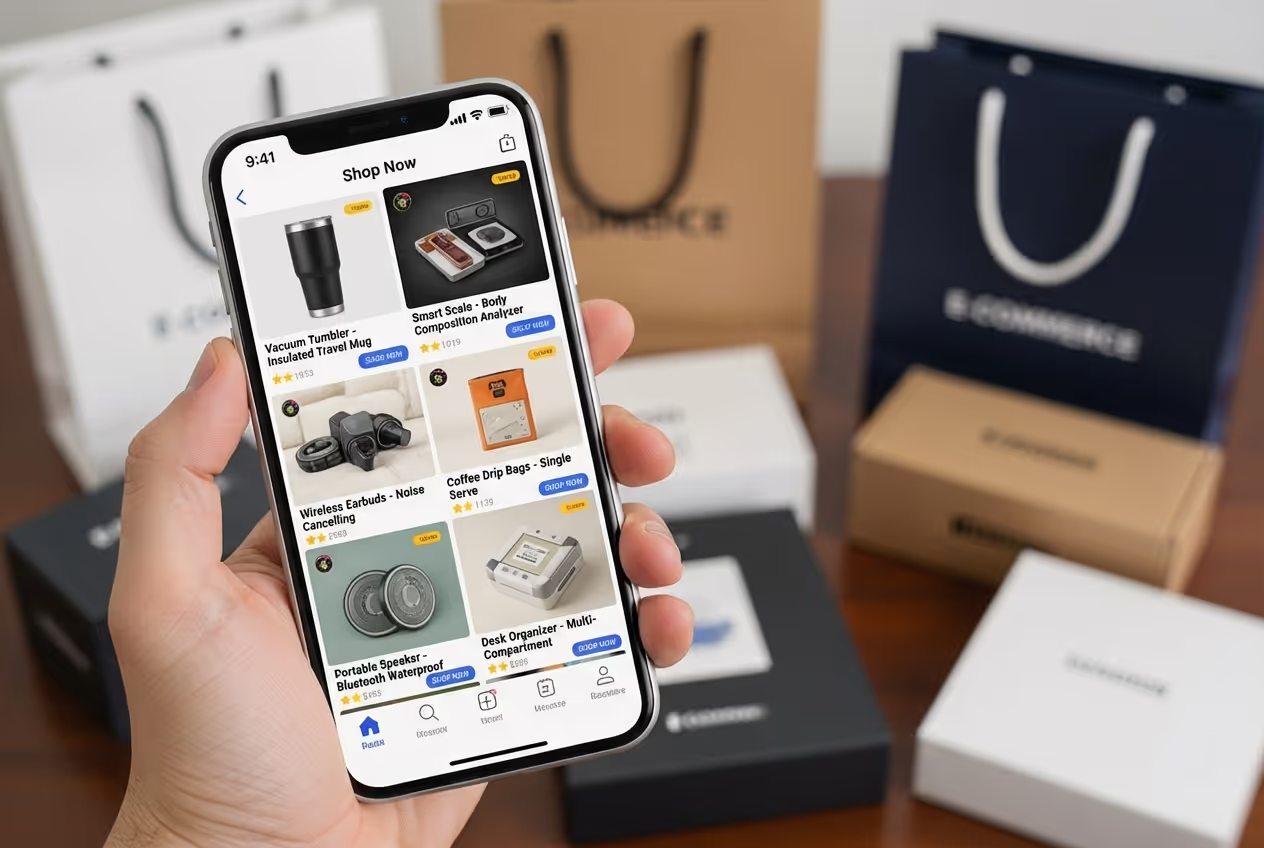

Why Social Media Has Become Essential for Ecommerce
Summary
- Social media channels drive product discovery, research, and purchases for ecommerce customers, with 70% of consumers buying products first seen on social platforms.
- 89% of consumers make a purchase after following a brand on social media, and 91% visit the brand's website or app.
- Successful social media marketing combines organic content, paid advertising, influencer partnerships, and customer engagement.
- Platform selection depends on target audience demographics, product type, and available resources for content creation and management.
- Key metrics include engagement rate, click-through rate, conversion rate, and return on ad spend.
Social media marketing for ecommerce is no longer optional. It's where your customers spend their time, find new products, and make purchase decisions. With consumers spending nearly two and a half hours daily on social platforms, these channels have changed from places for sharing photos into direct sales engines.
The numbers show the trend. After following a brand on social media, 89% of consumers make a purchase, while 91% visit the brand's website or app. Over 70% of consumers report buying products they first found on social media. Global social commerce sales are projected to reach $1.2 trillion by 2025, representing nearly 17% of all online retail activity.
For ecommerce businesses, this shift means social media now serves multiple roles at once. It builds brand awareness. It drives qualified traffic to your store. It allows for direct sales through in-app shopping features. And it creates communities of loyal customers who become advocates for your brand.
Success requires a plan that combines organic content, paid advertising, influencer partnerships, and customer engagement. You must choose platforms based on your audience and measure results to improve performance.
I'm Steve Pogson, and I've spent over two decades helping ecommerce businesses grow through integrated strategies that include social media marketing for ecommerce. Here at First Pier, we've seen how the right social approach can significantly improve an online store's performance and customer relationships.
What is Social Media Marketing for Ecommerce?
Social media marketing for ecommerce is the use of social platforms to promote products, engage with customers, and drive sales for an online business. It treats these channels as part of the sales funnel, turning a social space into a storefront where discovery can lead directly to a purchase.
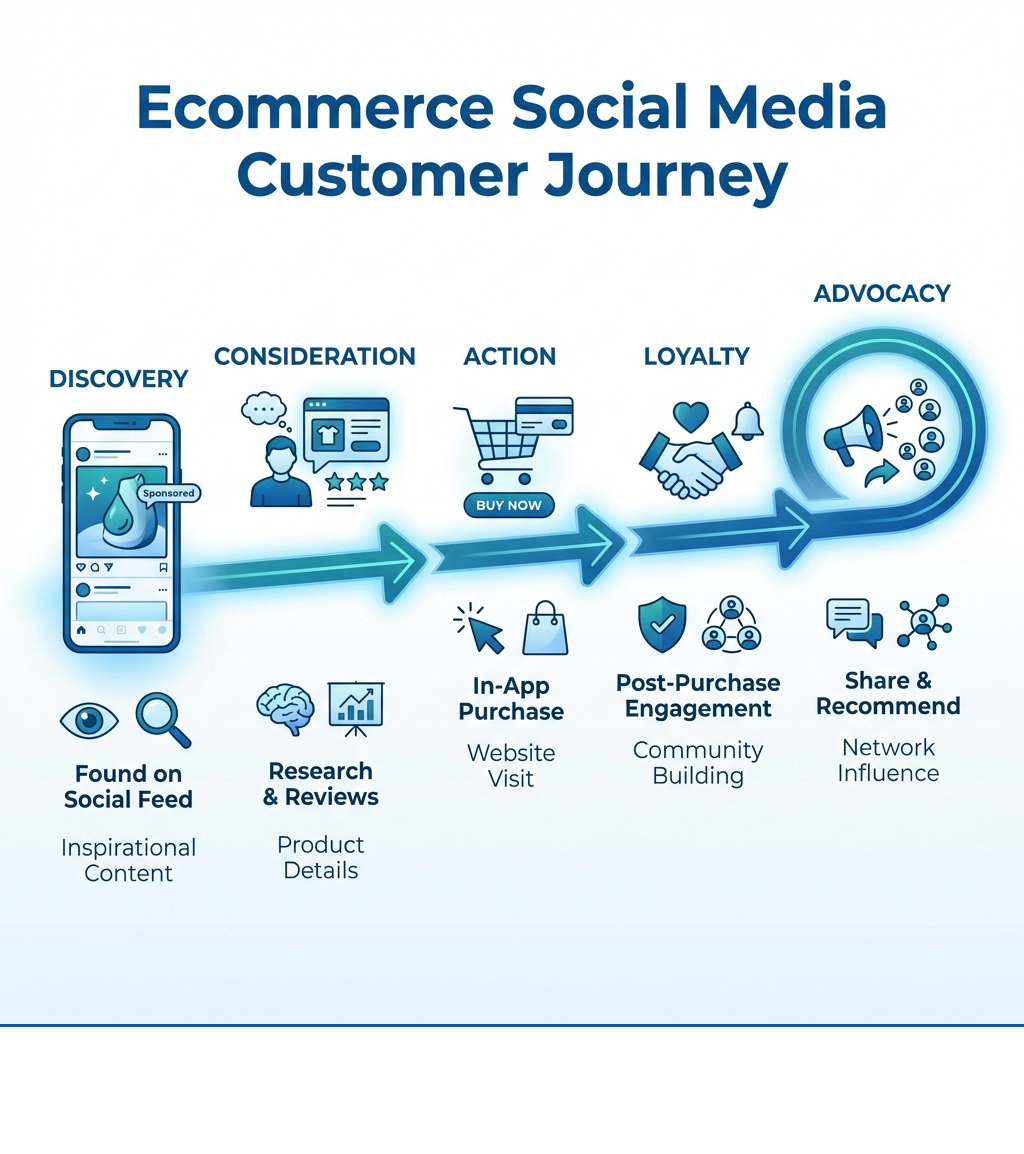
Consumer behavior has shifted. Social media is no longer just for social interaction; it is now a commerce platform. Over 70% of consumers report they’ve purchased products they found on social media. This blends content with commerce, where entertainment, education, and inspiration can lead to buying opportunities.
For an ecommerce brand, this can mean several things:
- Building brand awareness: Getting your products and brand story in front of new audiences.
- Driving website traffic: Using social posts and ads to direct potential customers to your online store.
- Direct in-app sales: Using features like shoppable posts and social storefronts that allow customers to buy without leaving the social platform. This is often referred to as "social commerce."
Social commerce is the practice where the entire customer journey, from discovery to purchase, happens within a social media platform. As platforms improve their selling features, businesses have more opportunities to reach these audiences and increase sales.
Core Strategies for Ecommerce Social Media Success
A successful social media plan for ecommerce combines several strategies. Focusing on just one area, like paid ads, while neglecting content or community, will produce limited results. A cohesive approach is necessary.
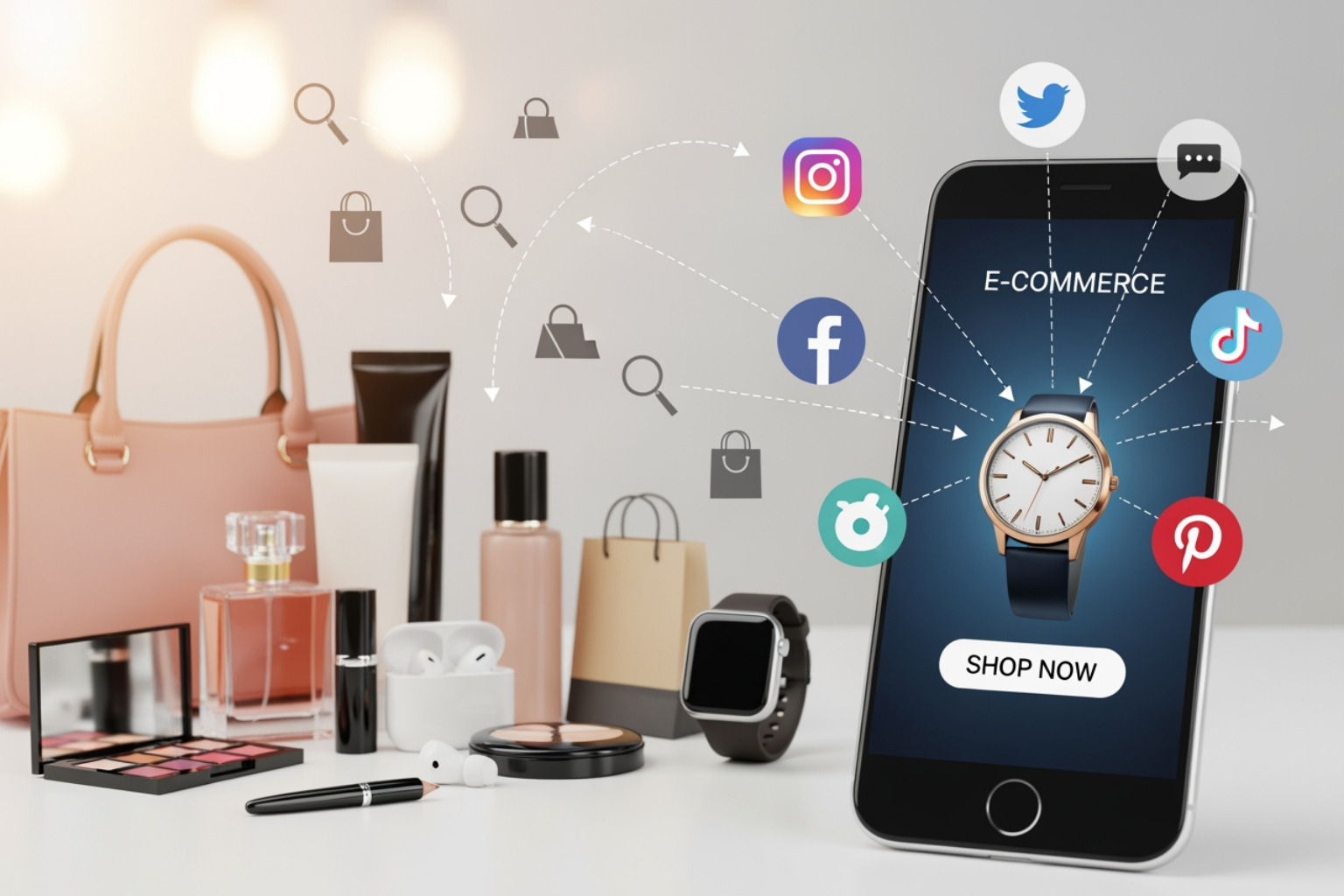
Creating Engaging Content for Ecommerce
Your social media strategy depends on the quality of your content. For ecommerce, this means going beyond product photos to create content that tells a story, educates, or entertains.
I always advise businesses to start with careful content planning. This involves thinking about different content types:
- Behind-the-scenes content: Show your process, your team, or your values. For example, sustainable fashion label Tradlands regularly shares factory tours and candid Q&As with their founder on Instagram, giving customers a transparent look at their brand.
- Educational posts: How-to guides, tutorials, or tips related to your products. Skincare brand Frankly, for instance, combined traditional photo ads with Instagram and Facebook Reels ads, achieving 43% more purchases by layering engaging content.
- Product demonstrations: Show your products in action.
- High-quality visuals: This is non-negotiable. Whether it's product shots or lifestyle photos, the visual quality must be high.
- Video content: Video content is especially important. Platforms are prioritizing it, and consumers respond well to it. With more than 100 million hours of video consumed on Facebook every day, vertical video formats for mobile users are a must.
To keep things organized and consistent, a content calendar is essential. It helps you plan posts in advance, balance different content types, and maintain a steady rhythm. Here at First Pier, we can help you with creating effective marketing materials that connect with your audience.
Using Customer Content (UGC) to Build Trust and Sales
User-generated content (UGC) is a useful tool for ecommerce businesses. It’s authentic, trustworthy, and influential. People trust other people more than they trust brands. Research shows that 79% of consumers say UGC significantly influences their purchase decisions, finding it 9.8 times more impactful than influencer content.
UGC acts as a form of social proof. When potential customers see real people using and liking your products, it builds confidence and reduces purchase hesitation.
So, how do you encourage UGC?
- Branded hashtags: Create a unique hashtag and encourage customers to use it when they share photos or videos of your products.
- Contests and giveaways: Run campaigns where customers submit content featuring your products for a chance to win.
- Featuring customers on your feed: Always ask for permission, but reposting customer photos or videos is a fantastic way to show appreciation and provide social proof. Brands like Glossier build social proof by encouraging customers to post their own photos or videos.
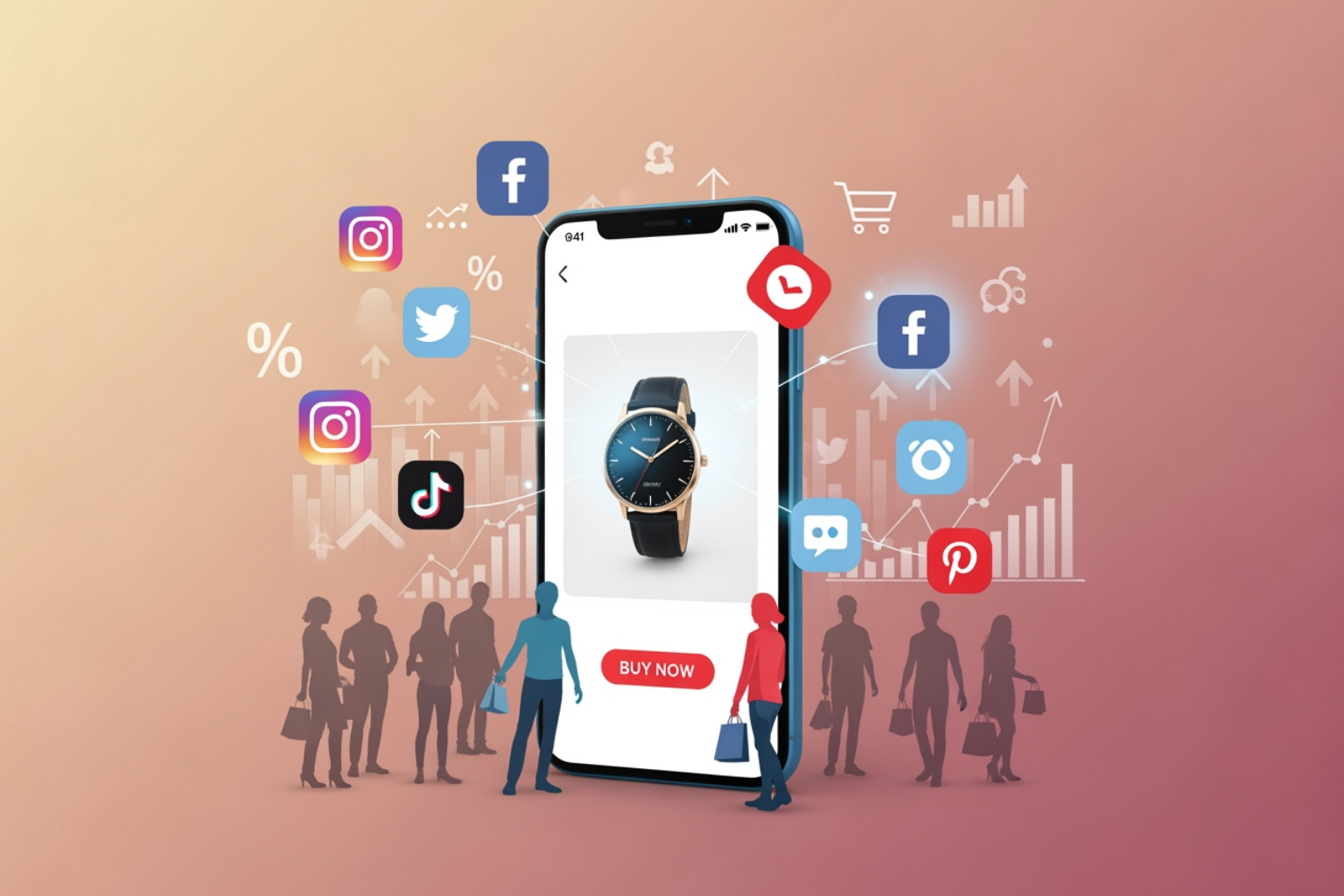
Working with Influencers and Creators
Working with influencers and creators can be an effective way to reach new customers. They have built trust with specific audiences, making them effective partners for product discovery and sales. This is often referred to as the creator economy.
When considering influencers, it's not just about follower count. Micro-influencers, with 1,000 to 10,000 followers, often have 2.8 times higher engagement than macro-influencers. They often have more authentic connections with their audience.
Finding the right partners involves:
- Aligning with your brand: Choose creators whose values and aesthetic match yours.
- Authentic relationships: Seek out influencers who genuinely use and like your product.
- Measuring ROI: Use affiliate links, unique discount codes, and UTM tracking to see which partnerships drive sales.
Here at First Pier, we understand the nuances of building a strong brand identity that connects with both your audience and potential collaborators.
Driving Sales with Paid Social Advertising
While organic reach on social media can be challenging, paid social advertising offers a direct path to your target audience. It allows you to put your products in front of people who are most likely to buy, often with high returns.
The main benefit of paid social is its targeting capabilities:
- Custom audiences: Upload your customer lists to target existing customers or exclude them from certain campaigns.
- Lookalike audiences: Create audiences that resemble your best customers, expanding your reach to new, relevant prospects.
- Retargeting campaigns: Show ads to people who have interacted with your brand (e.g., visited your website, added to cart) but haven't purchased yet.
You can also experiment with various ad formats:
- Carousel ads: Showcase multiple products or different features of a single product.
- Video ads: Highly engaging and effective for showing products.
- Collection ads: Allow users to browse and purchase products directly from the ad.
- A/B testing: Always test different creatives, copy, and targeting options to see what performs best.
Paid social advertising is a specialized skill, and it can significantly increase your ecommerce sales. If you need help with this, you can learn more about paid social advertising services.
Building and Engaging an Online Community
Social media is inherently about connection. For ecommerce businesses, this means moving beyond one-way broadcasting and creating genuine two-way communication. Building an online community around your brand can lead to strong customer loyalty and advocacy.
This involves:
- Responding to comments and DMs: Prompt and personal responses show you care. Consumers expect a response within 24 hours, and 73% say they’ll buy from a competitor if a brand doesn’t respond at all.
- Building brand loyalty: Create a space where customers feel heard and valued.
- Facebook Groups: These can be effective hubs for dedicated fans, allowing for deeper conversations and exclusive content.
- Exclusive content for followers: Offer sneak peeks, special discounts, or behind-the-scenes glimpses to reward your community.
- Polls and Q&As: These are simple yet effective ways to get feedback, understand preferences, and make your audience feel involved.
A strong online community means you have a built-in network of advocates who will promote your brand. We can help you with building community and loyalty for your ecommerce business.
Choosing and Using the Right Social Media Platforms
Selecting the right social media platforms is a strategic decision for your social media marketing for ecommerce. It's better to excel on two or three channels where your audience spends their time than to spread yourself too thinly across many.
| Platform | Key Demographics | Primary Content Format | Best Use Case for Ecommerce |
|---|---|---|---|
| Gen Z, Millennials | High-quality images, Reels, Stories | Visual products (fashion, beauty, home), brand building, shoppable posts | |
| TikTok | Gen Z, younger Millennials | Short-form vertical video | Trend-driven products, viral marketing, user-generated content campaigns |
| Broad audience, strong with Gen X & Boomers | Video, images, text, Groups | Community building, targeted ads for a wide range of demographics, Facebook Shops | |
| Predominantly female, higher household income | High-quality vertical images (Pins), Idea Pins | Visual discovery for products with a long consideration phase (home, food, fashion, DIY), driving long-term website traffic |





.png)
.png)

