


Why Email Marketing Content Writers Matter for E-Commerce Growth
Summary
- An email marketing content writer creates targeted copy for different types of emails to prompt actions such as purchases or sign-ups.
- Effective email content uses data, including audience segmentation, personalization, and testing, to improve results.
- Key elements of a successful email include a clear subject line, concise body copy, a direct call-to-action (CTA), and consistency with the brand’s voice.
- Businesses can hire the right writer by preparing a detailed content brief and reviewing their skills in copywriting, data analysis, and planning.

An email marketing content writer creates targeted copy for different types of emails—newsletters, promotional campaigns, abandoned cart reminders, and transactional messages—designed to prompt specific actions such as purchases, sign-ups, or engagement. They combine persuasive copywriting with data analysis and planning to write messages that produce measurable results.
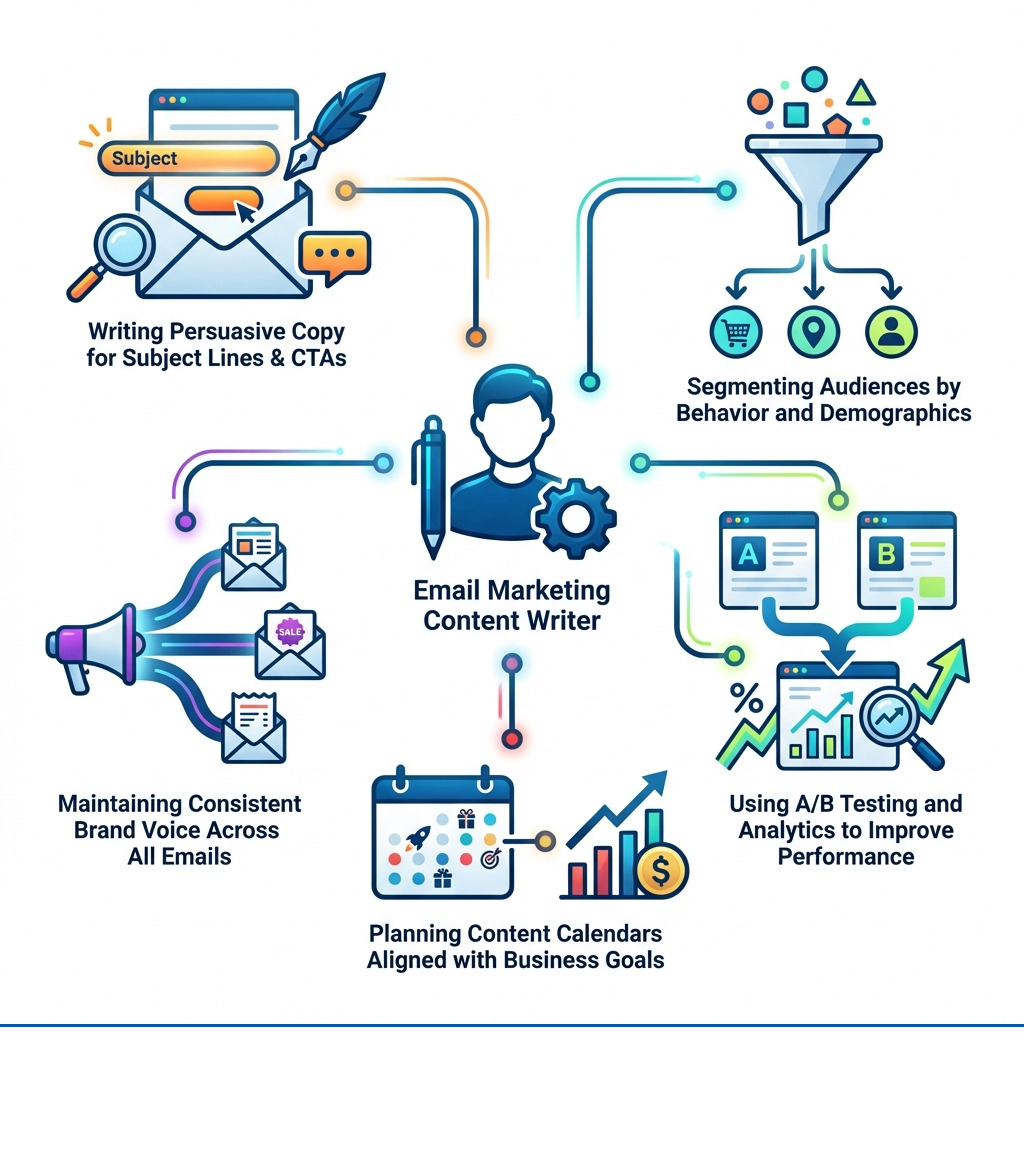
What an email marketing content writer does:
- Writes persuasive copy for subject lines, preview text, body content, and calls-to-action (CTAs)
- Segments audiences based on behavior, demographics, and purchase history to tailor messages
- Uses data and testing to refine content and improve open rates, click-through rates, and conversions
- Maintains brand voice across all email touchpoints to build trust and recognition
- Plans content calendars to coordinate campaigns with business goals and seasonal opportunities
In 2023, 52% of marketing professionals reported their email marketing ROI doubled compared to the previous year, with another 5.7% seeing a fourfold increase. These results don't happen by accident. They require content that connects with readers at the right moment with the right message. A skilled email marketing content writer knows how to write that content, using tools like segmentation, personalization, A/B testing, and behavioral triggers to turn subscribers into customers and customers into advocates.
The Role and Skills of an Expert Email Marketing Content Writer
Here at First Pier, I’ve learned that a successful email marketing content writer is more than someone who just puts words on a page. They are a professional who understands digital communication and how to get real business results.
What an Email Writer Actually Does
An email marketing content writer specializes in persuasive writing that drives specific actions. Their primary goal is to convert readers into customers or engaged subscribers. This requires detailed audience research to understand who they are writing for, what motivates them, and what problems they need solved.
My team and I approach each email as a strategic communication, carefully selecting words for subject lines, body copy, and calls-to-action (CTAs) to get responses. Whether it’s a welcome email, a promotional offer, or a re-engagement campaign, the writer's job is to make every word count towards meeting sales goals and strengthening customer relationships. I know that if the writing doesn't compel action, the email, no matter how well-designed, will fall flat.
Essential Skills for Driving Conversions
To consistently drive conversions, an email marketing content writer needs a diverse set of skills. First, a strong grasp of copywriting principles is fundamental. This means understanding how to structure arguments, create urgency, build trust, and communicate value clearly. Second, empathy is crucial. I train my writers to put themselves in the reader's shoes, anticipating their questions and concerns, and writing messages that speak directly to their needs.
Data analysis is another key skill. Writers must be able to interpret performance metrics, understand what the numbers mean, and use those insights to refine their approach. This data-driven approach means we are always improving. Planning is also important; writers need to plan email sequences, map out customer journeys, and ensure that each email fits into a larger marketing strategy. Adaptability is also important. The market changes quickly, so writers must be able to adjust their style and approach based on new trends or audience feedback. Finally, a deep understanding of customer psychology helps writers create messages that connect on an emotional level.
Here at First Pier, we believe that understanding your e-commerce data is important for this. To learn more about how we can help you use data to take action, you can explore our ecommerce analytics services.
Aligning Content with Your Brand Voice
For any brand, consistency is key, and that applies especially to email content. An email marketing content writer ensures that every email aligns with the overall brand voice and marketing strategy. This starts with a clear understanding of your brand guidelines—your mission, values, and personality. The writer must be able to adopt your specific tone of voice, whether it's playful, authoritative, empathetic, or formal.
I instruct my team to think of each email as an extension of your brand story. This helps build trust and creates a stronger customer connection. When subscribers recognize your brand's unique voice in every email, it reinforces their relationship with you and makes your messages more memorable. It's about creating a consistent experience that makes your customers feel like they are interacting with a familiar friend, not just another business.
Writing Content for Every Stage of the Customer Journey
Effective email content isn't one-size-fits-all. It's custom-made for the recipient’s context, their stage in the customer journey, and the specific goal of the email. My team and I work to ensure that each message serves its purpose perfectly.
Writing for Different Email Types
An email marketing content writer approaches different email types with specific goals in mind.
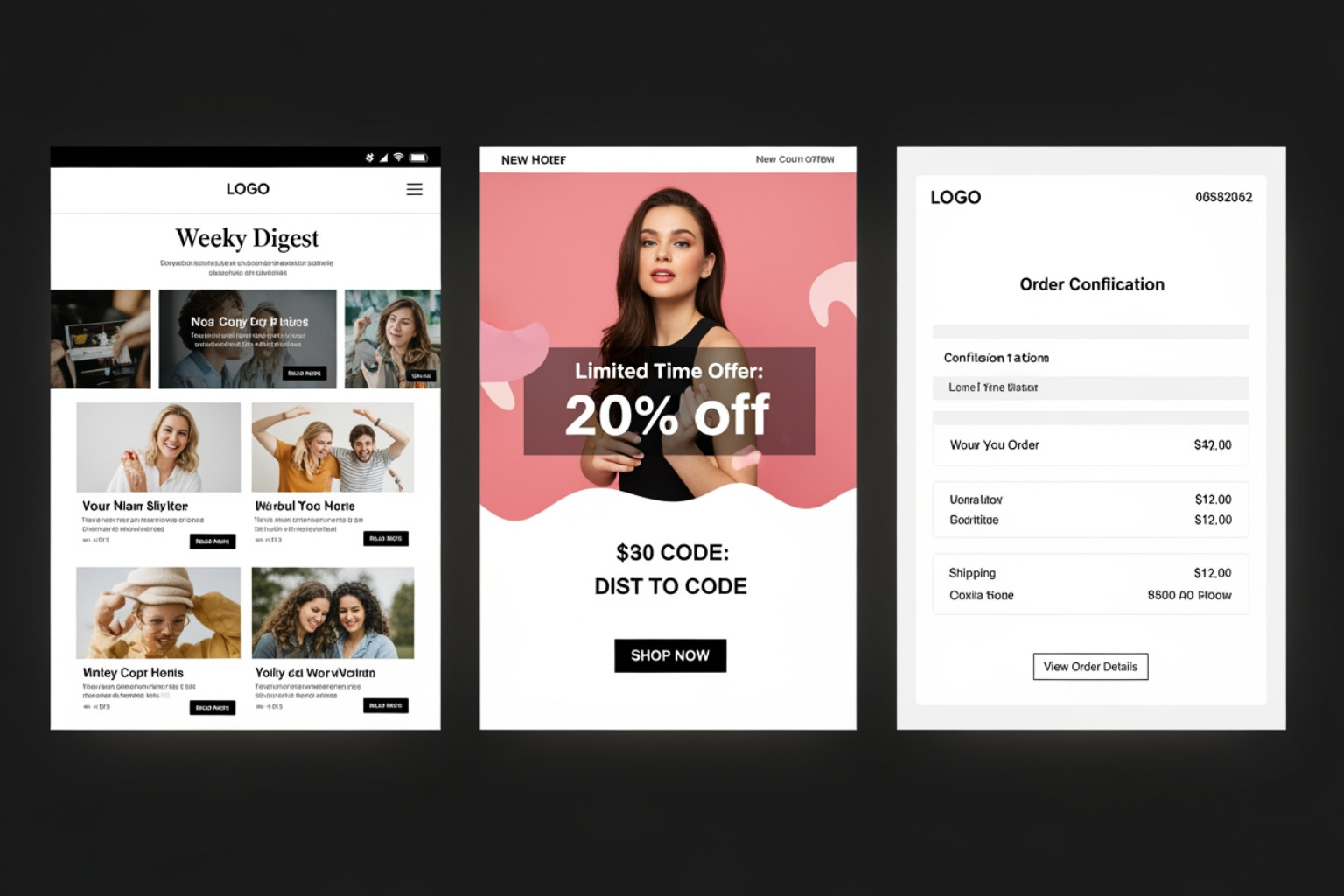
- Newsletters: These are about providing value, building community, and keeping your brand top-of-mind. As a 2023 survey showed, newsletters were the most popular type of email marketing, used by 16.8% of professionals. For these, I focus on concise, engaging snippets (around 50-70 words per topic) that offer insights, updates, or curated content. The goal is engagement and relationship building, not always an immediate sale.
- Promotional Emails: These emails are designed to drive sales or specific actions. Used by 15.3% of marketers, they require compelling offers, clear benefits, and a strong sense of urgency. I make sure the copy highlights what the customer gains, whether it's a discount, a new product, or an exclusive event.
- Transactional Emails: These include order confirmations, shipping updates, or password resets. While often overlooked, they are important for building trust. I ensure these emails are clear, concise, and provide all necessary information, often incorporating subtle branding or cross-selling opportunities.
- Welcome Series: This is a crucial first impression. I build a series of emails that introduce your brand, offer value, and guide new subscribers to their first purchase.
- Abandoned Cart Sequences: Most shoppers who fill a cart never check out. These emails are critical for recovering lost revenue. I write reminders that gently nudge customers back to complete their purchase, sometimes with an incentive.
- Re-engagement Campaigns: For inactive subscribers, I create emails designed to rekindle interest, offering exclusive content or special deals to bring them back into the fold.
At First Pier, my team and I specialize in creating these types of emails, and more, as part of our email & sms marketing services.
Best Practices for Compelling Subject Lines and CTAs
The subject line is the gatekeeper of your email. I know that if it doesn't grab attention, the rest of your content goes unread. According to CoSchedule, I always recommend keeping email subject lines short and simple, between 17 and 24 characters. This ensures readability, especially on mobile devices where screen real estate is limited.
Key strategies I apply:
- Urgency: Phrases like "Limited Time Offer" or "Ends Tonight" can compel immediate action.
- Personalization: Including the recipient's name or referencing their past behavior can increase open rates significantly.
- Action-Oriented Language: Starting with verbs like "Get," "Find," or "Claim" tells readers what to expect.
- Clear CTAs: The call-to-action must be unmistakable. I ensure the button copy is concise, compelling, and tells the reader exactly what to do next, whether it’s "Shop Now," "Learn More," or "Download Your Guide." The CTA should stand out and be easy to click, especially on mobile.
Common Mistakes That Hurt Engagement and Deliverability
Even the best intentions can go awry if certain common mistakes are made in email content. I've learned that avoiding these pitfalls is just as important as implementing best practices.
- Spam Trigger Words: Using words like "free," "win," "guarantee," or excessive punctuation can flag your email as spam, preventing it from reaching the inbox.
- Using All Caps: This not only feels like shouting but also increases the likelihood of being marked as spam. I advise a professional and measured tone.
- Over-selling: Constantly pushing products without providing value can lead to subscriber fatigue and unsubscribes. I balance promotions with helpful content.
- Ignoring Mobile Design: With a significant portion of emails opened on mobile, content must be optimized for smaller screens. This means concise paragraphs, clear fonts, and mobile-friendly CTAs.
- Poor Formatting: Dense blocks of text are hard to read. I use white space, bullet points, and headings to make emails scannable and digestible.
- No Opt-Out Link: This is a legal requirement and a best practice. A clear and easy-to-find unsubscribe link builds trust and keeps your list healthy.
Finally, deliverability is important. Even if your content is perfect, it won't matter if it never reaches the inbox. As I've seen, over 46% of emails sent in December 2023 were deemed spam. An email marketing content writer contributes to good deliverability by avoiding spammy language, writing engaging content that reduces complaints, and ensuring emails are formatted correctly.
Using Data to Improve Email Content
I always tell my clients that the best email content is based on data, not guesswork. Here at First Pier, I rely on analytics, segmentation, and testing to create content that gets a response and converts.
How to Use Analytics to Understand Your Audience
Data analytics tools are invaluable for an email marketing content writer. I use platforms like Google Analytics to understand audience demographics, interests, and which content performs best on your website. For example, if I see that a particular blog post or product category is getting a lot of traffic, that tells me it's a topic your audience cares about. I can then repurpose that popular content into an email campaign or create new content angles around it.

This data helps me address customer pain points directly. If analytics show that customers frequently search for "how-to" guides on a specific product, I can create an email series that provides those answers, building trust and positioning your brand as a helpful resource. It's about listening to what your data tells you your audience needs and then delivering it.
Personalization and Segmentation
Generic emails get generic results. Personalization and segmentation are critical for improving engagement and conversion rates.
- Personalization: This goes beyond just using a merge tag for a first name. It involves tailoring content based on individual subscriber behavior, purchase history, or even browsing patterns. A message that says, "Hey [Name], we noticed you liked [Product Category]" is far more effective than a general announcement.
- Segmentation: I divide your email list into smaller, more specific groups based on criteria like demographics, past purchases, geographic location (especially important for our local clients in Portland, ME), or engagement levels. For instance, customers who bought from you last month might receive a different email than those who haven't purchased in six months. This allows me to send custom messaging that is highly relevant to each segment, significantly increasing the chances of engagement.
This targeted approach not only makes your emails more effective but also reduces unsubscribes because subscribers feel the content is valuable and relevant to them. If you're looking to build a more granular approach to customer engagement, you might want to learn more about our subscription strategy services.
A/B Testing and Measuring Campaign Success
I never assume what will work best. That's why A/B testing is a critical part of my plan as an email marketing content writer. I conduct split tests on various elements of an email: subject lines, CTAs, body copy variations, and even send times. For example, I might test two different subject lines to see which one generates a higher open rate. I use the data from these tests to continually refine your email plan.
Measuring success means looking at key metrics:
- Open Rate: How many people opened the email. MailChimp’s benchmarks show an average open rate of 20.81%. I aim to surpass this by writing compelling subject lines.
- Click-Through Rate (CTR): How many people clicked on a link inside the email. This indicates how engaging the content and CTA were.
- Conversion Rate: How many people completed the desired action (e.g., made a purchase, filled out a form) after clicking.
- Return on Investment (ROI): This is the ultimate measure. I track the revenue generated directly from email campaigns to ensure they are contributing positively to your bottom line.
By consistently testing and measuring, I ensure your email content is always improving and produces better results over time.
How to Find and Work with the Right Email Marketing Content Writer
Finding an email marketing content writer who can deliver results for your e-commerce business is an investment. Here’s how I recommend you approach the process, from creating a solid brief to understanding the tools they use, and hiring the right person or agency.
Creating an Effective Email Content Brief
The foundation of good email content is a clear, detailed brief. As an email marketing content writer, I rely on these to understand your vision and execute it effectively. Without a proper brief, even the most skilled writer might miss the mark on your brand's overall marketing strategy.
Here’s what I consider key components for an effective email marketing brief:
- Target Audience: Who are you trying to reach? What are their demographics, pain points, and motivations?
- Campaign Objective: What is the single, clear goal of this email? (e.g., drive sales of a specific product, increase newsletter sign-ups, gather customer feedback).
- Key Message: What is the core idea or value proposition you want to convey?
- Desired Tone: Is it playful, informative, urgent, empathetic? Provide examples if possible.
- Call to Action (CTA): What specific action do you want the reader to take? Make it clear.
- Word Count: For simple offers, 100-150 words is often enough. For newsletters, short snippets of 50-70 words per subject work best.
- Deadline: A reasonable deadline ensures timely delivery.
- Additional Information: Include any relevant links, product details, brand guidelines, or examples of past successful emails.
A good email marketing brief doesn’t limit the writer; it shapes and controls the copy, helping them produce high-quality content that gets results and aligns with your marketing objectives and brand voice.
Tools and Trends for the Modern Email Marketing Content Writer
The field of email marketing is always changing. As an email marketing content writer, I stay updated on the latest tools and trends to keep your brand's emails effective.
- AI-Generated Content: Tools like Hoppy Copy are emerging, which can automate content creation based on your brand, industry, and goals. While AI can draft content and suggest ideas, I've found that human oversight and refinement are still crucial to maintain authenticity and brand voice. It's a helper, not a replacement.
- Interactive Emails: These emails incorporate elements like GIFs, quizzes, or even mini-games directly within the email client, increasing engagement.
- Hyper-Personalization: Moving beyond basic name inserts, this involves dynamic content blocks that change based on individual subscriber data, creating a unique email for each recipient.
- Spam Checkers: Tools like Hoppy Copy's built-in spam checker help ensure emails are less likely to land in the junk folder.
- Idea Generators: Platforms like AnswerThePublic, BuzzSumo, and Really Good Emails provide inspiration. AnswerThePublic can show me questions people are asking about a topic, giving me direct insight into audience pain points. BuzzSumo helps me find high-performing content in your niche, and Really Good Emails offers a vast library of email examples to draw inspiration from. I also use Google Trends to identify rising search queries that can inform timely email content. These tools are great for sparking ideas and ensuring relevance.
Finding and Hiring Your Ideal Email Marketing Content Writer
When it comes to finding the right email marketing content writer for your e-commerce business, you have a few options.
- Freelance Platforms: Sites like Upwork or Fiverr connect businesses with freelance writers. You can find writers with specific expertise in e-commerce or email marketing. When evaluating, look at their portfolios, client reviews, and experience levels.
- Agencies: Working with an agency like First Pier in Portland, ME, offers a comprehensive solution. My team and I provide not only the writing expertise but also planning, data analysis, and integration with your broader marketing efforts. This ensures all parts of your email plan work together.
- Portfolio Review: Always ask for samples of their past email campaigns. Look for clear, concise writing that drives action and aligns with the brand's tone.
- Test Projects: Consider a small, paid test project to assess their skills in a real-world scenario before committing to a larger engagement.
- Asking Strategic Questions: During interviews, ask about their approach to audience research, how they use data to inform content, and their understanding of email deliverability best practices.
- Evaluating for Planning and Copywriting Skills: The best writers also think about the overall plan. Look for someone who can not only write well but also contribute to the email marketing plan.
To Sum Up
A skilled email marketing content writer is more than a writer; they are a professional who can help turn your email list into a reliable revenue source. By combining persuasive copywriting with a data-informed plan, they build customer relationships and guide subscribers toward action. Here at First Pier, my team and I include expert content creation in our email and SMS marketing plans to help e-commerce brands grow.
If you want to improve customer retention and increase sales, explore our award-winning Shopify e-commerce agency services.





.png)
.png)

