


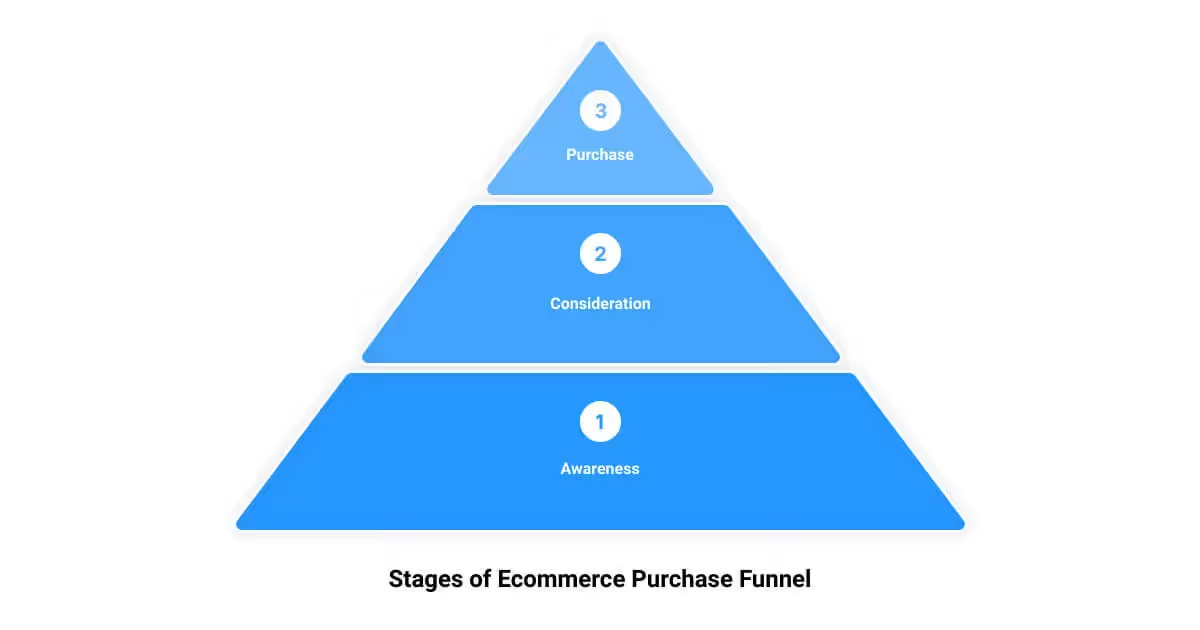

The ecommerce purchase funnel is the path a person travels from first hearing about a store to becoming a repeat customer. It's usually drawn as four stages — awareness, consideration, conversion, and retention — and its practical value isn't the diagram. It's the diagnosis: mapping where buyers actually drop off tells a store exactly which fix will move revenue, instead of guessing. A store losing people at consideration has a very different problem than one losing them at checkout, and the funnel is what separates the two.
This guide walks through each stage, what the customer is doing there, what the store needs to do to move them forward, and — most usefully — how to find the stage that's leaking and fix it.
The four stages
Every purchase, and every returning customer, passes through the same sequence. The numbers shrink at each step, which is why it's a funnel rather than a pipe.
1. Awareness — the customer discovers the store
At the top, a potential buyer becomes aware the store or product exists — through search, social, an ad, word of mouth, or content. The goal here isn't to sell; it's to get in front of the right people and earn enough interest for a first click. The metric that matters is qualified reach: traffic from people who plausibly want what's sold, not raw impressions. Awareness is fed by marketing and search visibility, and it's the stage most stores overspend on while ignoring the leaks further down — which is like pouring more water into a bucket with a hole in it.
2. Consideration — the customer evaluates
Now the visitor is on the site, weighing whether this product and this store are right for them. They're comparing options, reading product details, checking reviews, and looking for reasons to trust the purchase. The store's job is to answer questions and remove doubt: clear product pages, honest photography, specifications that address real concerns (sizing, materials, compatibility), visible social proof, and transparent shipping and return terms. Most consideration-stage losses come from an unanswered question — the buyer wanted to know something the page didn't tell them, so they left.
3. Conversion — the customer buys
The visitor decides to purchase and moves through the cart and checkout. This is the highest-intent moment in the funnel and, paradoxically, where a great deal of revenue is lost — because friction here costs sales from people who had already decided to buy. Unexpected shipping cost, a forced account creation, a long or confusing checkout, or too few payment options each shed buyers at the worst possible moment. The goal is to make paying as short and frictionless as possible.
4. Retention — the customer comes back
The funnel doesn't end at the first sale. A one-time buyer is far less valuable than one who returns, and acquiring a repeat purchase costs a fraction of acquiring a new customer. The work here is post-purchase: reliable fulfillment, a good unboxing and support experience, and reasons to come back — post-purchase email and SMS flows, replenishment reminders, and loyalty incentives. Retention is the stage most stores under-build, and it's where durable profitability actually comes from.
Finding the stage that's leaking
The funnel is a diagnostic tool, so the important skill is reading it. The method is to measure the drop-off between stages and find the steepest one — that's where the money is.
- Lots of traffic, few product-page views or add-to-carts? The leak is at consideration. The visits are arriving, but something on the site is failing to build enough interest to move forward — often unclear pages, weak product information, or a mismatch between what the ad promised and what the page delivers.
- Healthy add-to-carts, low completed orders? The leak is at conversion. People want to buy and aren't finishing — almost always checkout friction: surprise shipping cost, mandatory account creation, or a cumbersome flow.
- Good first purchases, few repeat buyers? The leak is at retention. Acquisition works but nothing brings customers back, so the store pays full price to acquire every sale.
- Low qualified traffic overall? The leak is at awareness — but confirm the lower stages convert before pouring budget into the top, or the extra traffic just leaks out the same holes.
The discipline that saves the most money: fix the lowest leaking stage first. Adding traffic to a funnel that fails at checkout wastes the added spend. Sealing the checkout leak first means every future visitor — including the ones already arriving — converts better.
The metrics that map to each stage
A few numbers make the funnel measurable rather than theoretical:
- Awareness: qualified sessions and traffic sources — how many relevant people arrive, and from where.
- Consideration: product-page views, add-to-cart rate, and time on key pages — whether visitors engage or bounce.
- Conversion: cart abandonment rate and checkout completion rate — where checkout sheds buyers.
- Retention: repeat purchase rate and customer lifetime value — whether customers come back and what they're worth over time.
Tracked together, these turn the funnel from a picture into a dashboard that points at the next fix. For a fuller treatment of the numbers, see the guide to ecommerce KPIs.
Why the funnel is a loop, not a line
The cleanest way to think about it: the funnel bends back on itself. A retained customer who buys again re-enters at conversion without any new acquisition cost, and a delighted customer creates awareness for others through word of mouth and reviews. That's why retention pays twice — it drives repeat revenue and it feeds the top of the funnel for free. Stores that treat the funnel as a one-way line, ending at the first sale, leave most of its value unrealized.
Frequently asked questions
What are the stages of the ecommerce purchase funnel?
The four stages are awareness (the customer discovers the store), consideration (they evaluate the product and compare options), conversion (they complete the purchase), and retention (they come back to buy again). Some models add a separate advocacy stage for customers who refer others, but retention and advocacy usually work together.
How do I optimize my ecommerce funnel?
Measure the drop-off between each stage, find the steepest one, and fix that stage first. A consideration leak points to product pages and trust signals; a conversion leak points to checkout friction; a retention leak points to missing post-purchase engagement. Fixing the lowest leaking stage before adding traffic gets the most return, because more visitors won't help a funnel that fails at checkout.
What is the difference between the marketing funnel and the sales funnel?
They describe the same journey from different vantage points. A marketing funnel emphasizes the earlier stages — building awareness and interest — while a sales funnel emphasizes the later stages of converting an interested person into a buyer. In ecommerce the two blend into one continuous purchase funnel, since the same site handles discovery through checkout.
Where do most ecommerce stores lose customers?
Two stages account for most losses: consideration, where unclear pages or unanswered questions cause visitors to leave, and conversion, where checkout friction like surprise shipping cost or forced account creation abandons carts at the highest-intent moment. Cart abandonment alone averages around 70% across ecommerce, which is why the conversion stage rewards attention.
The bottom line
The ecommerce purchase funnel is worth using not as a diagram but as a diagnosis. Map awareness, consideration, conversion, and retention; measure where buyers fall out; and fix the steepest leak before anything else. Most stores pour budget into the top of the funnel while losing buyers at checkout and never bringing them back — the ones that grow efficiently do the opposite, sealing the lower leaks first and treating retention as the stage that pays for everything above it.
First Pier is an ecommerce agency in Portland, Maine that builds and optimizes Shopify and Shopify Plus storefronts. For help finding and fixing the leaks in your funnel, get in touch.





.png)
.png)

