.avif)
Shelter Tools is the retail arm of Shelter Institute, a three-generation, family-owned timber framing education company based in Woolwich, Maine. Their curated tool store operates on a simple philosophy: if they sell it, they use it and love it.
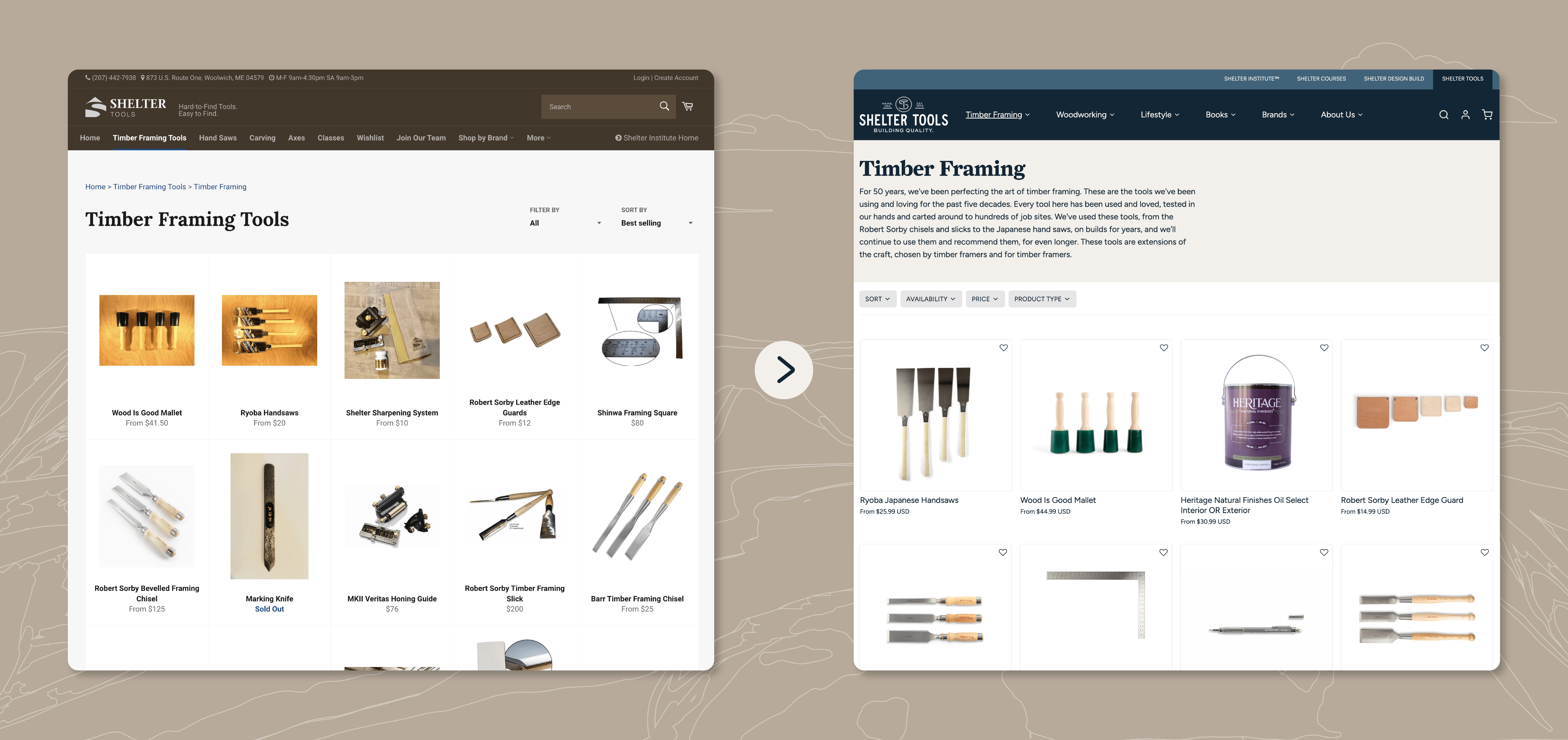
Shelter Tools was running on a severely outdated Shopify theme that didn't reflect the quality of their products or the depth of their expertise. Navigation was clunky, product data was inconsistent, and their biggest annual sale—Toolapalooza—was managed with limited digital infrastructure.

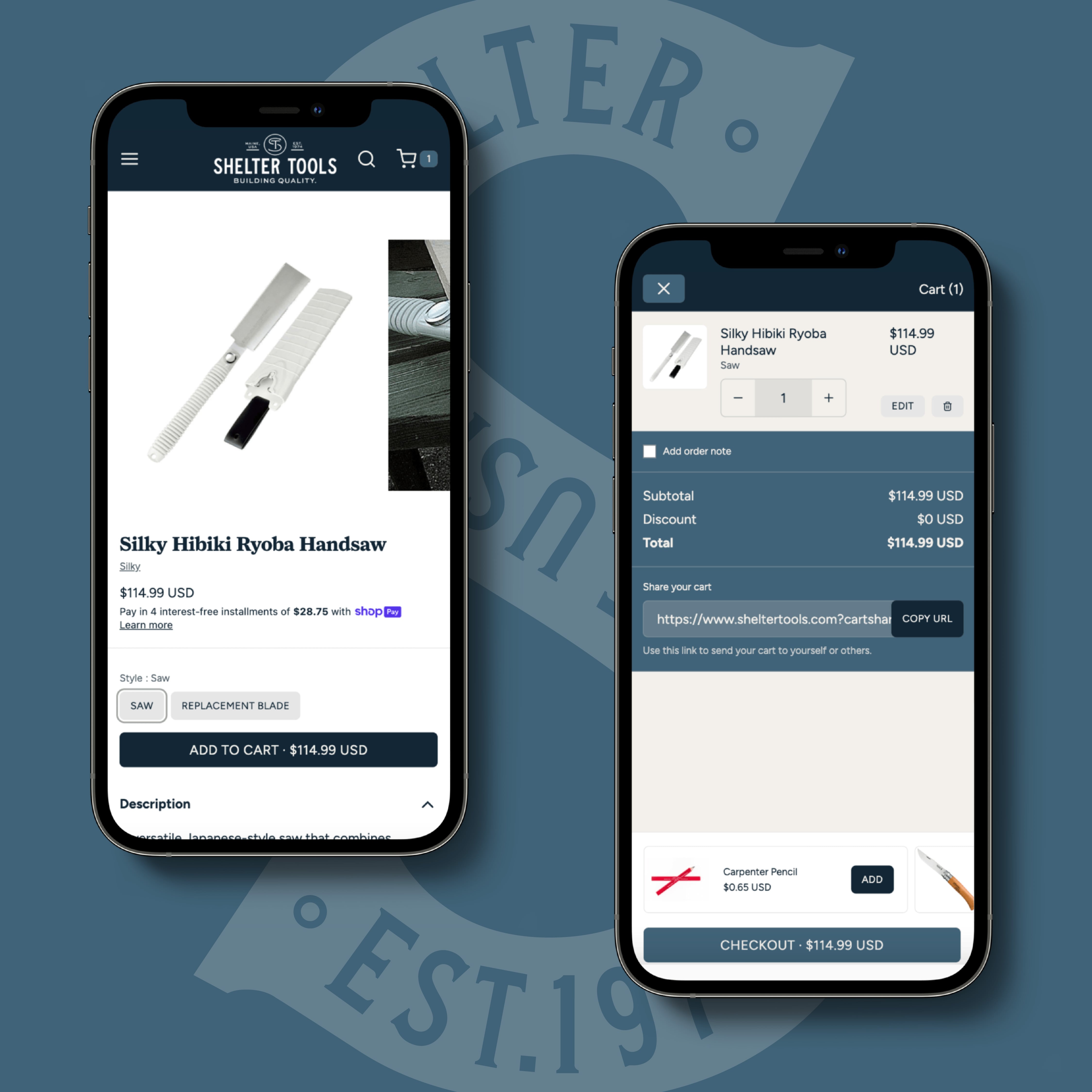
We launched a fully redesigned Shelter Tools website—modernizing the theme, overhauling navigation, enriching product data, and applying Shelter's new brand identity. From there, we built out a full-funnel advertising strategy across Google and Meta, and took over management of Toolapalooza—handling code creation, website updates, and digital advertising. Our ongoing collaboration focuses on refining the product catalog to position Shelter Tools as the go-to destination for timber framing, woodworking, and homestead tools.
Since the redesign, Shelter Tools has seen significant year-over-year growth in online revenue, orders, and conversion rate. Toolapalooza has become a fully managed, multi-channel sales event that continues to grow each year. A gift card strategy we recommended—breaking it out into its own holiday promotion—eliminated double-dipping and turned gift cards into a meaningful, standalone revenue driver. The store now operates on a modern, data-driven foundation that supports continued growth, with ongoing catalog refinement and product page enhancements underway.

Reach out to First Pier and get the conversation started; the sooner, the better. They are the real deal.
Clayton Hennin, Marketing Manager — Shelter Institute
For a tool retailer, the product data is the product.
Somebody choosing a framing chisel is choosing a steel, a bevel, a handle length and a maker. Those distinctions are the entire decision, and a catalog that does not carry them cannot be bought from with confidence — so the customer either calls, or goes and reads about it somewhere else and buys there. A beautiful store built on thin product data just relocates the problem.
So the rebuild went in that order: navigation and product data first, brand applied over the top, theme last. Conversion rate rose 74% and online orders 97% on a catalog that was already good. The tools did not change. The ability to tell them apart did.
Toolapalooza is the clearest evidence. It had been a manually run sale and became a coordinated moment across the site, email and paid channels, and it grows year over year. That only works because the catalog underneath can carry a promotion without somebody hand-assembling it every time.
Enriching product data is the least visible work in ecommerce and the first thing deferred in favour of design. On a considered-purchase catalog it is usually the highest-return thing available.
We thought you might say that! We've been dying to meet you too.