Our Work

POS & Ecommerce Migration for the Portland Museum of Art

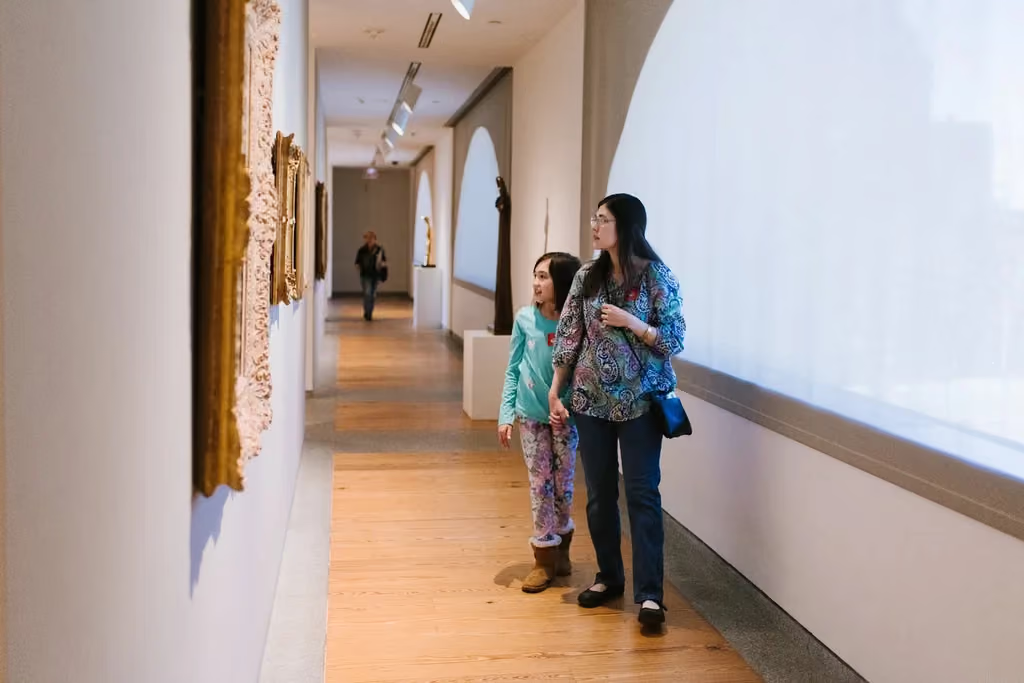
A parent and child walking a Portland Museum of Art gallery, looking at framed works along the wall

The Portland Museum of Art was founded in 1882 and anchors Portland's downtown Arts District, drawing visitors from across Maine and well beyond. Its store comes at the end of that visit — the last thing many people touch on the way out.

Background

The museum first came to us for something unusual: not a build, but a read. The User Experience and Visitor Touchpoint Project mapped every system behind a visit — the visitor desks, membership, the store — and named three things worth fixing: the network, the store's point of sale and online shop, and the absence of any link between commerce and Altru, the museum's visitor management system.

The network got fixed first. The rest waited, correctly, while the museum opened the Konkel Family Welcome Center. Point of sale was deprioritized and pencilled in to restart after the new year.

By then the store was working hard against its own software. Lightspeed lagged; receipts could take over a minute to print; transactions needed paper and a signature; nothing reached Altru, so a visitor who joined as a member at the register was invisible to the membership record. Connectivity had been poor for so long that devices bought to be mobile had been wired down to keep them working — a fix that made the system slower still. When card payments failed, the point of sale and the gateway each pointed at the other.

The online shop was a separate island. Its inventory was updated against the store perhaps once a quarter. Whole categories had no products in them. It was nobody's job because it had never been worth anyone's time.

Then the calendar closed in. The museum's fiscal year ends with a physical inventory count, and its Lightspeed contract was set to expire days after it. The migration had to thread between the two.

The Solution

That gap set the shape of the project. There was no version of this where the store went dark or the year-end count happened across two systems, so the work was sequenced backwards from the deadline rather than forwards from the wish list.

Phase one was the online shop, brought forward to land before the holiday season rather than after it: a refresh onto the museum's current brand, transactional emails redesigned to match, and marketing capture built into the journey instead of bolted on. The full custom build was deliberately deferred — the point was to stop losing the holidays while the harder work was still ahead.

Phase two was the migration. Every product and configuration moved off Lightspeed onto Shopify and Shopify POS. Hardware procured and configured, payments set up, and inventory processes established for what a store actually does all day — running out, taking product in, handling returns. At checkout we set up both shipping and curbside pickup, so an order placed online could be collected at the museum or sent.

The part that decides whether a migration like this survives is reporting. A finance office does not care which platform the store runs on; it cares that the numbers still arrive in the same shape. The store's month-end workbook ran to roughly thirteen reports — sales by category, by payment, by tax code, exempt sales tax, sales totals, membership sales, open purchase orders, receivings, valuation, voids, partial sales, discounts, manual adjustments. We rebuilt them, then added exports feeding back into Altru so the museum's visitor record got richer after the move rather than thinner.

Then we trained the store staff — the ten or twelve people who needed the register to work on day one. A museum store cannot call an agency to ring up a sale.

The Outcome

The store went live on Shopify and Shopify POS ahead of the Lightspeed expiry, with one catalog and one inventory count behind every way the museum sells: the counter in the store, pop-up processing at events, phone and email orders, and online — with shipping and curbside pickup both offered at checkout. The finance office kept its reports. Membership and annual fund sales made at the register started reaching the data team.

The gift cards came later, and they are the neatest illustration of the whole point. The museum had been running physical cards on Tendercard, with a separate terminal beside the register purely to load and redeem them — a second system doing one job because the first could not. We replaced that with gift cards designed and issued on Shopify, redeemable in the museum store and online against a single balance. One card, one number, whichever way the customer chooses to spend it.

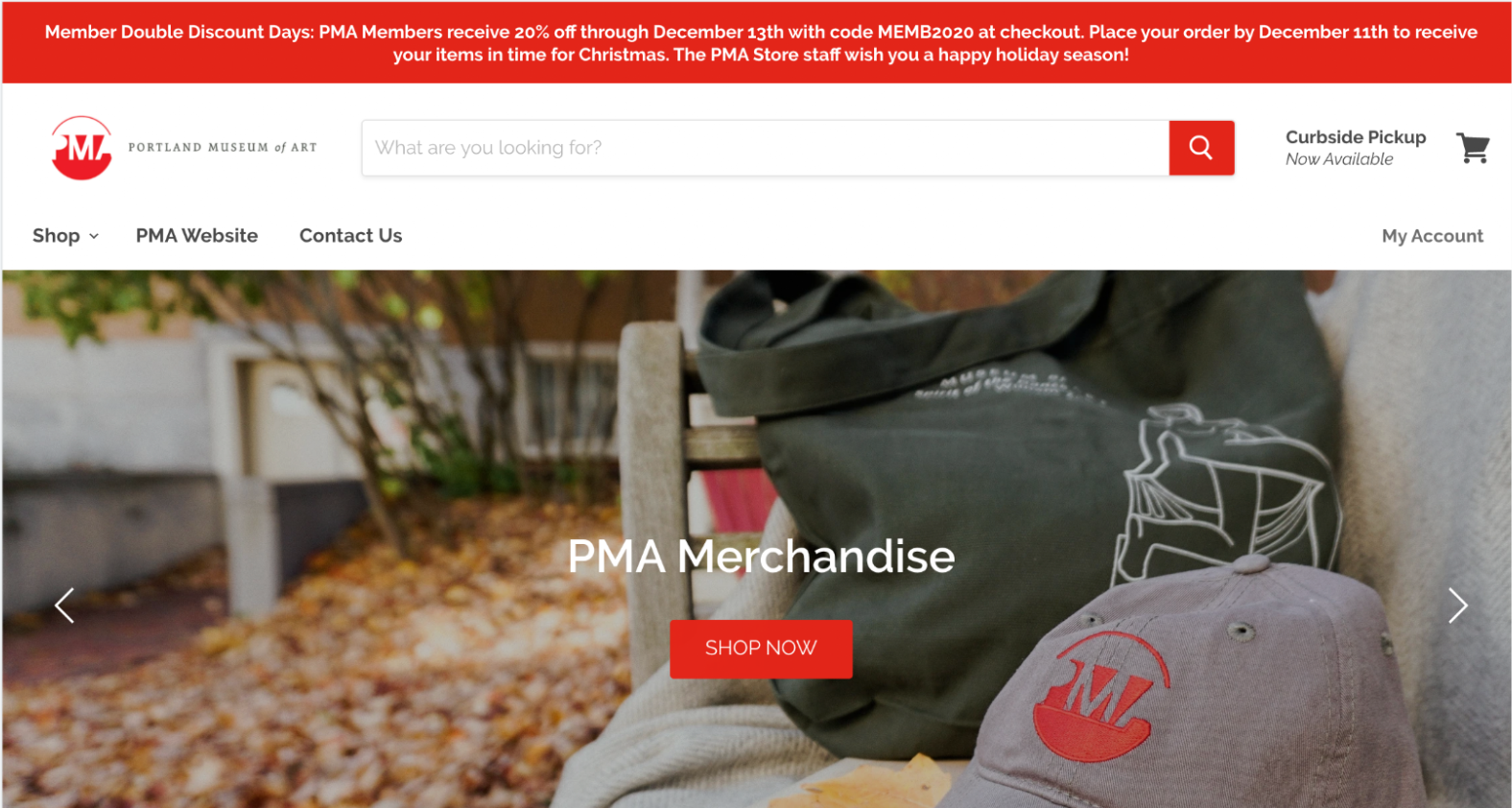
The Portland Museum of Art store's Shopify homepage, with curbside pickup offered in the header
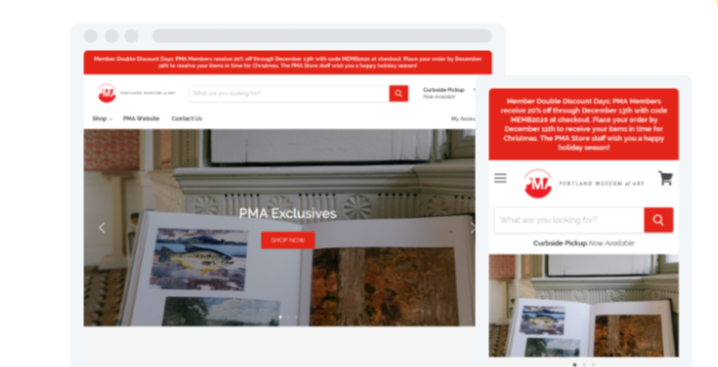
The museum store's Shopify storefront shown on desktop and mobile
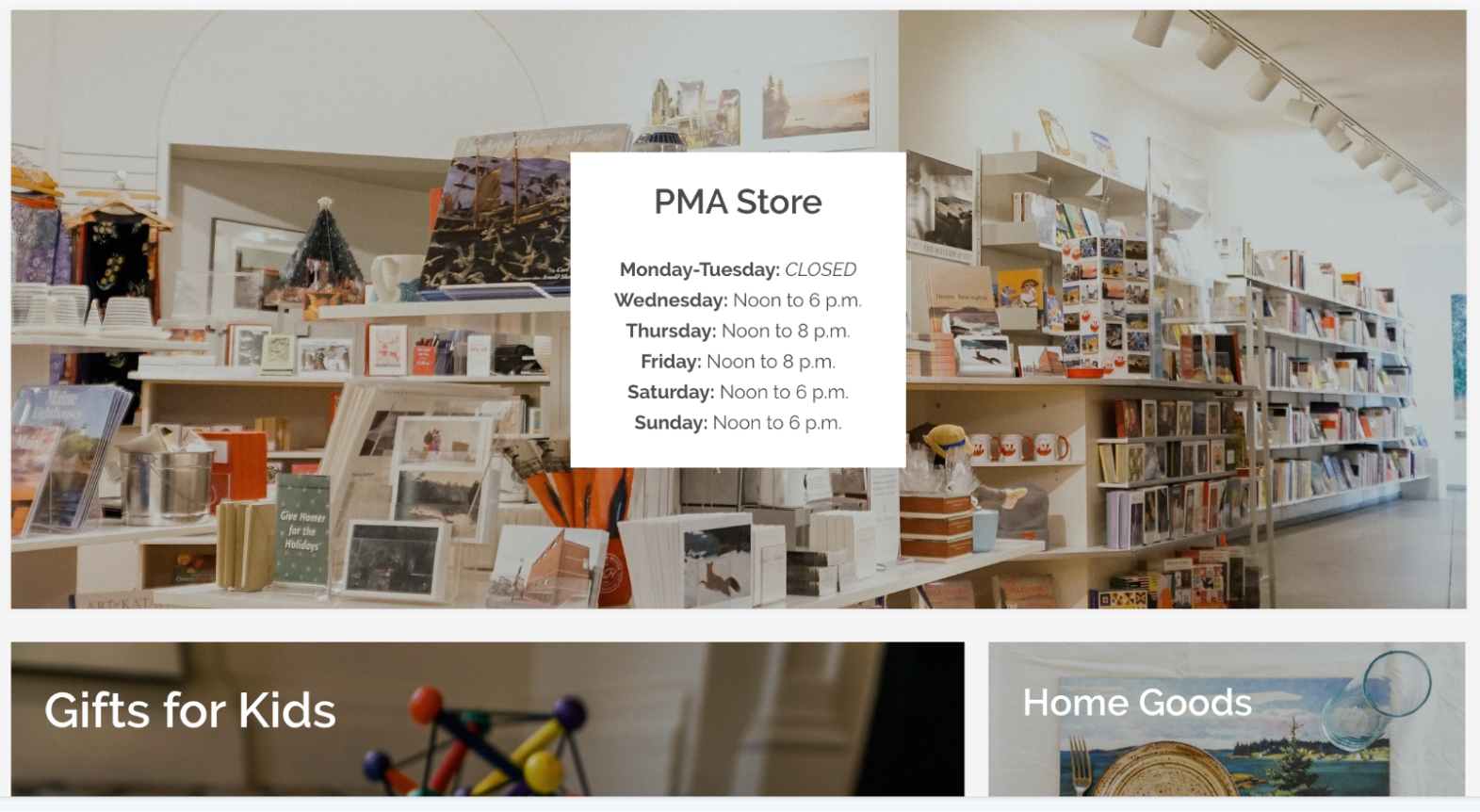
The museum store's Shopify homepage showing store hours and the Gifts for Kids and Home Goods collections
A bright blue hand drawn asteriskA bright blue hand drawn bracket

We're able to have a bird's-eye view of our system, which has improved all of our processes, as well as visitor and staff experiences day-to-day.

Marcie Griswold, Director of Visitor Ops & Membership — Portland Museum of Art

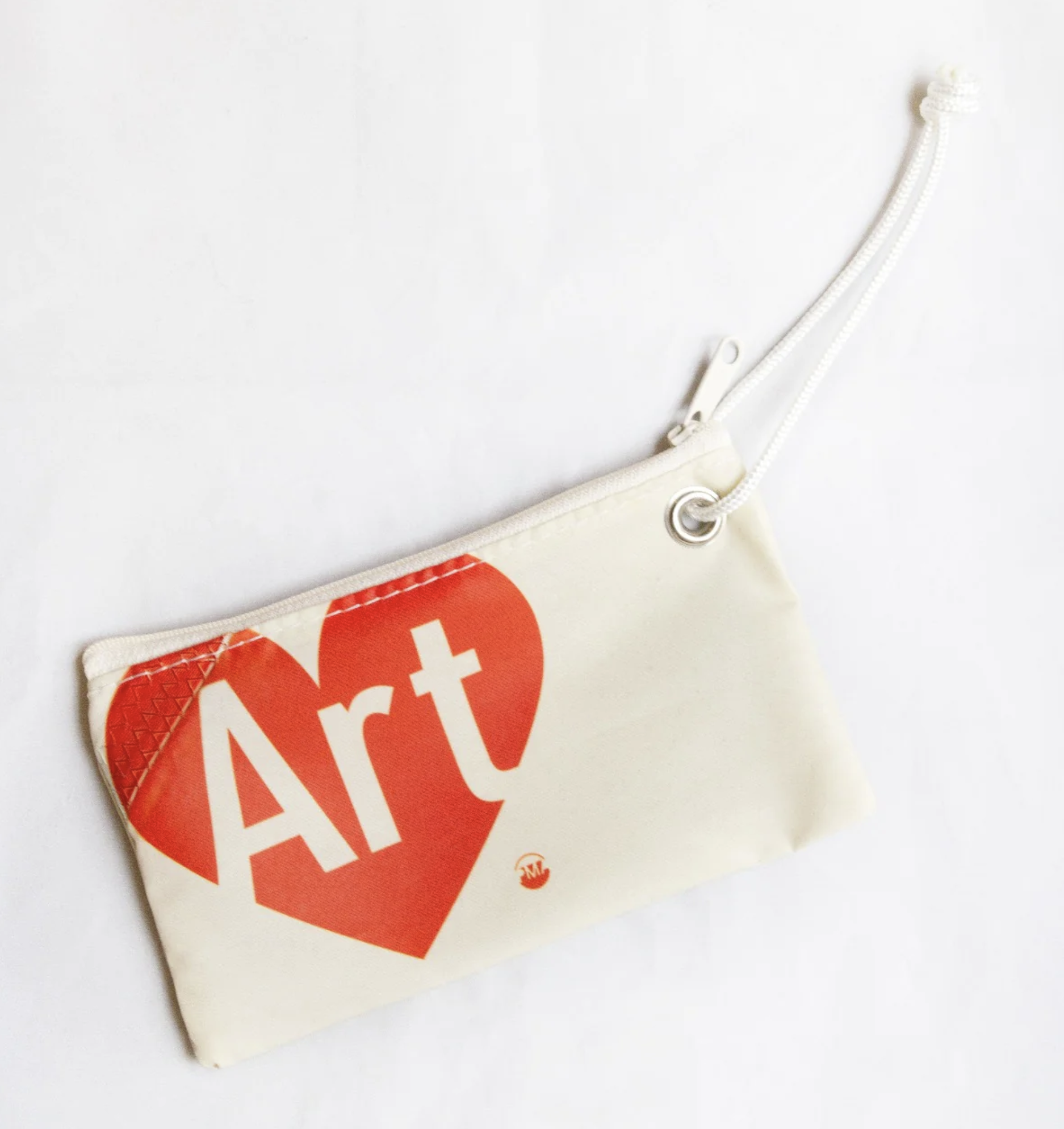
An Art heart zip pouch sold by the Portland Museum of Art store
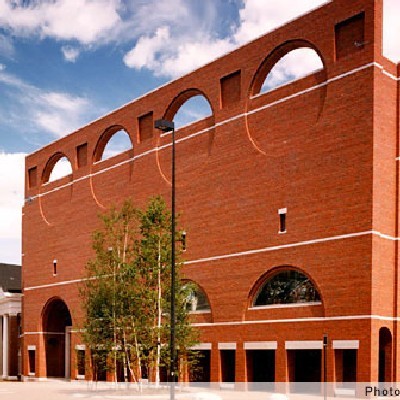
The Portland Museum of Art's brick building on Congress Square in downtown Portland, Maine

The Takeaway

The most useful thing an outsider brings is not a recommendation. It is a map.

The museum knew its systems were fragmented — anyone waiting a minute for a receipt knew that. What it did not have was a single document showing every touchpoint, what ran it, and where a person was quietly compensating for a gap between two pieces of software. Those compensations are invisible from the inside because they have been someone's normal for years: the mobile devices wired down to stay connected, the separate terminal beside the register for gift cards, the quarterly guess at what the online shop had in stock.

Drawing that map first is what made the migration survivable on a fixed deadline. When the old contract's expiry landed against the museum's fiscal year end and its physical inventory count, the scope was already understood and the dependencies were already known. The work could be aimed at the seams that mattered instead of discovering them under pressure.

Institutions tend to buy the replacement before they have drawn the map. It is almost always the more expensive order.

A bright blue hand drawn scribbly wave that is part of First Pier's brand colors and patterns