Our Work

Subscription Strategy for Wyman's

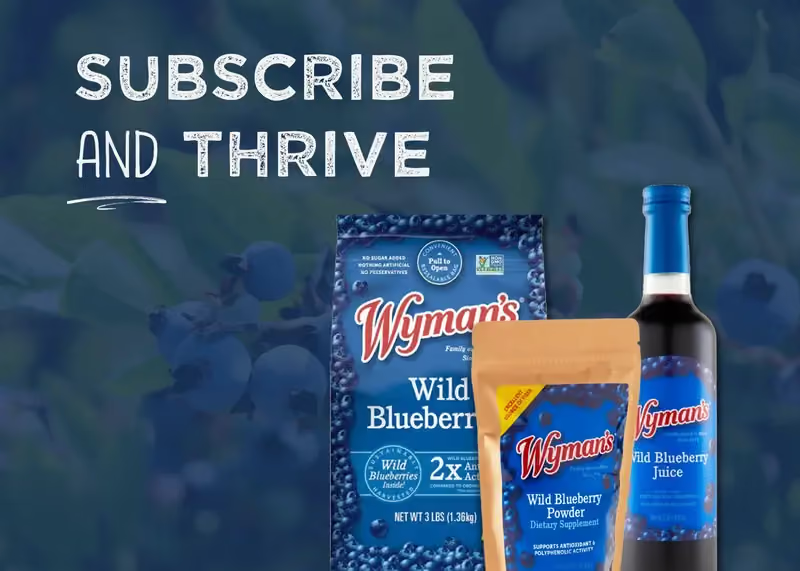
A bottle of blueberries next to a bag of blueberries

Wyman’s of Maine is one of the world’s largest growers of wild blueberries.

Background

With a history dating back to the mid-1800s, Wyman's is a legacy player in the grocery industry but a recent entrant into the juice and direct-to-consumer space. When Wyman's introduced its signature blueberry juice product several years ago, customers began buying it by the case.

The Solution

Understanding the market potential of a product that customers were buying in bulk, we worked with Wyman's to identify the opportunity that offering its blueberry juice and powder products by subscription would unlock. Recognizing that subscriptions would dramatically increase Wyman's customer lifetime value (CLTV), we partnered with their marketing department to create aggressive first-order offers. 

After launch, we enhanced the program with switch-to-subscription discounts in cart and special loyalty tiers for subscribers, making this subscription program incredibly successful.

The Outcome

Implementing Recharge subscriptions for Wyman's blueberry products increased CLTV by 400%, while creating consistent recurring revenue and improving demand projections for the legacy blueberry company.

Website design for blueberry product featuring multiple page layouts
A bright blue hand drawn asteriskA bright blue hand drawn bracket

We went from essentially $0 in sales to multimillion-dollar sales very rapidly, and we're continuing to grow. We wouldn't have been able to achieve any of that without First Pier.

Patrick Carroll, VP of Innovation — Jasper Wyman & Son

The Takeaway

The customers had already invented the subscription. Nobody had sold it to them yet.

Wyman's launched a blueberry juice and people started buying it by the case. That is the clearest demand signal a consumables business ever receives — a customer manually re-ordering in bulk is telling you, in the most inconvenient way available to them, that they would like this to arrive on its own.

So the strategy was not persuasion. It was removing friction from behaviour that already existed: aggressive first-order offers to make the first commitment easy, then switch-to-subscription discounts in the cart and loyalty tiers that made staying worth more than leaving.

Customer lifetime value rose 400%, average revenue per user 160%, and the return customer rate 300%. Those are one number seen from three angles — the same household buying more often, for longer.

The strategic value is not on the revenue line at all. A legacy grower plans production against forecasts, and a subscription base is the only part of a direct-to-consumer business that can be forecast honestly. Recurring revenue is worth more than its face value to a company that has to decide months ahead how much fruit to freeze.

A bright blue hand drawn scribbly wave that is part of First Pier's brand colors and patterns