




What Is Customer Feedback Collection (And Why It Matters for Your Store)

Summary
- Customer feedback collection is the process of gathering opinions and data from customers about their experience with your product or service.
- Real-time feedback is approximately 40% more accurate than feedback collected after the fact.
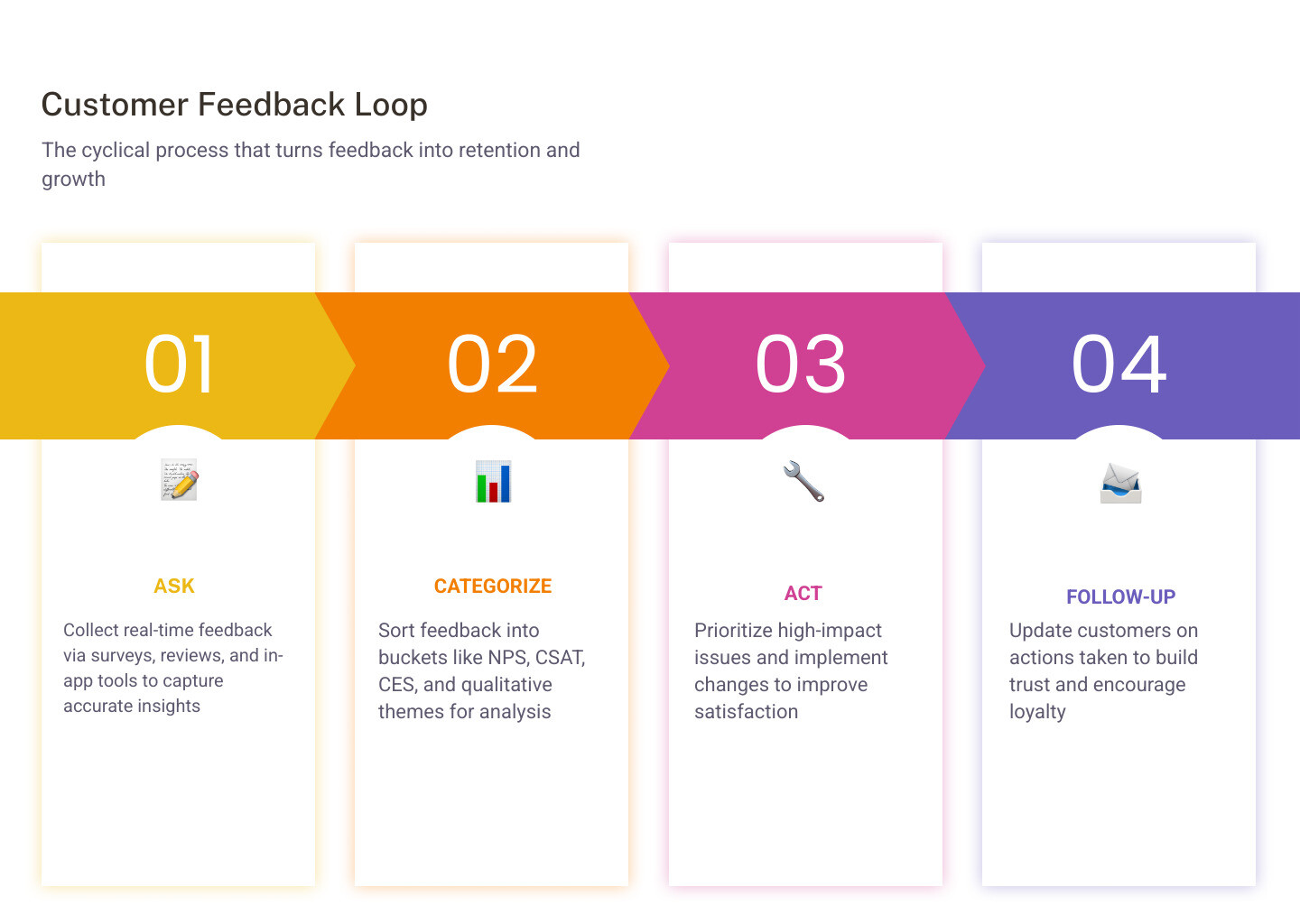
- Effective feedback programs follow a cyclical process: ask, categorize, act, and follow up.
- For established e-commerce brands, retaining customers costs significantly less than acquiring new ones — making feedback a direct revenue tool.
- Multiple collection methods exist, including surveys, reviews, social listening, and in-app tools.
Customer feedback collection is how businesses systematically gather input from customers about their products, services, and overall experience.
Here is a quick overview of the most common ways to collect it:
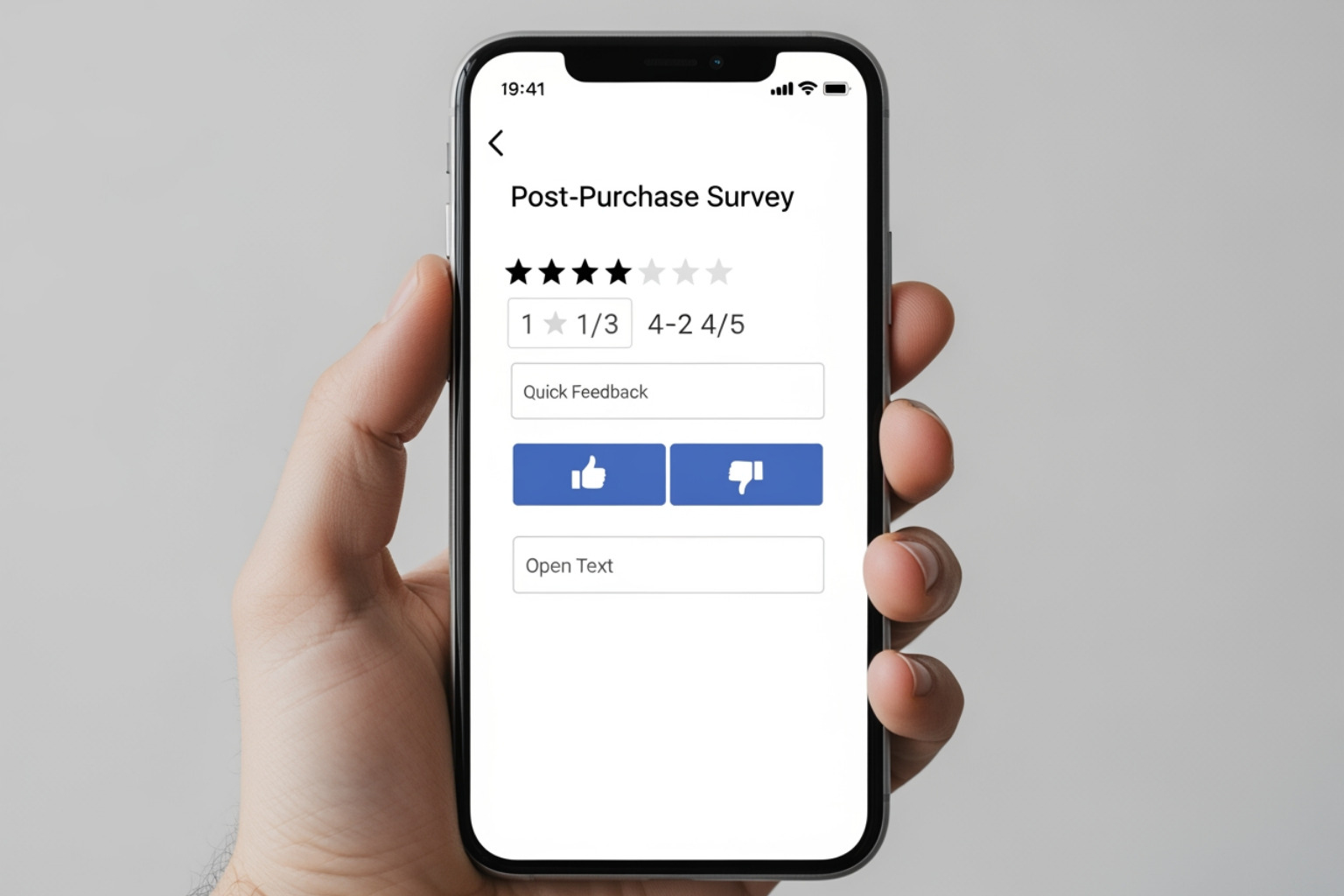
- Post-purchase surveys - sent via email after a customer completes an order
- On-site feedback widgets - pop-ups or embedded forms triggered by user behavior
- NPS, CSAT, or CES surveys - standardized rating questions measuring loyalty, satisfaction, or effort
- Online reviews - collected through platforms like Google, Trustpilot, or Okendo
- Social media listening - monitoring brand mentions and comments across social channels
- Customer interviews or focus groups - direct conversations for deeper qualitative input
- Support ticket analysis - reviewing patterns in help requests and complaints
For any Shopify store past the early growth stage, customer feedback is not a nice-to-have — it is operational data. Once collected, the next step is rigorous customer feedback analysis — turning raw responses into specific changes to product, messaging, or service. Without it, you are making product, marketing, and retention decisions based on assumptions. Research shows that real-time feedback is roughly 40% more accurate than feedback collected later, which means the when and how of collection matters as much as the questions you ask.
Done well, feedback collection connects directly to retention. And retention matters: it costs anywhere from five to twenty-five times more to acquire a new customer than to keep an existing one.
I'm Steve Pogson, founder of First Pier and a certified Shopify specialist with over two decades of hands-on experience helping e-commerce brands grow — and customer feedback collection has been a core part of every retention and optimization strategy I've built. In this guide, I'll walk you through the methods, tools, and processes that actually work for Shopify merchants.
Understanding the Value of Customer Feedback Collection
When I talk to brand owners here in Portland, Maine, the conversation often shifts to how they can get more traffic. But traffic is only half the battle. If you aren't listening to the people who already bought from you, you are leaving money on the table. Customer feedback collection is the most effective way to understand why people stay and why they leave.
Customer satisfaction isn't just a feeling; it is a metric that predicts your future revenue. Research shows that customers who have a five-star experience are 2.6 times more likely to buy from you again. On the flip side, if a customer is frustrated and you don't have a way to hear about it, they simply disappear.
The accuracy of this data depends heavily on timing. Customer feedback tends to be 40% more accurate when it is given in real-time. If you wait three weeks to ask a customer how their checkout experience was, they’ve likely forgotten the small friction points that might be driving others away. By capturing those thoughts in the moment, you get a clear picture of your store's performance.
At First Pier, we look at Customer Feedback Analysis as a way to validate business plans. If you think your shipping is too slow, but your feedback says customers are actually confused by your product descriptions, you can redirect your resources to what actually matters. This direct line of communication helps you build brand advocates—customers who don't just buy from you but tell their friends to do the same.
Categorizing Feedback Types
To make sense of the noise, I find it helpful to group feedback into specific buckets. Not all information is gathered the same way, and not all of it serves the same purpose.
Structured vs. Unstructured DataStructured feedback is easy to count. Think of a 1-to-10 rating or a multiple-choice question. It is great for tracking trends over time. Unstructured feedback is the "why" behind the score—the open-ended comments, emails, and social media rants. You need both to get the full story.
Solicited vs. Unsolicited FeedbackSolicited feedback is when you go out and ask for it through a survey or a review request. Unsolicited feedback is what customers give you without being asked—like a comment on an Instagram post or a message to your support team. Both are vital, but unsolicited feedback often contains the most raw and honest opinions.
When we set up systems for our clients, we focus on three main metrics:
| Metric | What it Measures | Key Question |
|---|---|---|
| NPS (Net Promoter Score) | Long-term loyalty | How likely are you to recommend us to a friend? |
| CSAT (Customer Satisfaction Score) | Short-term happiness | How satisfied were you with this specific interaction? |
| CES (Customer Effort Score) | Ease of use | How easy was it to resolve your issue today? |
Using these metrics allows you to compare your performance against industry standards. For example, data from Bain and Company shows that companies with the highest NPS in their industry tend to outgrow their competitors by at least double.
Building a Strategy for Customer Feedback Collection
A good strategy starts with journey mapping. I recommend walking through your own store as a customer. Where are the moments of high emotion? Usually, it’s right after they find the perfect item, right after they pay, and right after the package arrives. These are your natural feedback moments.
You want to use a multi-channel approach. If you only ask for feedback via email, you are missing the people who don't check their inbox but spend all day on your site. Automation is your best friend here. You can't manually ask every customer for their opinion, but you can set up triggers that do it for you.
Choosing Channels for Customer Feedback Collection
Where you ask is just as important as what you ask. Here are the channels I see working best for Shopify stores:
- Email: This is the workhorse of customer feedback collection. It’s perfect for post-purchase follow-ups. Tools like Klaviyo allow you to send a Shopify Review Request Email exactly when the customer is most likely to be excited about their new product.
- In-App/On-Site: These are micro-surveys that appear while the customer is actually browsing. They have much higher response rates than email because they don't require the user to leave the page.
- SMS: Texting has incredibly high open rates. It’s a great way to send a quick "How did we do?" message, especially for younger demographics.
- Social Media: People are talking about you on Reddit, Quora, and Instagram. Monitoring these mentions gives you a candid look at your brand's reputation.
For Shopify merchants, I often recommend Okendo. It integrates deeply with your store to capture high-quality reviews and User Generated Content (UGC). This doesn't just give you feedback; it gives you social proof that helps other people feel confident enough to buy.
Timing Your Customer Feedback Collection
Timing is the secret sauce. If you ask too early, they haven't tried the product. If you ask too late, the excitement has faded.
- Real-time: Use on-site widgets to ask about the shopping experience before they leave. If they are about to abandon their cart, a quick "Is there something we can help you find?" can save the sale.
- Post-purchase: Wait until the item has actually been delivered. For a clothing brand, give them a few days to try it on. For a supplement brand, you might wait two weeks to see if they feel the results.
- The Quiz Method: I love using an Ecommerce Quiz Strategy. By asking questions during a Shopify Quiz, you collect "zero-party data"—preferences the customer tells you directly. This is a goldmine for personalizing your future marketing.
Managing and Acting on Insights
Collecting the data is only half the job. I’ve seen too many businesses let their feedback sit in a spreadsheet that no one ever looks at. To avoid this, we use the ACAF loop: Ask, Categorize, Act, and Follow-up.
First, you need to categorize. I suggest breaking feedback into buckets like:
- Product Quality (Bugs, sizing, durability)
- Customer Service (Wait times, helpfulness)
- Marketing/Sales (Pricing, promotions, site navigation)
- Shipping/Logistics (Delivery speed, packaging)
Once categorized, you have to prioritize based on urgency and impact. A bug that prevents people from checking out is high urgency. A request for a new color is lower urgency but high impact for future growth.
It costs 5x to 25x more to acquire new customers than to keep existing ones happy. When you act on feedback, you are protecting your investment. If multiple people say your checkout is confusing, fix it. If they love a specific feature, highlight it in your ads. You can even use their exact words in your copywriting to connect better with new shoppers.
Finally, show off the love. Using User Generated Content Shopify strategies helps you turn those positive comments into marketing assets. When customers see that you listen and improve, they stop being just "shoppers" and start being part of your brand's community.
Frequently Asked Questions
What is a customer feedback loop?
A customer feedback loop is a system where you take the information customers give you and use it to make actual changes to your business. It isn't just about listening; it’s about the "loop" of asking, analyzing the data, implementing a change, and then telling the customer that you made that change because of them. Closing this loop is what builds real trust.
How do you handle negative reviews?
Don't delete them! Negative reviews are actually an opportunity. I always tell my clients to respond quickly and take responsibility. Apologize, offer a solution, and move the conversation to a private channel like email or phone if needed. Often, a customer who had a bad experience but saw it handled perfectly becomes more loyal than someone who never had an issue at all.
Which tools are best for Shopify stores?
For stores here in Maine and beyond, I usually suggest a combination of tools. Okendo is fantastic for reviews and UGC. Klaviyo is the gold standard for email and SMS feedback. If you want deep session data, Hotjar helps you see exactly where people are getting stuck on your site.
Conclusion
Building a successful online brand isn't about having the loudest ads; it’s about having the best ears. Customer feedback collection gives you the roadmap you need to build a store that people love to return to. By setting up the right channels, timing your requests, and actually acting on what you hear, you move from guessing to knowing.
If you are looking to grow your Shopify store and want to build a system that keeps customers coming back, we can help. Here at First Pier in Portland, we specialize in enhancing customer retention and loyalty through data-driven strategies and technical expertise. Let's stop the guesswork and start listening to your best growth engine—your customers.





.png)
.png)

