




Why Your Unsubscribe Rate Is One of the Most Important Email Metrics You Track
Summary
- A healthy email unsubscribe rate is generally below 1.0%, with top-performing lists staying under 0.5%.
- The most common reasons people unsubscribe are too many emails, irrelevant content, and poor mobile formatting.
- Segmentation and personalization can double open rates and significantly reduce list churn.
- Preference centers help keep subscribers by letting them control message frequency and content type.
Reduce unsubscribe rate and you protect two things at once: your sender reputation and your revenue. Every subscriber who opts out is a lead you can no longer reach. Do it enough times and email providers start routing your messages to spam — making the problem compound fast.
Here are the most effective ways to reduce email unsubscribe rates:
- Send less, but more relevant content — 42% of people unsubscribe because emails arrive too often
- Segment your list — targeted emails generate 2x the open rates of batch-and-blast sends
- Personalize your messages — use purchase history, behavior, and lifecycle stage
- Optimize for mobile — nearly half of all emails are opened on mobile, and ~10% of unsubscribes happen because of poor mobile formatting
- Build a preference center — let subscribers choose frequency and content type instead of forcing a full opt-out
- Clean your list regularly — remove invalid addresses, hard bounces, and long-inactive contacts
- Use automated flows — welcome series, abandoned cart, and post-purchase emails keep subscribers engaged without manual effort
The benchmark you're aiming for: below 1.0% for email and below 0.5% for SMS. Ecommerce stores specifically should target 0.1%–0.3%.
High unsubscribe rates don't just shrink your list. They signal a deeper issue — your content isn't matching what subscribers expected when they signed up. That gap, left unaddressed, chips away at deliverability, brand trust, and ultimately sales.
I'm Steve Pogson, founder of First Pier and a certified Shopify specialist with over two decades of experience helping ecommerce brands build retention strategies that reduce unsubscribe rate while growing revenue. In this guide, I'll walk you through exactly how to diagnose the problem and fix it.
Measuring and Benchmarking Your List Health
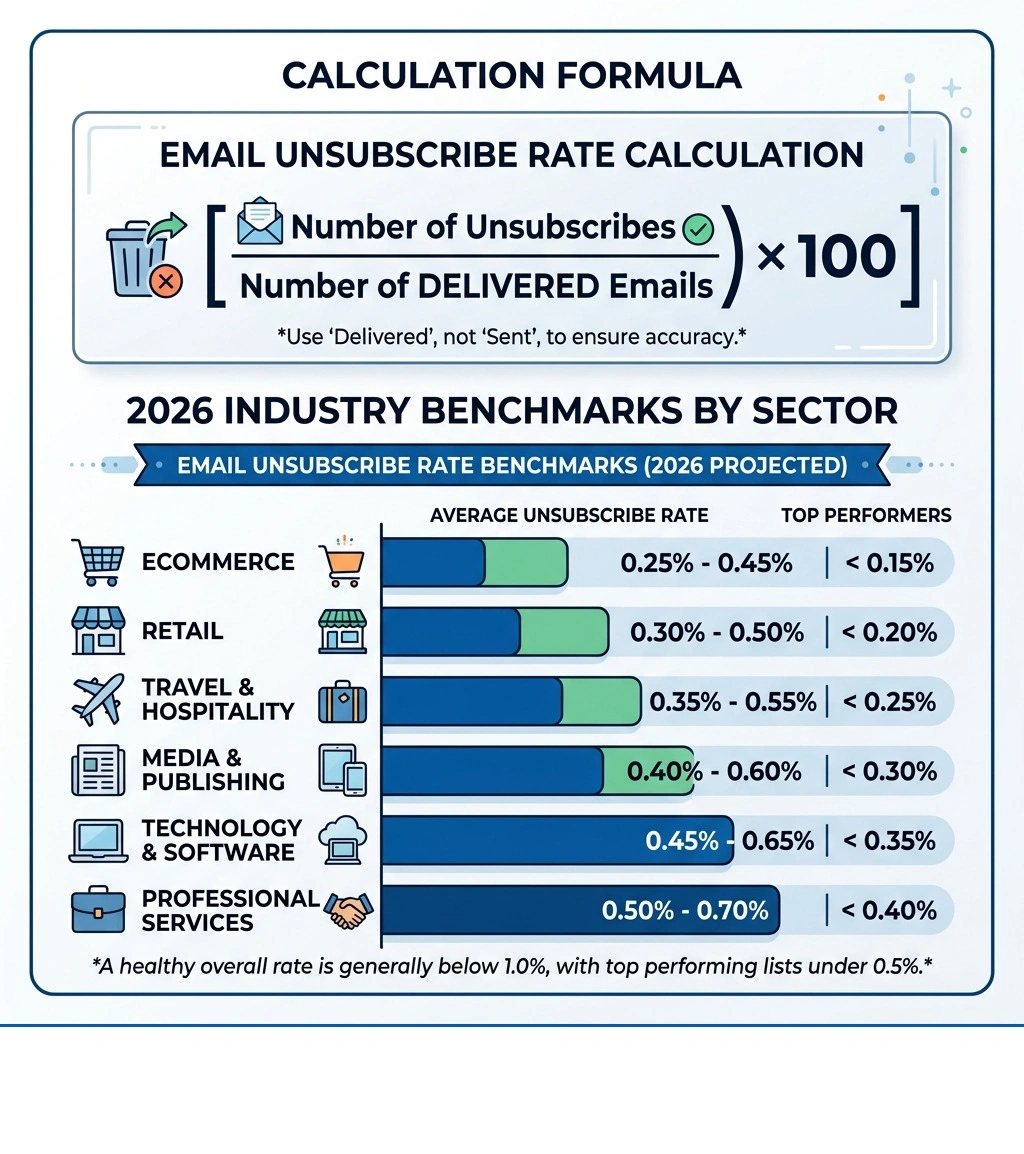
To fix a problem, I first have to define it. According to our Glossary/Unsubscribe Rate, this metric is the percentage of people who opt out of your mailing list after a specific campaign.
The calculation is straightforward: divide the number of unsubscribes by the number of delivered emails, then multiply by 100. I emphasize "delivered" because using the "sent" number can artificially lower your rate if you have a high bounce rate. For instance, if I send 10,000 emails, but 500 bounce, my denominator is 9,500. If 19 people unsubscribe, my rate is 0.2%.
In April 2026, the standards for a healthy list are stricter than ever. Email clients like Gmail and Outlook use these rates to judge your domain reputation. If your rates climb too high, you risk your emails being filtered into the "Promotions" tab or, worse, the spam folder.
| Channel | Healthy | Room for Improvement | Needs Attention |
|---|---|---|---|
| < 1.0% | 1.0% - 2.0% | > 2.0% | |
| SMS | < 0.5% | 1.5% - 2.0% | > 2.0% |
As noted in this guide on 7 ways to reduce your unsubscribe rate for increased retention and engagement, tracking these numbers campaign-by-campaign helps you spot trends before they become crises.
Understanding Healthy Benchmarks for 2026
Benchmarks aren't one-size-fits-all; they shift based on your industry and how your audience interacts with your brand. In my experience here at First Pier, ecommerce brands often see the lowest rates because subscribers are specifically looking for deals and product updates.
- Ecommerce/Retail: 0.1% - 0.3% (Healthy)
- SaaS/Technology: 0.2% - 0.5%
- Health & Wellness: 0.3% - 0.6%
- Nonprofit: 0.1% - 0.3%
It’s also important to look at this metric alongside your Glossary/Open Rate. If your open rates are high but your unsubscribes are also climbing, your subject lines might be over-promising or misleading, leading to frustration once the email is actually opened.
Primary Drivers of Subscriber Churn
Why do people leave? It usually isn't because they suddenly hate your brand. It’s usually a friction point in the experience. Research shows that 42% of people unsubscribe simply because communications are too frequent. When a subscriber feels bombarded, their first instinct is to hit the "exit" button.
Other major drivers include:
- Irrelevant Content: Sending a "New in Men’s Boots" email to someone who has only ever bought high heels.
- Brand-Centric Messaging: Focusing entirely on your company's achievements rather than providing value to the customer.
- The "One-and-Done" Trap: Customers who sign up just to get a welcome discount and have no intention of staying.
According to this look at How to Reduce Email Unsubscribe Rates - Lite14 Tools & Blog, people also leave when they forget they signed up in the first place. This happens when branding is inconsistent or when you go months without sending an email and then suddenly blast the list.
The Impact of High Frequency and Timing
Timing is everything. If I send an abandoned cart reminder at 3:00 AM in my customer's time zone, it gets buried under a mountain of other notifications by the time they wake up. Even worse is the "double-dip"—when a customer receives a manual newsletter and an automated flow email within the same hour.
To reduce unsubscribe rate, I recommend implementing message limits (or "smart sending"). This prevents a single user from receiving more than a set number of messages in a 24-hour period. You can find more ideas on balancing your calendar in our Email Marketing Strategy Examples.
Using Segmentation to Reduce Unsubscribe Rate
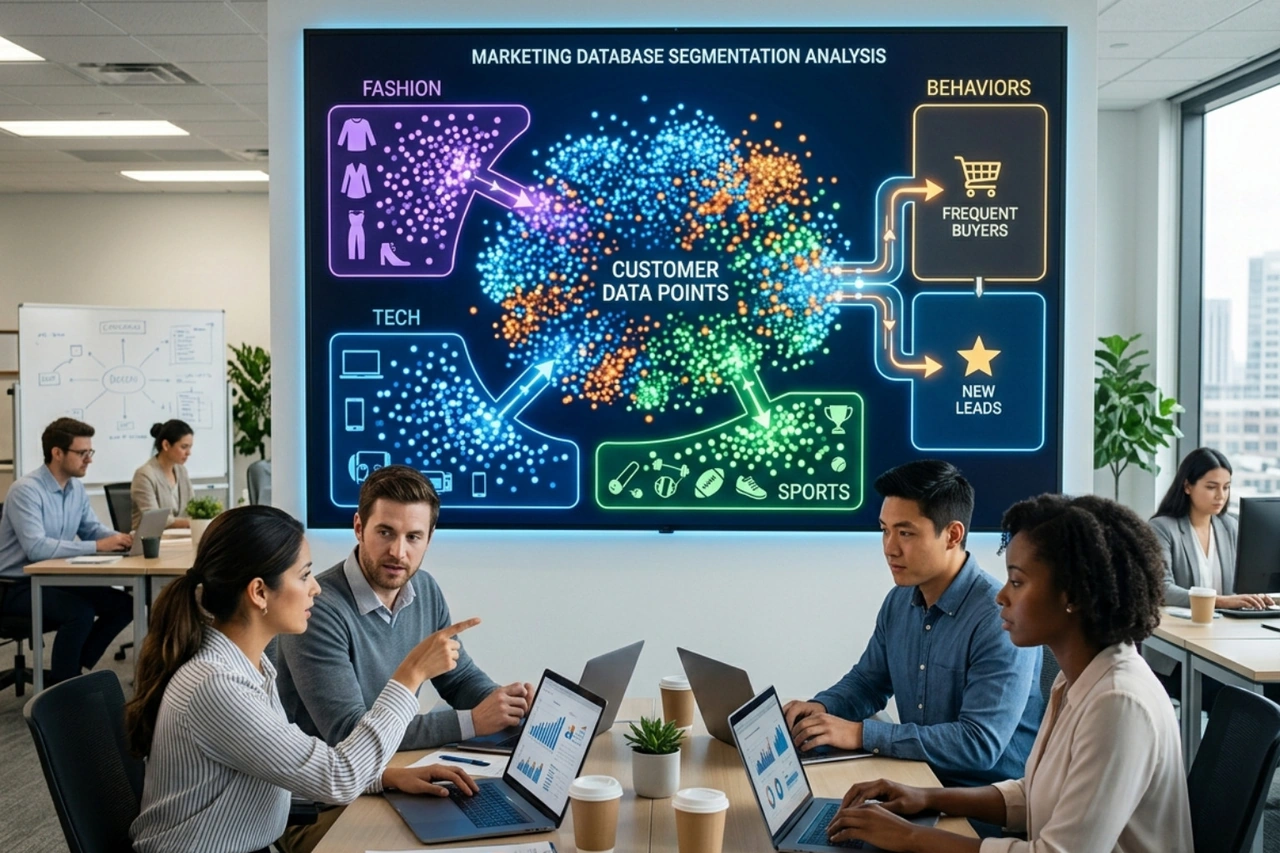
The "batch-and-blast" era is over. If I treat my entire list as a single mass, I am essentially asking for a high unsubscribe rate. Segmentation allows me to slice the list into smaller groups based on specific data points.
- Behavioral Data: What have they clicked on recently?
- Purchase History: What categories do they actually buy from?
- Lifecycle Stages: Are they a new lead, a first-time buyer, or a loyal VIP?
Segmented campaigns have been shown to have nearly 10% lower unsubscribe rates than non-segmented ones. When the content matches the user's current relationship with the brand, it feels like a service rather than an interruption. For more on this, check out our guide on Email Marketing For Ecommerce.
How Personalization Helps Reduce Unsubscribe Rate
Personalization goes much deeper than just using a first name in a subject line. True 1:1 narratives use dynamic content blocks to show different products or images to different people within the same email.
If I know a subscriber lives in Maine and it’s currently snowing, showing them winter parkas is relevant. Showing that same email to a subscriber in Florida is a fast track to an unsubscribe. Following Klaviyo Best Practices means using the data you already have to make every email feel tailor-made.
Technical Standards for Mobile and List Hygiene
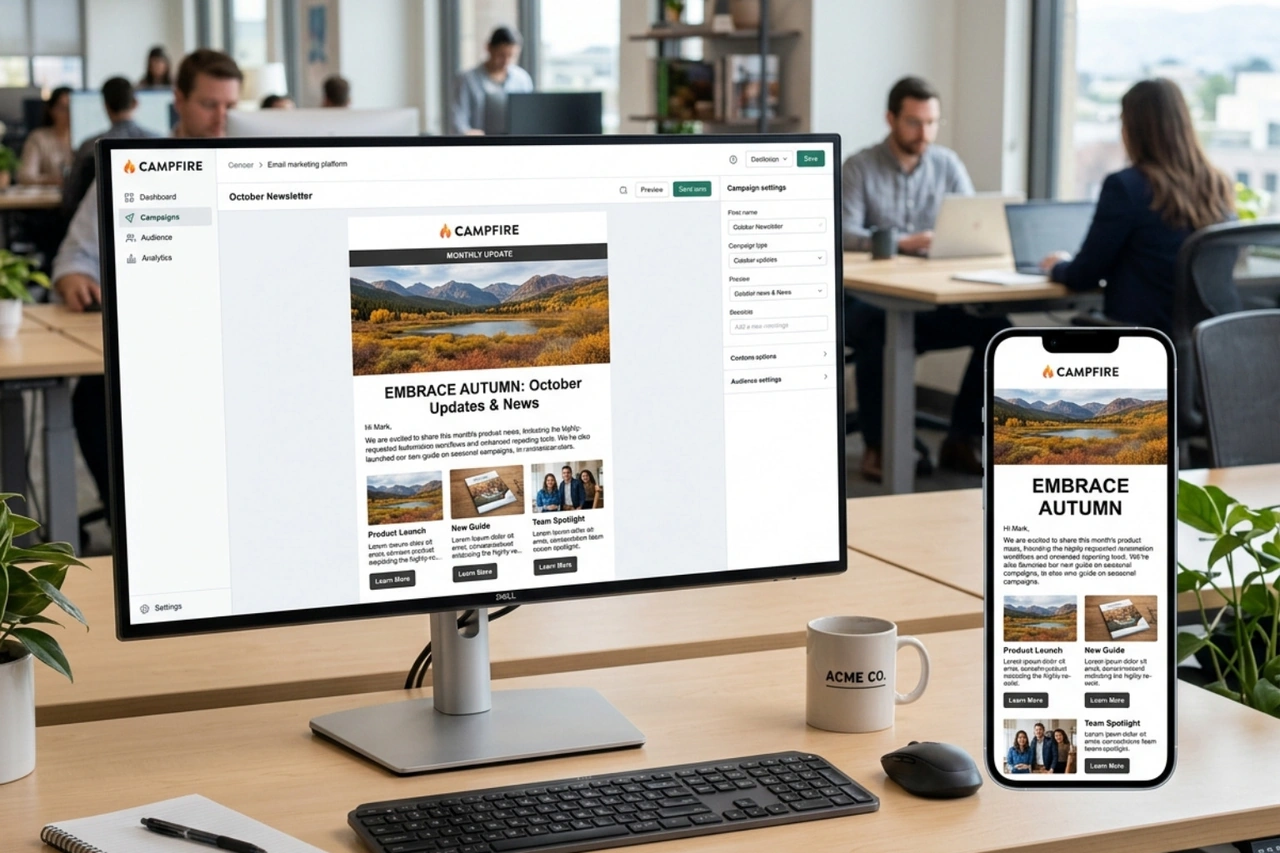
In 2026, 80% of people access their email via a mobile app. If your email looks broken on a smartphone, you’re going to lose subscribers. Nearly 10% of unsubscribes are tied directly to poor mobile formatting.
- Responsive Design: Your layout must fluidly adjust from desktop to mobile.
- Dark Mode Optimization: Many users prefer dark themes; if your logo has a white "box" around it or your text disappears, it looks unprofessional.
- Touch-Friendly Buttons: Ensure your Call to Action (CTA) buttons are large enough to be tapped easily with a thumb.
Cleaning Your List to Reduce Unsubscribe Rate
It might sound counterintuitive, but sometimes you need to remove people from your list to help it grow. List hygiene is the process of removing contacts that are hurting your deliverability.
I look for:
- Glossary/Hard Bounce: Permanent delivery failures (invalid emails).
- Glossary/Soft Bounce: Temporary failures (full inboxes).
- Unengaged Subscribers: People who haven't opened an email in 90+ days.
Setting up a "sunset flow" is a great way to handle this. I send a final "Do you still want to hear from us?" email. If they don't respond, I remove them. This keeps the list "warm" and ensures my emails are going to people who actually want them.
Preference Centers and Automated Retention
One of the best ways to reduce unsubscribe rate is to offer an alternative to leaving. A preference center is a landing page where subscribers can "opt-down" instead of opting out.
Instead of a giant "Unsubscribe from All" button, I give them choices:
- Frequency: "Only send me one email a week" or "Pause all emails for 30 days."
- Content Categories: "Only send me sales and discounts" or "Only send me educational blog posts."
- Channels: "Switch me from email to SMS."
By giving the subscriber control, I turn a potential loss into a more defined, engaged relationship.
Using Automated Flows to Maintain Engagement
Automated flows are the "set it and forget it" heroes of retention. Because these are triggered by a user's specific action, they are inherently more relevant than a standard newsletter.
- Welcome Series: Sets the tone and expectations immediately after signup.
- Abandoned Cart: Reminds them of what they liked, often with a small incentive.
- Post-Purchase Follow-up: Asks for a review or provides usage tips, building value after the sale.
Data shows that abandoned cart flows can generate over $3.00 in revenue per recipient, while post-purchase flows help bridge the gap between the first and second sale. You can see more about building these in our guide to Klaviyo Email Marketing Flows.
Frequently Asked Questions about Unsubscribe Rates
What is a high unsubscribe rate for ecommerce?
Anything consistently above 0.5% for an ecommerce brand is a warning sign. If you hit 1.0% or higher, you need to immediately examine your send frequency and content relevance. Spikes are normal during big sales like Black Friday, but your baseline should be much lower.
How often should I clean my email list?
I recommend a deep clean at least once a month. Most modern platforms like Klaviyo or ActiveCampaign have tools to automate parts of this, but you should manually review your segments and sunset flows monthly to ensure you aren't paying for "dead" weight on your list.
Can I use SMS to re-engage email unsubscribers?
Yes, but only if you have separate, explicit consent for SMS. If someone unsubscribes from your email, it’s a great time to offer them a "text-only" option if they find email too cluttered. However, never move an email subscriber to SMS without their permission—that’s a fast way to get blocked and potentially fined.
To Sum Up
Lowering your unsubscribe rate isn't about "tricking" people into staying. It’s about building a relationship where the value you provide exceeds the "cost" of the interruption in their inbox. When you focus on relevance, respect their time, and optimize the technical experience, your list health will follow.
Here at First Pier, we specialize in this kind of high-performance ecommerce strategy. Based in Portland, Maine, our team helps Shopify brands navigate the complexities of retention and platform optimization. We don't just send emails; we build systems that keep customers coming back.
If you’re ready to stop the leak in your marketing funnel and build a more loyal audience, I'd love to help you plan your next move. You can find more info about email and SMS marketing services on our site to see how we can help your brand grow sustainably.




.png)
.png)

